How Plug-In Solar Panels Work—and Why Utilities Fight Back
Plug-in solar panels let renters and homeowners generate their own electricity by connecting solar panels to a standard wall outlet — no installer, no roof required. Here's how the technology works and why electric utilities are pushing back.
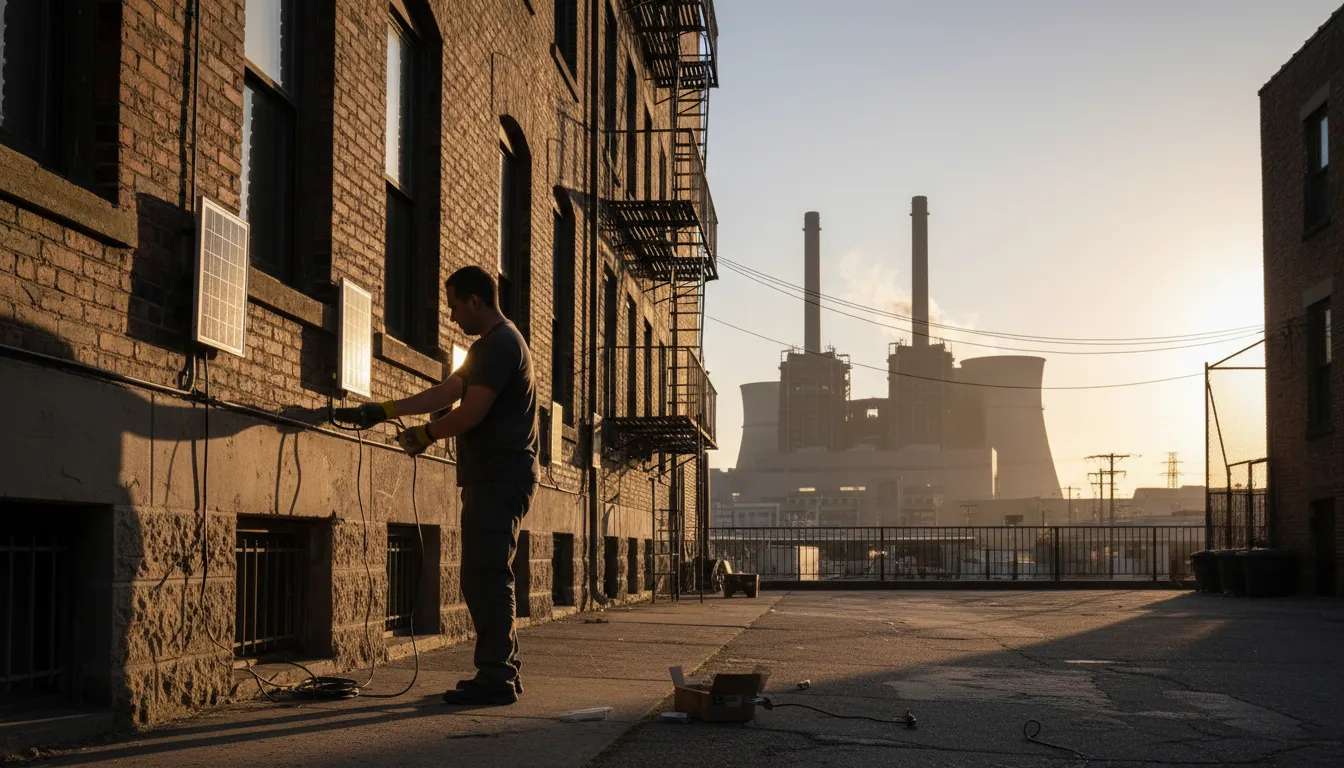
Solar Power Without the Contractor
For most of the past two decades, going solar meant signing a contract, hiring an electrician, and bolting panels to a roof you may not own. That model works for homeowners with capital to spare — but it has locked out the roughly one-third of U.S. households that rent, as well as millions of apartment dwellers worldwide.
Plug-in solar panels, sometimes called balcony solar or Balkonkraftwerk in Germany, are changing that equation. These compact systems let anyone generate their own electricity and feed it directly into their home — using nothing more than a standard electrical outlet.
How the Technology Works
A plug-in solar system is built around three core components: one or two solar panels, a microinverter, and a standard power cable. The panels — typically rated between 200 and 800 watts — can be mounted on a balcony railing, propped up in a backyard, or hung from a window ledge.
Solar panels produce direct current (DC), but household appliances run on alternating current (AC). The microinverter, a compact device that clips behind the panel, converts the DC electricity into grid-compatible AC in real time. Once that conversion happens, the power flows through the plug into the home's electrical circuit.
Crucially, the system is grid-tied: it does not store energy in a battery but instead feeds electricity directly into the home's wiring. When the sun shines, solar power displaces electricity that would otherwise be drawn from the grid, reducing the meter reading — and the bill. If the panels produce more than the household uses at that moment, the surplus flows back into the grid; if they produce less, the grid makes up the difference seamlessly.
Modern microinverters also include anti-islanding protection: they automatically shut down if the grid loses power, preventing dangerous backfeed that could electrocute utility workers making repairs.
A European Success Story
Germany pioneered the regulatory framework for plug-in solar in 2019 and has become the world's leading market. More than 1.2 million systems are registered with the German government, and the country raised its permitted inverter output limit from 600 watts to 800 watts in 2024 to reflect maturing technology and safety standards.
German research suggests the systems can pay for themselves in as little as two and a half years, depending on local electricity prices and sunlight. After the payback period, a typical system saves its owner several hundred dollars — or euros — annually for decades. Panel lifespan is generally estimated at 25 to 30 years, according to Solar United Neighbors.
The United States Is Playing Catch-Up
In the U.S., plug-in solar has faced a patchwork of regulatory barriers. Unlike Germany, most American states have no clear legal category for these devices, meaning homeowners can find themselves in a grey zone where utilities can demand the same interconnection paperwork required for a rooftop array — a process that can take months and cost hundreds of dollars.
That is beginning to shift. Utah became the first U.S. state to fully legalize plug-in solar in 2025, capping eligible systems at 1,200 watts and removing the requirement for utility approval or a licensed electrician. By early 2026, at least 30 similar bills had been introduced across 23 additional states, from California to Virginia, according to the World Resources Institute.
In January 2026, UL Solutions published the UL 3700 standard — the first dedicated safety certification for plug-in solar devices in the U.S. — giving regulators and consumers a clear benchmark for product safety.
Why Utilities Are Pushing Back
Despite growing consumer interest, electric utilities have succeeded in delaying plug-in solar legislation in at least five states, including Arizona, New Mexico, and Wyoming, according to NPR reporting. Utility lobbyists cite safety concerns — arguing that improperly installed panels could overload circuits or create fire risks — and claim that widespread adoption could destabilize the grid.
Critics of that position note that the safety concerns apply mainly to older, uncertified products, and that the new UL 3700 standard directly addresses them. Analysts at the World Resources Institute argue that the deeper motivation is financial: every kilowatt-hour a customer generates themselves is one the utility does not sell.
"For the roughly one-third of U.S. households who rent, rooftop systems have largely been out of reach. Plug-in solar is a practical, affordable option for households locked out of the clean energy transition." — World Resources Institute
Who Stands to Benefit Most
The technology's most transformative potential is for renters and apartment dwellers — groups historically excluded from solar incentives that assume roof ownership. A single 400-watt panel mounted on a south-facing balcony can offset roughly 10 to 15 percent of a typical apartment's electricity consumption, with systems paying back their cost in five to seven years under average U.S. electricity rates.
As safety standards mature and more states clarify the legal pathway, plug-in solar is moving from a European curiosity to a mainstream option — one that could quietly reshape who participates in the clean energy economy.