How the Muon g-2 Experiment Works—and Why It Matters
The Muon g-2 experiment at Fermilab measures the magnetic wobble of muons with extreme precision, testing whether unknown particles exist beyond the Standard Model of physics.
A Tiny Wobble With Enormous Stakes
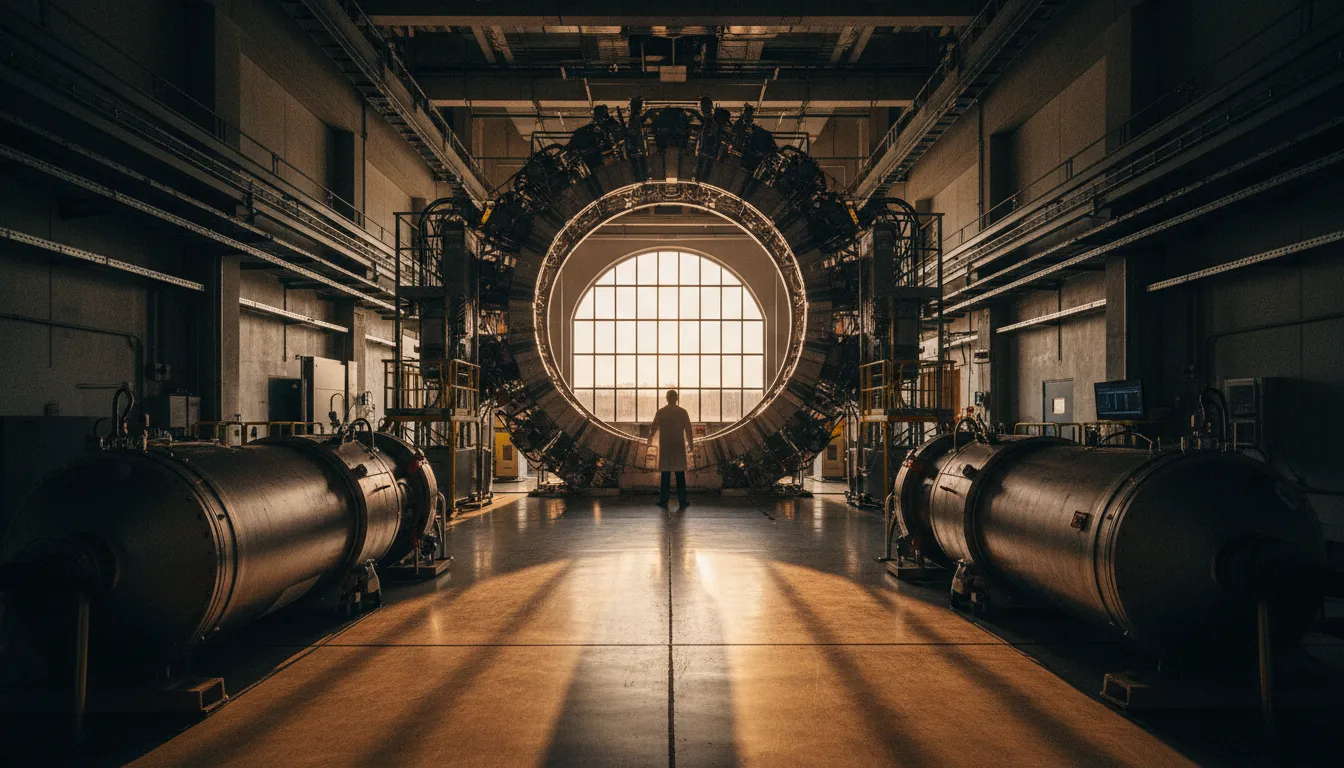
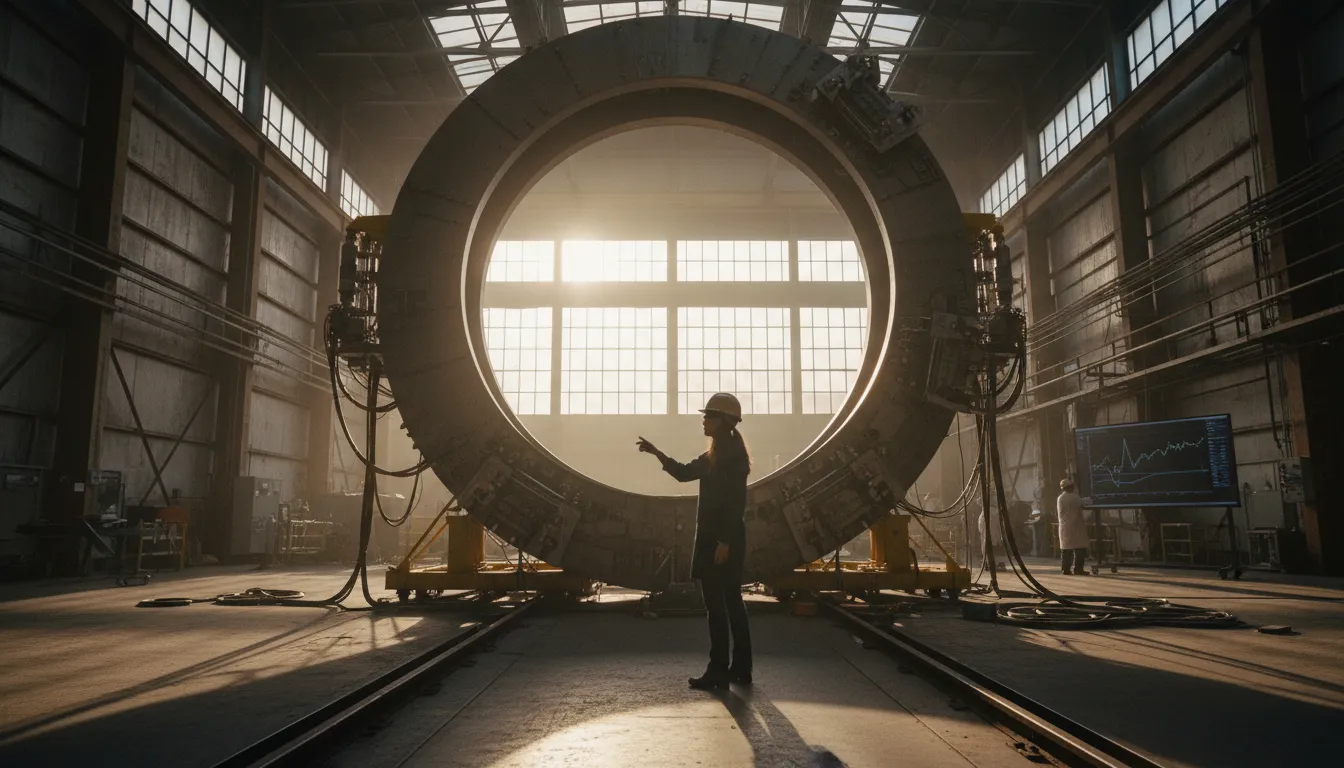
Deep beneath the Illinois prairie at Fermi National Accelerator Laboratory sits a 50-foot-diameter superconducting magnet ring—the heart of one of the most precise experiments ever conducted. The Muon g-2 experiment measures a single quantity: how much a subatomic particle called the muon wobbles in a magnetic field. That wobble, measured to better than 127 parts per billion, could reveal entirely new forces of nature hiding beyond the known laws of physics.
What Is a Muon—and What Is g-2?
A muon is essentially a heavier cousin of the electron—about 207 times more massive—and, like the electron, it behaves as a tiny magnet. The strength of that internal magnet is described by a number called the g factor. Basic quantum mechanics predicts g should equal exactly 2. But the real world is messier. Virtual particles constantly pop in and out of existence in the quantum vacuum, tugging at the muon's magnetism and nudging g slightly above 2. That tiny excess—the "anomalous" part—is what physicists call g-2.
The anomalous magnetic moment is extraordinarily sensitive to every particle and force in the universe, including ones not yet discovered. If the measured value of g-2 disagrees with what the Standard Model of particle physics predicts, it could mean unknown particles are influencing the muon's wobble.
How the Experiment Works
The experiment begins when Fermilab's accelerators slam roughly a trillion protons into a fixed target about 12 times per second, generating a shower of particles. From that spray, physicists extract muons and inject them into the storage ring—a massive, hollow, doughnut-shaped magnet cooled to superconducting temperatures.
Inside the ring, muons race at nearly the speed of light. The powerful magnetic field forces them into a circular path while simultaneously causing their spin axes to precess, or wobble, like a gyroscope tilting on a tabletop. The rate of that wobble depends directly on the muon's anomalous magnetic moment.
Muons are unstable. As they circle, they decay into positrons (the antimatter counterpart of electrons) and neutrinos. The positrons preferentially fly in the direction the muon's spin was pointing at the moment of decay. By carefully measuring the energy and timing of billions of these positrons with detectors lining the ring, physicists reconstruct the precise wobble frequency—and from it, the value of g-2.
Why It Challenges the Standard Model
The final Fermilab result, published in 2025 after six runs of data collection, achieved a precision of 0.127 parts per million—surpassing the experiment's own design goal. Combined with earlier measurements from Brookhaven National Laboratory, the experimental value disagrees with certain Standard Model predictions at 4.2 sigma—just short of the 5-sigma threshold physicists require to claim a discovery, but still representing only a roughly 1-in-40,000 chance of being a statistical fluke.
The picture, however, is complicated. Two different theoretical methods for calculating the Standard Model prediction—one using experimental electron-positron collision data, the other using lattice quantum chromodynamics (supercomputer simulations of quark interactions)—yield different answers. The lattice approach brings theory closer to experiment, potentially narrowing the gap that once excited physicists.
Decades in the Making
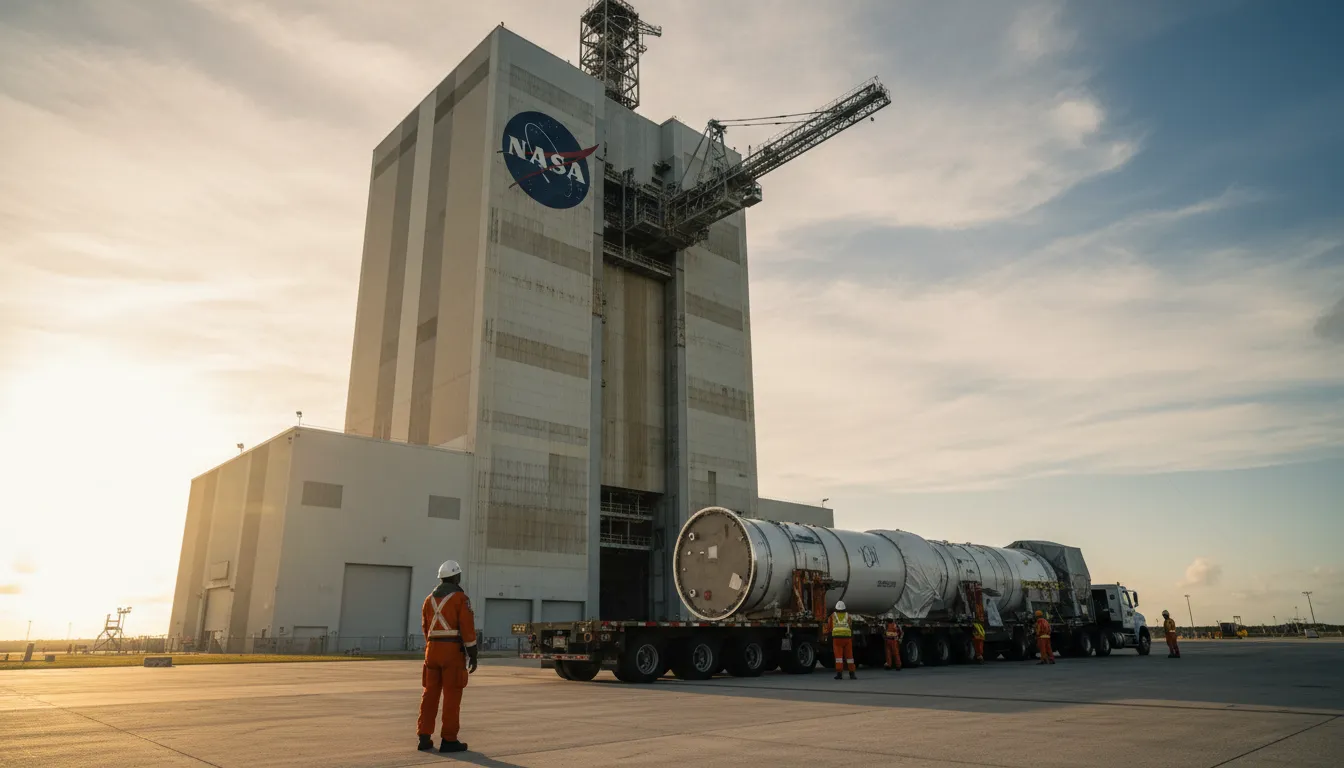
The quest to measure the muon's wobble spans three generations. It began at CERN in the 1960s and 1970s, moved to Brookhaven in the 1990s—where a tantalizing discrepancy first emerged—and culminated at Fermilab, which inherited Brookhaven's magnet ring after a spectacular 3,200-mile journey by barge in 2013. In April 2026, the Breakthrough Prize in Fundamental Physics honored hundreds of researchers across all three experiments with its $3 million award.
What Comes Next
The experimental side is settled. The ball is now in theorists' court. Resolving the disagreement between lattice and data-driven predictions will determine whether the muon's wobble truly points to new physics—supersymmetric particles, dark-sector forces, or something entirely unexpected—or confirms the Standard Model's remarkable staying power. Either outcome would reshape our understanding of the universe at its most fundamental level.