How the Rubin Observatory Will Map the Entire Sky
The Vera C. Rubin Observatory in Chile uses the world's largest digital camera to photograph the entire visible sky every three nights, hunting asteroids, probing dark energy, and generating an unprecedented ten-year movie of the cosmos.
A New Eye on the Universe
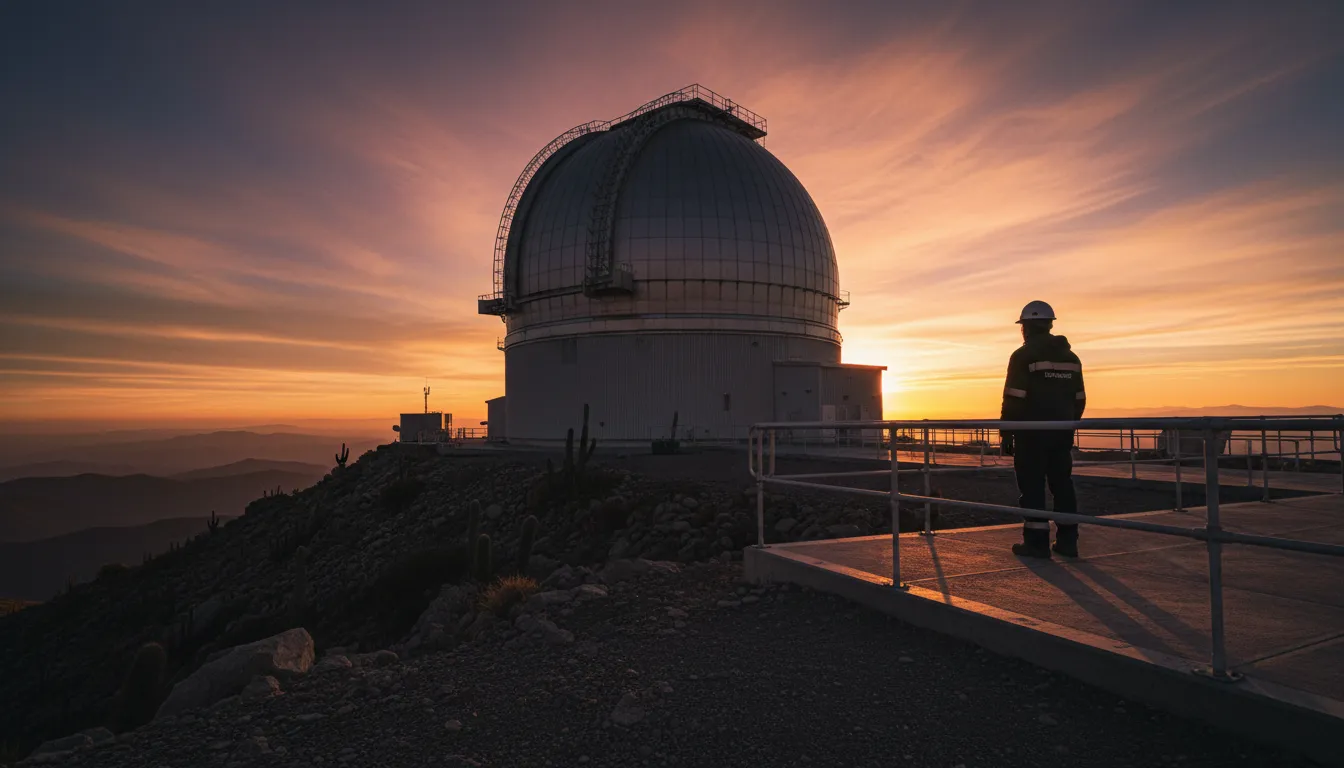
Perched atop Cerro Pachón in the Chilean Andes, the Vera C. Rubin Observatory is unlike any telescope before it. Rather than staring at a single patch of sky for hours, it will sweep the entire visible southern hemisphere every three nights for a full decade—creating a time-lapse movie of the cosmos that astronomers expect will rewrite textbooks on everything from dark energy to asteroid threats.
The facility is a joint project of the U.S. National Science Foundation and the Department of Energy, built and operated by a global collaboration of more than 900 scientists. It is named after Vera Rubin, the American astronomer whose observations of galaxy rotation curves provided some of the strongest evidence for the existence of dark matter.
The Largest Digital Camera Ever Built
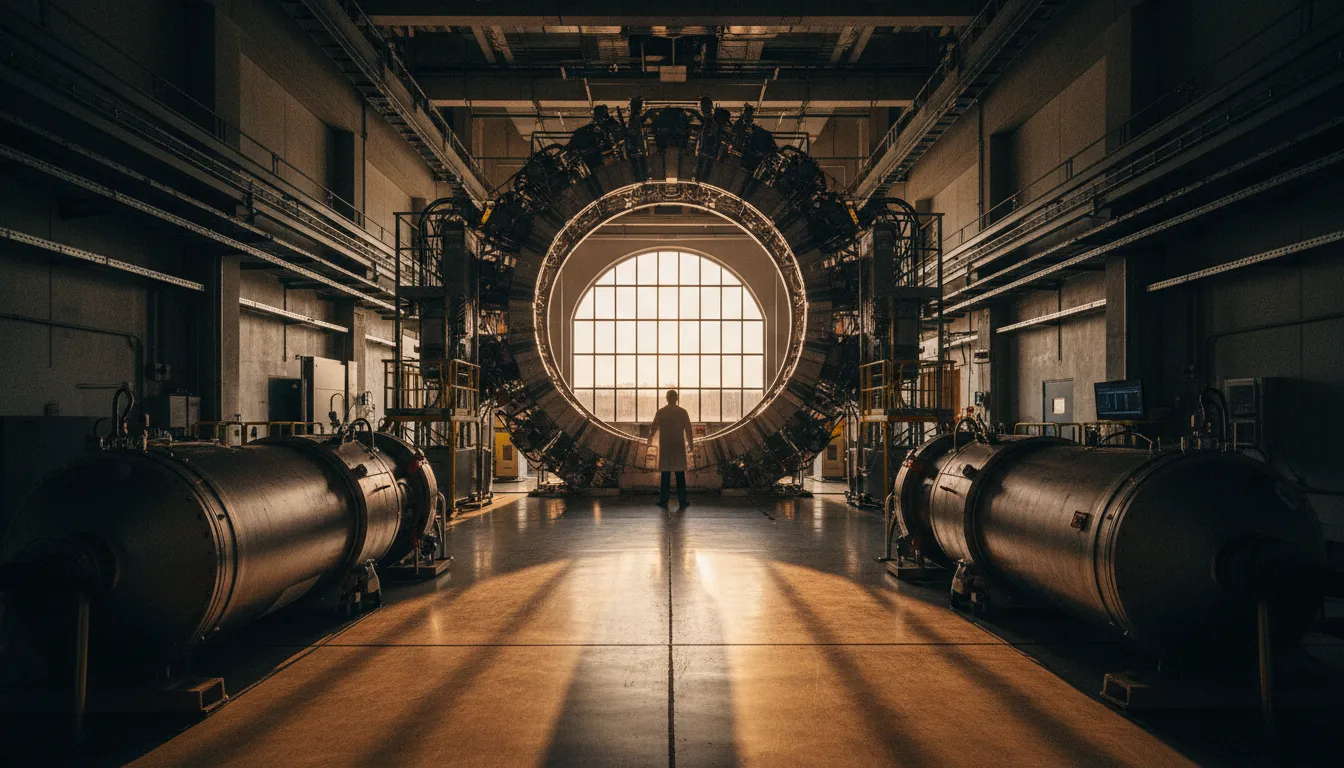
At the heart of the observatory sits the LSST Camera—a 3,200-megapixel sensor array the size of a compact car, weighing roughly three metric tons. Mounted on the 8.4-meter Simonyi Survey Telescope, it captures a 3.5-degree field of view in each exposure—more than 40 times the area of the full Moon. Every 17 seconds it snaps a new 15-second image, producing upwards of 200,000 photographs per year.
The result is a torrent of data: approximately 10 terabytes every night. Over the planned ten-year Legacy Survey of Space and Time (LSST), the total dataset will swell to about 30 petabytes—enough raw information to keep astronomers busy for generations.
Four Pillars of Science
The LSST is organized around four broad science goals:
- Dark energy and dark matter. Together these invisible components make up roughly 95 percent of the universe, yet their properties remain mysterious. By tracking how billions of galaxies shift over time and measuring gravitational lensing—the way massive objects bend background light—Rubin will deliver some of the most precise measurements ever of cosmic expansion.
- Solar-system inventory. The observatory is expected to discover several million previously unknown asteroids and comets, including an estimated 60 to 90 percent of all potentially hazardous asteroids larger than 140 meters. That makes it a cornerstone of planetary defense.
- The transient sky. Supernovae, gamma-ray burst afterglows, and other short-lived events will be flagged automatically within 60 seconds, allowing other telescopes worldwide to follow up in near-real time.
- Milky Way structure. By cataloguing billions of stars and their motions, Rubin will produce the most detailed map ever of our own galaxy's shape and history.
Early Results Already Impress
Although the full ten-year survey has not yet begun, early commissioning data has already demonstrated the observatory's power. In roughly ten hours of initial observations, the telescope discovered 2,104 never-before-seen asteroids, including seven near-Earth objects. A broader early dataset published in April 2026 reported over 11,000 new asteroids, 33 previously unknown near-Earth objects, and approximately 380 trans-Neptunian objects—icy bodies orbiting beyond Neptune—based on just six weeks of observations.
Those numbers hint at the scale to come. Once the LSST is fully operational, Rubin is projected to catalog around 100,000 new near-Earth objects over its decade of scanning.
Why It Matters
Previous sky surveys have typically been either wide or deep, but not both. Rubin's combination of a massive mirror, an enormous camera, and a rapid cadence lets it be wide, fast, and deep simultaneously. That triple threat opens scientific territory that was previously inaccessible—from detecting faint, slow-moving objects at the edge of the solar system to spotting subtle distortions in spacetime caused by dark matter.
For the broader public, the planetary-defense dimension is perhaps the most tangible benefit. Identifying hazardous asteroids years or decades before a potential impact gives engineers time to develop deflection missions—a capability that only works if the threat is spotted early enough.
With its first full data release planned for two years after the survey begins, the Rubin Observatory is poised to become one of the most productive scientific instruments of the twenty-first century—and the ultimate proof that sometimes, the best way to understand the universe is simply to watch everything at once.