How Cell-Free Biomanufacturing Works—No Cells Required
Cell-free biomanufacturing produces proteins, vaccines, and chemicals using cellular machinery extracted from disrupted cells—no living organisms needed. The technology promises faster, cheaper, and more flexible production of everything from therapeutics to biofuels.
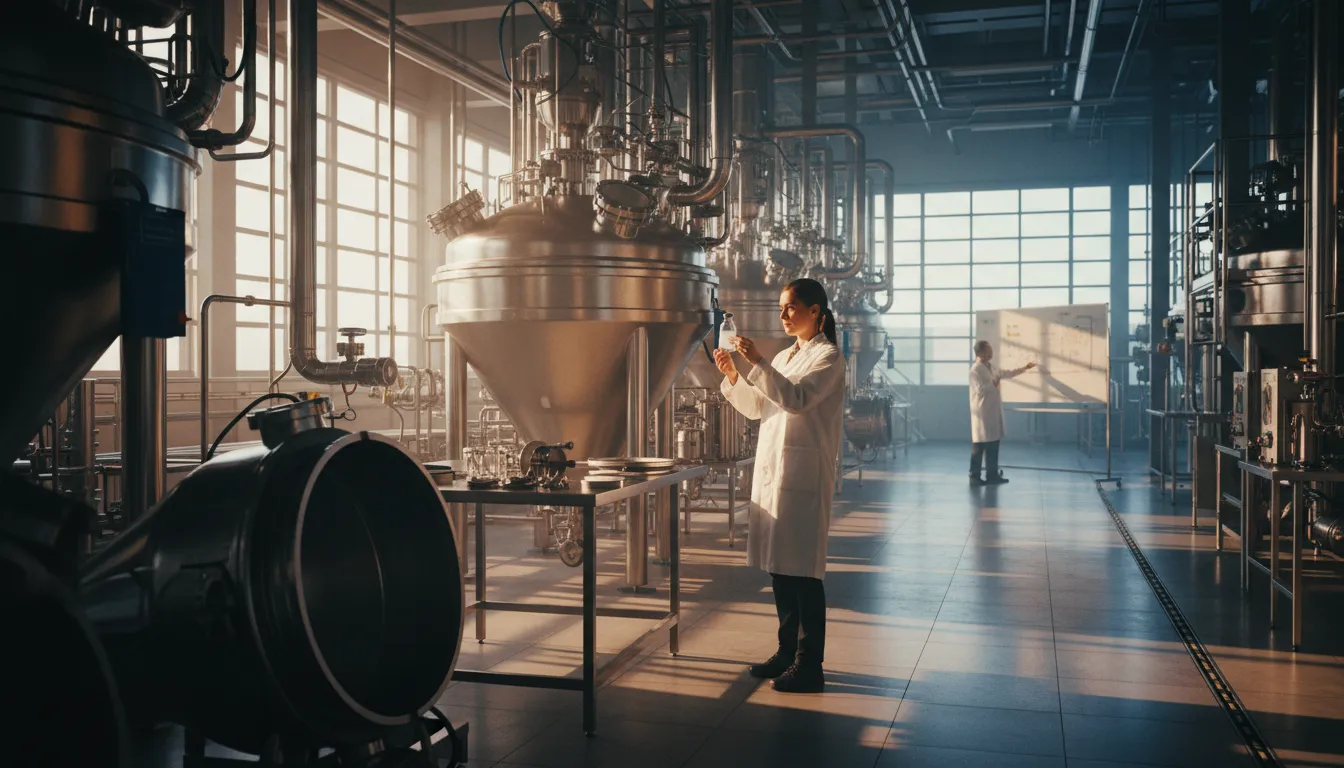
Biology Without the Biology
Traditional biomanufacturing relies on living cells—bacteria, yeast, or mammalian cultures—to produce proteins, enzymes, and drugs. But a growing field is stripping away the cell itself and keeping only the molecular machinery inside. Cell-free biomanufacturing uses the extracted contents of ruptured cells to run biological reactions in a test tube, producing everything from vaccines to industrial chemicals without ever sustaining a living organism.
The approach is gaining traction across pharmaceuticals, synthetic biology, and green chemistry. The global cell-free protein expression market was valued at roughly $322 million in 2025 and is projected to reach $627 million by 2035, according to industry analysis by Roots Analysis.
How It Works
The process begins by growing cells—typically E. coli, wheat germ, or insect cells—and then breaking them open through a process called lysis. The resulting crude extract, or lysate, contains ribosomes, enzymes, amino acids, and energy molecules: all the hardware a cell uses to read genetic instructions and build proteins.
Scientists add a DNA or RNA template encoding the desired protein, along with supplemental energy sources and amino acids. The extract's molecular machinery does the rest, transcribing and translating the genetic code into functional protein—typically within hours rather than the days or weeks that cell-based systems require.
Because there are no cell walls, membranes, or competing metabolic pathways, researchers enjoy direct access to the reaction environment. They can adjust pH, temperature, and chemical composition in real time—something impossible inside a living cell.
A Nobel Prize Origin Story
Cell-free synthesis traces its roots to a landmark 1961 experiment at the U.S. National Institutes of Health. Marshall Nirenberg and Heinrich Matthaei added synthetic RNA made entirely of uracil to a cell-free extract and discovered it produced a chain of phenylalanine amino acids. The experiment cracked the genetic code, earning Nirenberg the 1968 Nobel Prize in Physiology or Medicine. What began as a research tool has since evolved into a manufacturing platform.
Why It Matters
Speed
A cell-free reaction, including extract preparation, typically takes one to two days. In vivo protein expression can require one to two weeks, according to a user's guide published in ACS Synthetic Biology. For drug discovery and outbreak response, that speed difference is critical.
Flexibility
Without the constraint of keeping cells alive, researchers can produce toxic proteins that would kill a host organism. They can also incorporate non-natural amino acids to engineer novel protein structures or selectively label proteins for structural studies.
Portable Medicine
Freeze-dried cell-free systems can be stored at room temperature and reactivated with water, enabling vaccine production in remote areas without cold-chain infrastructure. Researchers have demonstrated conjugate vaccine doses producible for approximately $0.50 per dose after weeks of room-temperature storage.
Real-World Applications
Companies are already commercializing cell-free platforms. Resilience uses the technology to produce antibodies, fusion proteins, and subunit vaccines. LenioBio offers a plant-based cell-free system for rapid protein production. Touchlight in the UK manufactures synthetic DNA for mRNA vaccine development using entirely cell-free processes. Major suppliers including Thermo Fisher Scientific and Promega sell cell-free expression kits used in laboratories worldwide.
The Challenges Ahead
Despite its promise, cell-free biomanufacturing faces significant hurdles. Scaling reactions from a test tube to industrial volumes remains difficult—extract quality varies between batches, and reagent costs are high. Many systems still require ultra-cold storage below −70°C, complicating logistics. A NIST workshop report identified scale-up and automation as the field's most pressing bottlenecks.
Researchers are tackling these problems through integration with automated biofoundries—high-throughput platforms that use robotics to optimize reactions systematically. As extract preparation becomes cheaper and more reproducible, cell-free systems may move from niche research tool to mainstream manufacturing platform, producing medicines, materials, and chemicals without a single living cell.


