Why MRI Machines Need Helium—and Why Supply Is Fragile
MRI scanners depend on liquid helium to cool their superconducting magnets to near absolute zero. With global supply concentrated in just a few countries, disruptions can threaten hospital imaging worldwide.
The Coldest Link in Modern Medicine
Magnetic resonance imaging is one of medicine's most powerful diagnostic tools, producing detailed images of organs, soft tissue, and the brain without radiation. But every MRI scanner hides a surprising dependency: liquid helium, cooled to roughly −269°C (−452°F), just four degrees above absolute zero.
Without this extreme cold, the superconducting magnets at the heart of every conventional MRI machine simply stop working. And because global helium supply is concentrated in a handful of countries and tightly linked to natural gas production, any geopolitical or industrial disruption can ripple directly into hospital imaging departments.
Why Helium? The Physics of Superconducting Magnets
MRI scanners generate powerful magnetic fields using coils of niobium-titanium wire. At room temperature, these wires have ordinary electrical resistance. But when cooled below a critical threshold—around −263°C—they become superconducting, meaning electricity flows through them with zero resistance. This allows the magnets to sustain the intense, stable fields needed to align hydrogen atoms in the body and produce clear images.
Liquid helium is the only substance cold enough to reach these temperatures in a practical, sustained way. A typical MRI unit requires approximately 2,000 litres of liquid helium to keep its magnets operational. There is no readily available substitute at scale—helium's boiling point is the lowest of any element, making it uniquely suited for this role.
Where Helium Comes From—and Why Supply Is Tight
Unlike most industrial gases, helium cannot be manufactured. It forms underground over millions of years through the radioactive decay of uranium and thorium in Earth's crust, accumulating in natural gas reservoirs. All commercial helium is extracted as a by-product of natural gas processing.
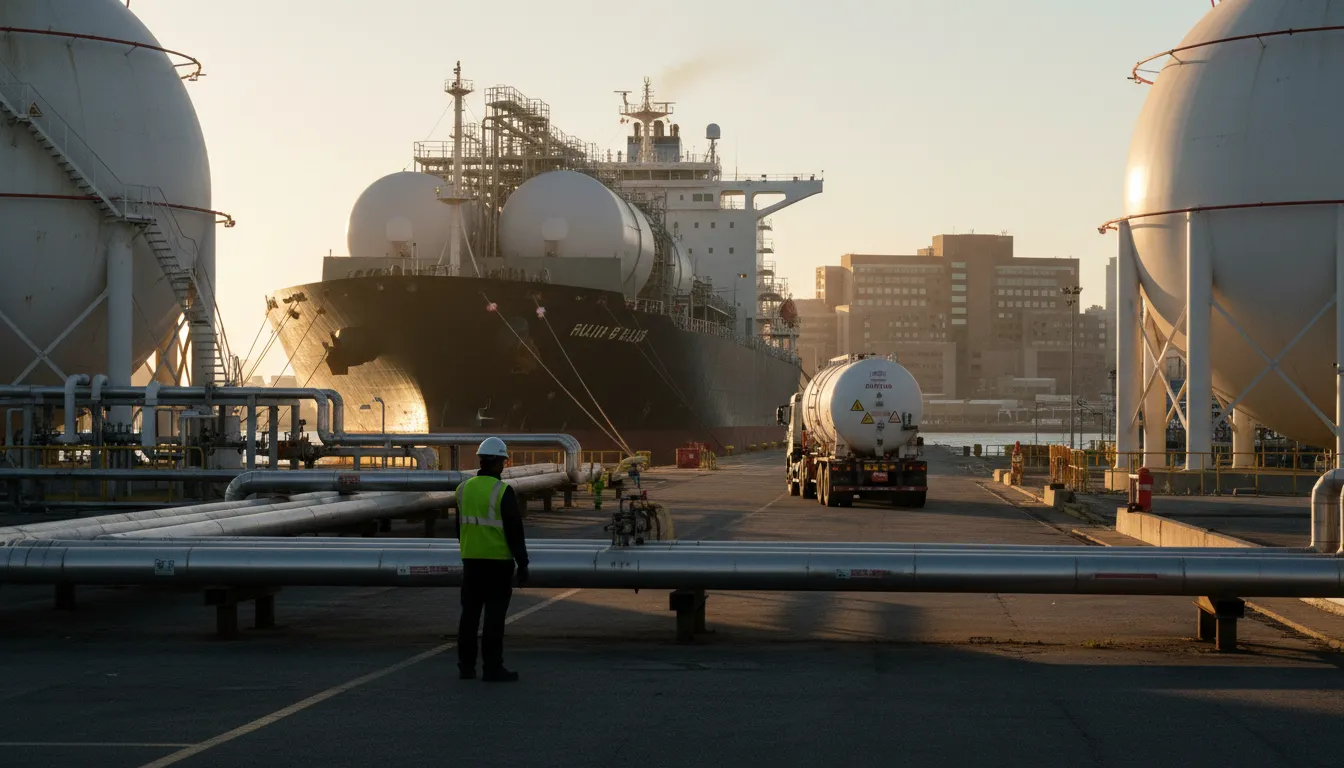
Global production is dominated by just a few countries. The United States and Qatar together account for the majority of the world's roughly 190 million cubic metres of annual output, with Algeria, Russia, and Australia contributing smaller shares. Qatar alone produces about 63 million cubic metres per year, nearly a third of the global total—almost entirely as a by-product of liquefied natural gas (LNG) operations.
This concentration creates a fragile supply chain. When LNG production drops—whether due to conflict, maintenance shutdowns, or market shifts—helium output falls with it. Liquid helium also has a constant boil-off rate, giving it an effective transport window of roughly 45 days. Unlike oil or metals, it cannot be stockpiled indefinitely.
What Happens When Supply Is Disrupted
The medical sector has already experienced several helium shortages. When supply tightens, prices spike and hospitals face difficult choices: delay maintenance, ration scan availability, or risk taking machines offline entirely if helium refills cannot be secured.
Hospitals also compete for helium with the semiconductor industry, aerospace, fibre-optic manufacturing, and scientific research—all sectors where helium plays irreplaceable roles. In a supply crunch, bidding wars can more than double open-market prices.
Helium-Free MRI: A Solution on the Horizon
Manufacturers are developing alternatives. Philips' BlueSeal technology uses a sealed magnet design requiring just seven litres of helium over the machine's lifetime, compared to 2,000 litres in conventional systems. GE HealthCare's FreeLium platform takes a similar approach.
Meanwhile, researchers are exploring alternative superconducting materials like magnesium diboride (MgB₂) that function at higher temperatures, potentially eliminating liquid helium entirely. Some helium-free 1.5-Tesla systems are already scanning patients in over 20 countries.
But the global MRI fleet numbers tens of thousands of machines, and most rely on legacy technology. Replacing them will take years and billions of dollars in investment. For now, modern medicine remains tethered to the universe's second-lightest element—and to the handful of places on Earth where it can be found.