How TSA Airport Security Works—and Who Does It
The TSA screens nearly a billion passengers a year using CT scanners, facial recognition, and 50,000 officers—but 20 US airports use private screeners instead. Here is how the entire system works.
Born From Tragedy
Before September 11, 2001, airport security in the United States was a patchwork of private contractors overseen by individual airlines. Screeners were often minimum-wage workers, and passengers could carry blades up to four inches long on board. Friends and family walked freely to the gate. The attacks exposed catastrophic gaps in the system and triggered the most sweeping overhaul of transportation security in American history.
On November 19, 2001, President George W. Bush signed the Aviation and Transportation Security Act, creating the Transportation Security Administration within months. By the end of 2002, the federal government had hired, trained, and deployed nearly 60,000 screeners across more than 400 airports—replacing every private contractor at checkpoints nationwide.
How Checkpoint Screening Works
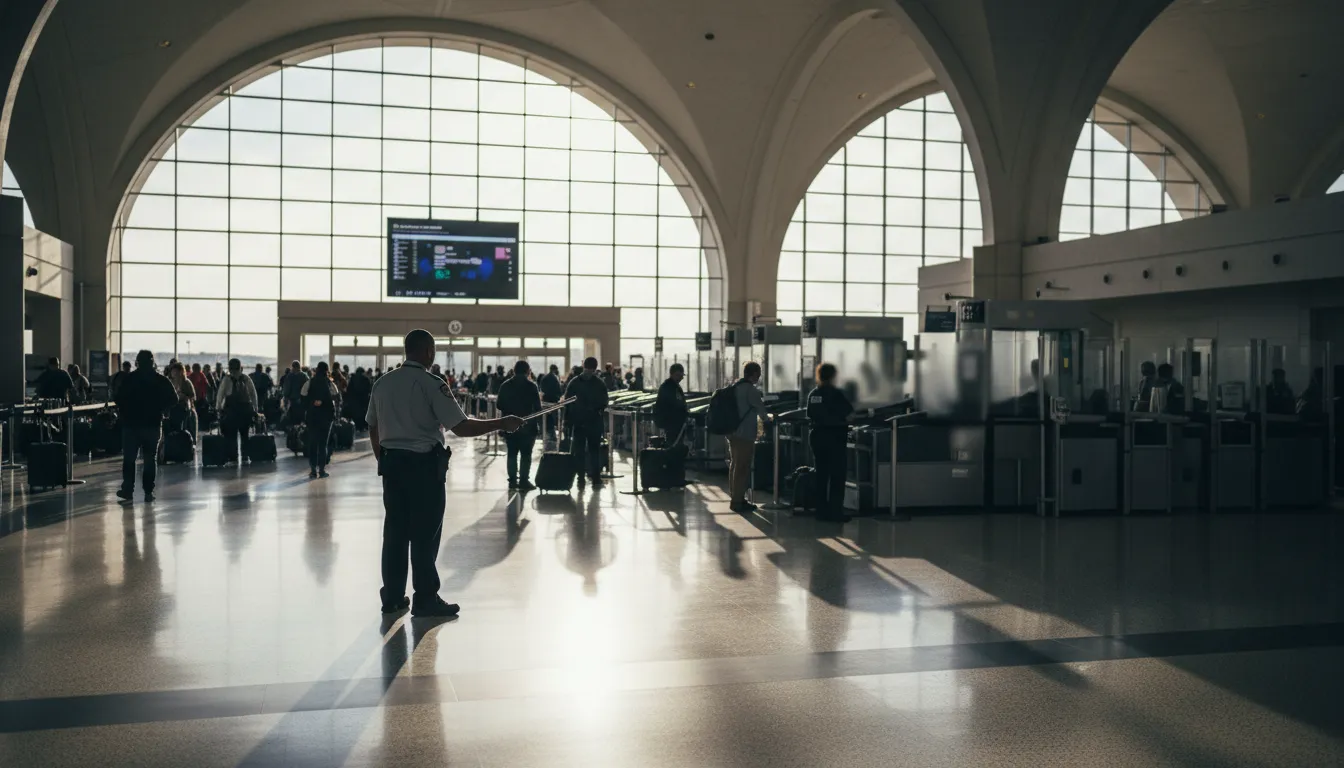
Every passenger follows the same basic sequence: present identification, place carry-on items on a conveyor belt, and walk through a body scanner or metal detector. Officers may conduct additional pat-down searches if an alarm is triggered. The process may seem routine, but each step relies on layered technology designed to catch different threat types.
CT Scanners
TSA's most significant hardware upgrade in recent years is the deployment of computed tomography (CT) scanners at checkpoints. Borrowed from the medical field, these machines create three-dimensional images of carry-on bags that officers can rotate 360 degrees on screen. Sophisticated algorithms automatically flag potential explosives—including liquid ones—reducing the need for passengers to remove laptops or travel-size liquids from their bags.
Facial Comparison Technology
At a growing number of checkpoints, Credential Authentication Technology 2 (CAT-2) units combine document scanning with live facial comparison. The machine photographs the traveler, compares the image against the photo on a government-issued ID, and confirms whether they match. TSA says the system uses one-to-one verification only—photos are deleted after a positive match and are not fed into any broader database. Travelers may opt out without penalty and use a manual ID check instead.
The Scale of the Operation
TSA screens roughly 900 million passengers per year—an average of about 2.5 million every day. Peak travel days, such as the Sunday after Thanksgiving, can push single-day volume past 3 million. In 2024 alone, the agency screened 494 million checked bags and over two billion carry-on items. Approximately 50,000 Transportation Security Officers staff checkpoints at more than 400 airports, supported by a total workforce of about 60,000 and an annual budget near $10 billion.
The Private Alternative
Not every US airport uses TSA employees. Under the Screening Partnership Program (SPP), 20 airports—including San Francisco International and Kansas City International—contract private companies to run their checkpoints. These private screeners must follow every TSA procedure and receive the same training. TSA still sets the rules, approves the contractors, and maintains oversight.
The distinction matters most during disruptions. When government shutdowns or budget disputes delay federal paychecks, TSA-staffed airports can see officer call-out rates spike above 40 percent, causing hourslong lines. Private-screener airports, which set their own pay schedules, have largely avoided such chaos—fueling periodic debate about whether the SPP model should expand.
What Has Changed Over the Years
TSA's rules have evolved as threats have shifted. The 3-1-1 liquids rule—containers of 3.4 ounces or less in a single quart-sized bag—arrived in 2006 after a foiled plot to bomb transatlantic flights with liquid explosives. Mandatory shoe removal followed that same year after Richard Reid's attempted shoe bombing. In 2025, TSA finally dropped the shoe requirement at airports equipped with advanced CT scanners capable of detecting sole-hidden explosives without removal.
Beginning in 2026, passengers who arrive without a REAL ID-compliant license or passport can still fly—but must pay $45 for an on-the-spot identity verification process called TSA Confirm.ID.
Why It Matters
Airport security touches nearly every American who travels by air. Understanding how the system works—its technology, its funding model, and the private alternative that exists alongside it—helps travelers navigate checkpoints and informs the ongoing policy debate about whether a federal workforce or private contractors better serve the flying public.