IMF: US Debt Heading for 140% of GDP by 2031
The IMF praises the American economy as 'buoyant' but warns that runaway deficits and ballooning public debt — projected to hit 140% of GDP by 2031 — pose a growing risk to global financial stability.
Strong Growth, Fragile Finances
The International Monetary Fund delivered a stark two-sided verdict on the American economy this week: growth is accelerating, yet the country's fiscal trajectory is fast becoming a hazard not just for the United States but for the entire world. The IMF's 2026 Article IV consultation, released on February 25, painted a picture of an economy firing on many cylinders — and a public balance sheet quietly fraying at the seams.
The Fund projects US GDP growth of 2.6% in 2026, up from an estimated 2.2% in 2025, with unemployment hovering near 4% and core inflation on track to reach the Federal Reserve's 2% target in early 2027. IMF Managing Director Kristalina Georgieva called US entrepreneurs and workers "undoubtedly the story of 2025."
A Debt Spiral in Slow Motion
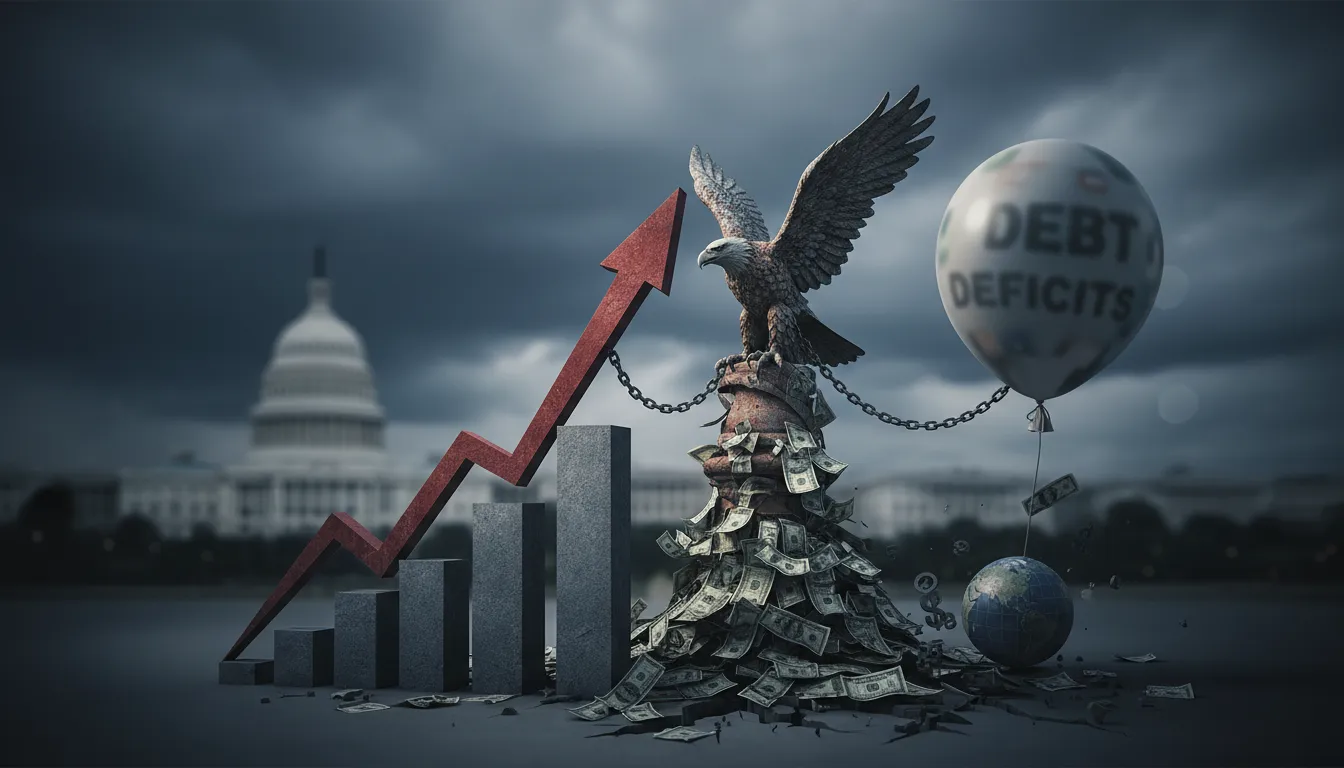
Behind the headline optimism lies a more alarming fiscal picture. The IMF projects federal deficits will remain at 7–8% of GDP in coming years — more than double the 3% target publicly championed by Treasury Secretary Scott Bessent. If left unaddressed, consolidated US government debt is on course to reach 140% of GDP by 2031.
The Fund did not mince words: "The upward path for the public debt-GDP ratio and increasing levels of short-term debt represent a growing stability risk to the US and global economy." The current account deficit, meanwhile, is expected to remain elevated at 3.5–4% of GDP — a gap Georgieva described simply as "too big."
The IMF's warning lands as the Trump administration pursues large tax cuts and spending reshuffles through Congress. Critics note that proposed extensions of the 2017 tax cuts, combined with new spending priorities, could widen the fiscal gap even further. The Fund called for a broad mix of measures to raise revenues and address structural imbalances in entitlement programmes such as Social Security and Medicare.
Tariffs: A Self-Inflicted Headwind
The IMF's review — covering the first year of Donald Trump's second presidency — also scrutinised the administration's sweeping tariff agenda. The Fund noted that wide-ranging import levies have "roiled supply chains and financial markets," adding that "uncertainty around trade policies could represent a larger-than-expected drag on activity."
Rather than endorsing unilateral tariffs, the IMF urged Washington to engage constructively with trading partners to "address concerns over unfair trade practices and agree on a coordinated reduction in trade restrictions." Tariffs justified on national security grounds, the Fund added, should be "applied narrowly" rather than broadly across entire trading blocs.
A Candid Exchange at the Top
IMF officials described meetings with Bessent and Federal Reserve Chair Jerome Powell as "very good and substantive." Notably, Bessent was said to have "underscored the value he places on frank, candid, and even-handed surveillance by the IMF" — a diplomatic signal that the administration, despite its confrontational trade posture, welcomes external scrutiny of its economic management.
The Fund also stressed that the Federal Reserve's policy credibility remains a "highly valuable asset" that must be protected through monetary policy independence — an implicit caution against political pressure on the central bank.
Global Stakes
The IMF's warning carries weight beyond Washington's budget debates. As the world's largest economy and the issuer of the global reserve currency, any abrupt US fiscal adjustment — or loss of investor confidence — could trigger what the Fund called "disorderly external rebalancing," with potentially severe knock-on effects for emerging markets and trade partners alike. For now, the US economy remains strong. But the clock on its fiscal credibility, the IMF suggests, is ticking louder than most policymakers acknowledge.