FIFA Backs Mexico for World Cup Despite Cartel Crisis
FIFA has pledged full confidence in Mexico's 2026 World Cup hosting role despite deadly cartel violence that has killed over 70 people since the killing of cartel boss El Mencho, raising urgent safety questions about matches scheduled in Guadalajara.
Four Months Out, a Crisis Tests the World Cup's Mexican Leg
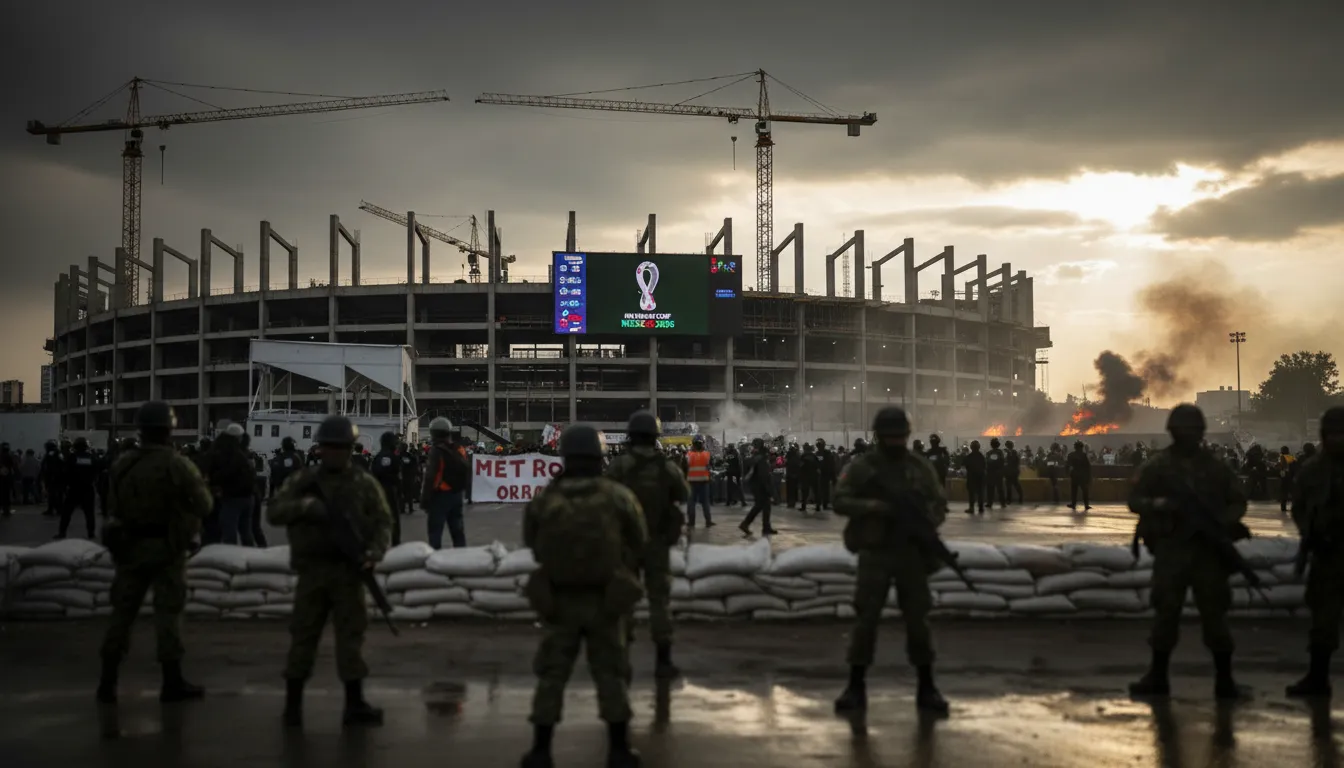
With the 2026 FIFA World Cup less than four months away, a sudden eruption of cartel violence has forced football's governing body to publicly defend its decision to stage thirteen matches in Mexico — including four in the violence-torn state of Jalisco.
The crisis began last Sunday when Mexican military forces killed Nemesio Rubén Oseguera Cervantes, known as El Mencho, the head of the Jalisco New Generation Cartel (CJNG), one of the world's most powerful criminal organisations. The killing triggered an immediate and devastating backlash: cartel gunmen burned vehicles, erected hundreds of roadblocks, and clashed with security forces across nearly a dozen states. At least 70 people have died in the ensuing violence.
FIFA and Mexico Hold the Line
FIFA President Gianni Infantino moved swiftly to calm international alarm. "We have complete confidence in Mexico, in its president, Claudia Sheinbaum, and in the authorities," Infantino said, adding dismissively that "like in every country in the world, things happen — we don't live on the moon."
Mexican President Claudia Sheinbaum matched that tone, promising "every guarantee" and declaring there was "no risk" for fans attending the tournament. She deployed 7,000 military personnel to Jalisco to restore order, with the regional governor adding a further 2,000 troops and pledging enhanced surveillance across the state.
FIFA officials did acknowledge, however, that playoff matches scheduled for Guadalajara in late March could theoretically be relocated if they could not be "swiftly satisfied that all participants and stakeholders will be safe" — though relocation remains a last resort given the logistical and commercial complexities involved.
Guadalajara: Ground Zero
The stakes are highest in Guadalajara. Estadio Akron — situated in the CJNG's traditional stronghold — is scheduled to host four World Cup group-stage matches in June, plus qualifying playoff events in late March. The opening game of the entire tournament is set for Mexico City on June 11, when co-host Mexico faces South Africa.
The economic prize is enormous. The World Cup is projected to generate $3 billion for the Mexican economy, giving the government every incentive to keep the schedule intact.
International Nerves
Not everyone is reassured. Jamaica's football federation president Michael Ricketts said the situation was "making me very nervous," while Portugal's federation confirmed it was "closely monitoring the delicate situation" ahead of a March 28 friendly in Mexico City. A joint statement from both federations later affirmed the match remained on schedule, though uncertainty lingers.
Scholars urge caution. Academic Vanda Felbab-Brown warned that CJNG leadership succession could generate prolonged internal fighting. "The cartel's breakup could make the situation highly unpredictable through June," she told PBS NewsHour.
Sport and Sovereignty on the Line
For Mexico, the World Cup is more than football — it is a rare global showcase of national capability. But the speed with which the killing of a single cartel boss paralysed vast swaths of the country has laid bare the fragility underlying that ambition. FIFA and the Mexican government are betting that stability returns before the world's biggest sporting event arrives in June. The world will be watching closely to see if that wager pays off.