Iran-US Nuclear Crisis: Carriers, Deadlines, Red Lines
Two US aircraft carriers are now within striking distance of Iran as Trump issues a 10–15 day ultimatum, while diplomatic talks in Geneva ended without a breakthrough and Tehran fortifies its nuclear sites.
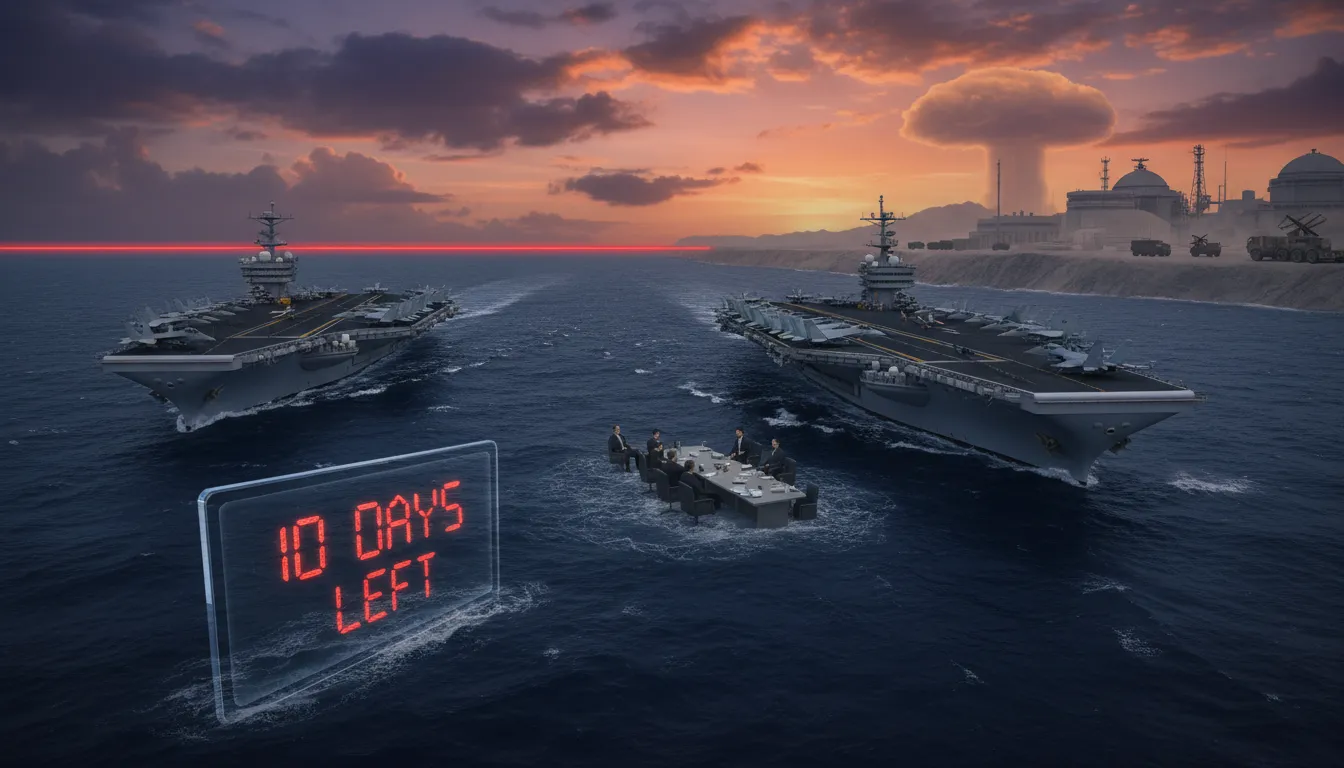
Two of the world's most powerful aircraft carriers are now positioned within striking distance of Iran. As diplomatic talks in Geneva collapsed without a concrete deal, the world is watching a crisis that could reshape the Middle East — and global security — in a matter of days.
An Armada Takes Shape
The USS Abraham Lincoln carrier strike group has been operating in the Arabian Sea off the coast of Oman since early February 2026, with satellite imagery confirming its position within range of Iranian territory. It was soon joined by the USS Gerald R. Ford — the world's largest aircraft carrier — dispatched from the United States on February 13, according to NBC News. Alongside the carriers, scores of advanced combat aircraft flooded the region: F-22 Raptors, F-35 Lightning IIs, F-16 Fighting Falcons, EA-18G Growlers, and airborne refueling tankers, as Defense News reported.
President Donald Trump framed the stakes bluntly, warning Iran it has "10 to 15 days at most" to agree to a nuclear deal — or face unspecified "bad things." Trump added he prefers diplomacy over military action, but the military posture signals otherwise.
Talks Without a Breakthrough
The latest round of indirect US-Iran negotiations was held in Geneva on February 17, mediated by Oman. Iranian Foreign Minister Abbas Araghchi called the three-and-a-half-hour session productive, saying both sides had reached "broad agreement on a set of guiding principles," according to Al Jazeera. But US Vice President JD Vance offered a cooler reading: Iran had shown "some progress" yet still refused to acknowledge Washington's core red lines, Radio Free Europe reported.
The gulf between the two sides remains wide. Washington demands Iran halt uranium enrichment entirely, curtail its ballistic missile program, and end financial support for regional proxy forces. Tehran, citing Supreme Leader Ali Khamenei's direct orders, refuses to negotiate its missile capabilities and insists discussions must be limited to the civilian nature of its nuclear program — a position fundamentally incompatible with US demands.
Tehran Fortifies, but Talks Continue
Even as diplomats meet, Iran is preparing for the worst. New satellite imagery reviewed by CNN shows Iran rapidly hardening key nuclear facilities with concrete and soil against potential airstrikes. The 7th of Tir Industrial Complex near Isfahan — linked to centrifuge production — has undergone significant reinforcement. Iran has also swiftly rebuilt its largest solid-propellant missile production facility in Shahrud and resumed reconstruction at the Imam Ali Missile Base in Khorramabad. Simultaneously, Iran announced joint naval drills with Russia in the Sea of Oman, a pointed signal of deterrence.
The Cost of Miscalculation
Analysts warn the risks of failure are enormous on both sides. The Atlantic Council has questioned whether a US military strike could achieve lasting results without sustained political and economic follow-through. Researchers at USC's Dornsife College and The Conversation caution that a breakdown in talks — or a strike — could trigger broader nuclear proliferation as neighboring states recalculate their own security needs. IAEA chief Rafael Grossi has separately warned that a nuclear-armed Iran could set off a regional chain reaction.
Domestically, Trump faces pressure both to appear decisive and to avoid an open-ended conflict. Regional actors, according to NPR, fear any war "is not going to be neat, not going to be short" — warning of refugee crises, regional destabilization, and potential civil unrest inside Iran itself.
A Narrowing Window
With US forces already in position, a ticking diplomatic clock, and both sides unwilling to abandon their core demands, the coming days may determine whether this standoff ends at a negotiating table or with the first strikes on Iranian soil. The margin for error has never been thinner.