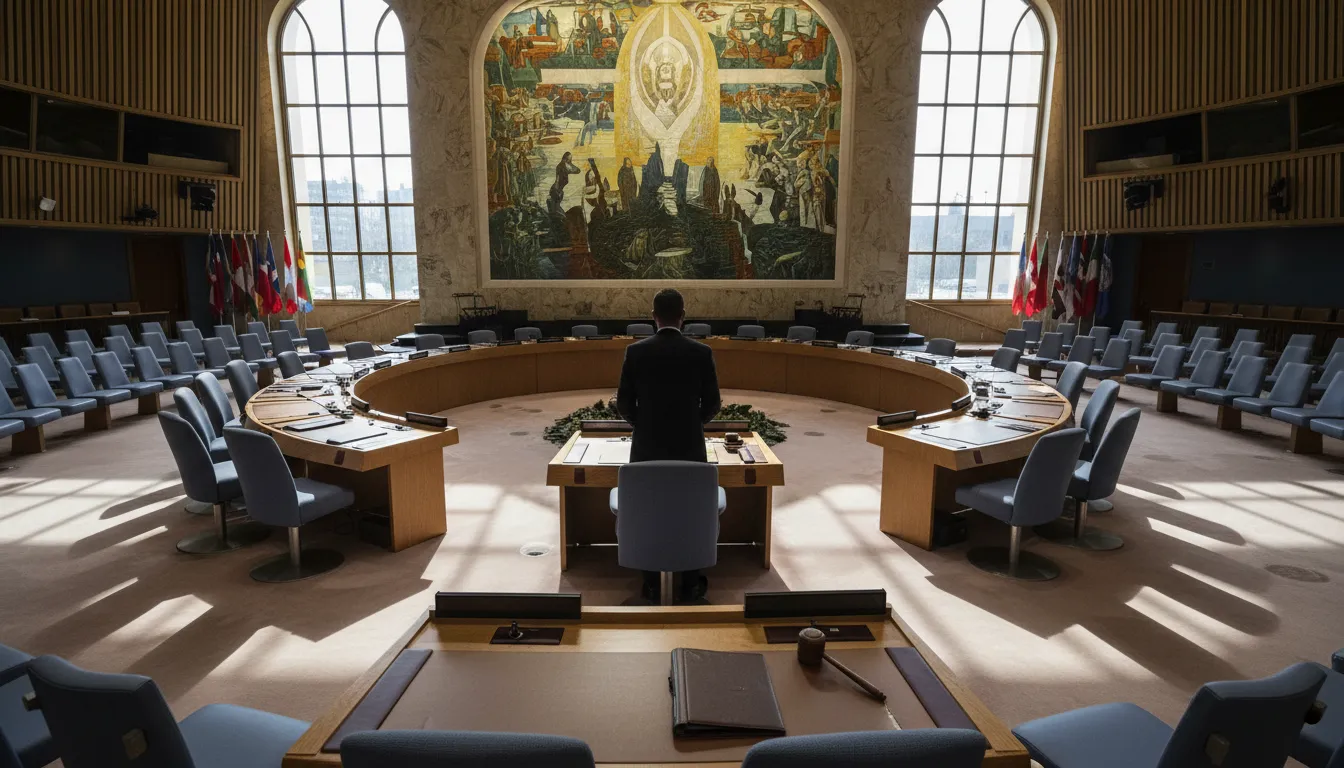
Macron at Île Longue: Towards a European Nuclear Shield
On March 2, 2026, Emmanuel Macron will deliver a historic speech from the Île Longue submarine base on French nuclear deterrence and its possible extension to Europe, against a backdrop of growing doubts about American guarantees to NATO.
An Anticipated Speech in a Context of Geopolitical Upheaval
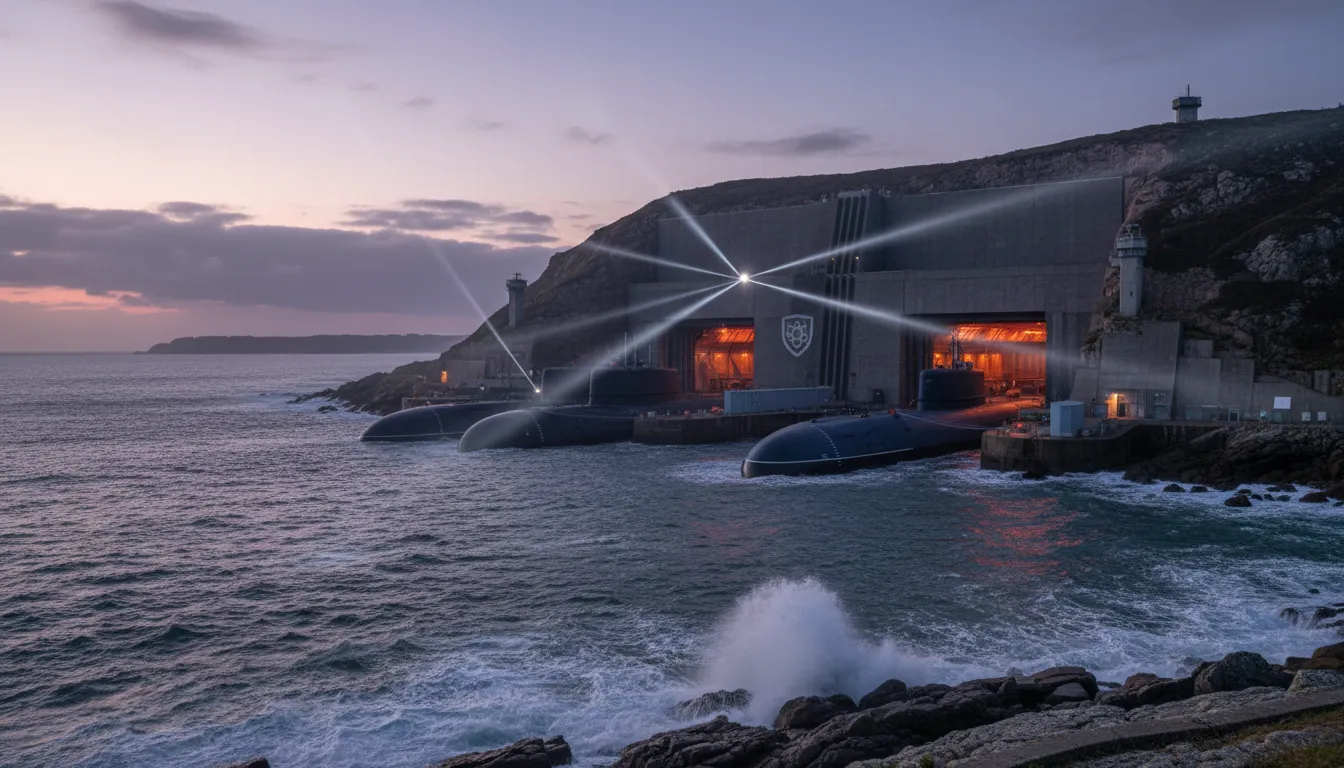
On March 2, 2026, Emmanuel Macron will speak from the Île Longue peninsula in Finistère, the strategic base for the French Navy's four nuclear-powered ballistic missile submarines (SSBNs). This first major presidential speech on nuclear deterrence since 2020 comes amid a profound questioning of the European security order, with "quite significant developments" announced by the Élysée Palace.
American Pressure and the Russian Threat as Catalysts
The speech takes on particular resonance in the face of repeated signals from the Trump administration calling into question the unconditional nature of American guarantees to NATO. Donald Trump himself has stated that Article 5 of the Atlantic Treaty could be "interpreted in several ways," plunging European capitals into uncertainty. At the same time, the war in Ukraine and Moscow's nuclear rhetoric have made the debate on the strategic autonomy of the Old Continent urgent.
The Paris-Berlin Axis: A Historic First
It was at the Munich Security Conference on February 13, 2026, that German Chancellor Friedrich Merz publicly confirmed that he had engaged in "confidential talks" with Macron on "European nuclear deterrence." Never before had a German leader so explicitly mentioned this subject. The French president described his vision as a way of "articulating the French national doctrine" with "special cooperation, joint exercises, and common security interests with certain key countries."
Berlin, however, has set a firm condition: any nuclear cooperation must "fall strictly within the framework of nuclear participation in NATO" and not create "different security zones in Europe." Merz also mentioned the possibility that German combat aircraft could, in the long term, carry French nuclear weapons—a prospect that remains very hypothetical for the time being.
Paris-London: Unprecedented Coordination in Thirty Years
Ahead of the speech, France and the United Kingdom have already taken a symbolic step. During Macron's state visit to London in July 2025, the two countries signed a declaration stating for the first time that their respective deterrent forces are "independent but can be coordinated." A nuclear oversight group, co-chaired by the Élysée Palace and the British Cabinet Office, has been established to structure this historic cooperation.
French Doctrine: Absolute Sovereignty, Strict Sufficiency
France maintains an arsenal of approximately 300 nuclear warheads, based on the principle of "strict sufficiency." Far from engaging in an arms race with the Russian and American arsenals—which each exceed 3,500 warheads—Paris insists on the defensive nature of its posture. Macron has specified that, whatever doctrinal developments may occur, "the final decision will always remain that of the French head of state."
A Decisive Issue for All of Francophone Europe
For Belgium, Switzerland, and Luxembourg, this speech represents a crucial step for their own security. The question of an extension, even implicit, of the French nuclear guarantee to European partners has considerable implications for the continental security architecture. As Washington expects Europeans to provide "the majority of NATO's conventional defense capabilities" by 2027, French nuclear deterrence is now an unavoidable pillar of the European strategic debate—and the March 2 speech could mark its true beginning.