Merz in Beijing: DAX CEOs and the Economic Reset with China
German Chancellor Friedrich Merz is traveling to China with a high-ranking delegation of DAX CEOs to realign cooled relations and solidify new strategic trade partnerships in light of US tariffs.
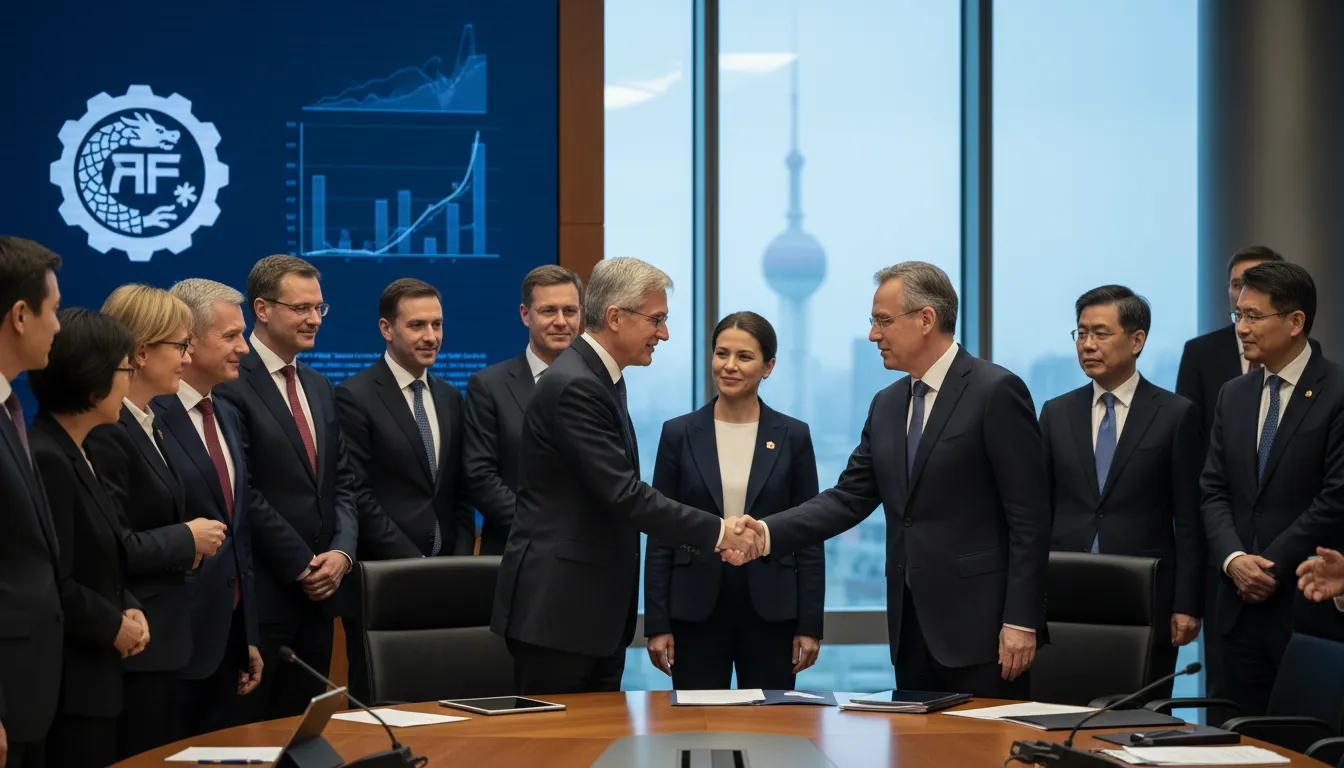
German Chancellor Friedrich Merz embarked on his first state visit to the People's Republic of China on Tuesday – and he is not alone. A high-ranking business delegation of around 30 leading company heads is accompanying him on the two-day trip to Beijing and Hangzhou (February 25–26). It is the clearest attempt in years to reshape German-Chinese relations, which had become increasingly strained under the traffic light coalition.
Prominent Entourage from the DAX Executive Suite
The list of companies reads like a who's who of German industry: Oliver Blume (Volkswagen), Oliver Zipse (BMW), Ola Källenius (Mercedes-Benz), Roland Busch (Siemens), Bill Anderson (Bayer), Björn Gulden (Adidas), Bettina Orlopp (Commerzbank), as well as representatives from DHL, Henkel, and Airbus's civil aviation division are all present. According to reports, business interest in participating exceeded the number of available places – a signal of how important the China business remains for German industry.
Program: Beijing and Robotics in Hangzhou
In the capital, Premier Li Qiang will receive the Chancellor with military honors. In addition to a joint session of the German-Chinese Economic Advisory Committee, a one-on-one meeting with President Xi Jinping is on the agenda – the diplomatic centerpiece of the trip. The delegation will then travel to Hangzhou, where Merz will visit the robotics company Unitree and a Siemens Energy plant.
China is Again Germany's Largest Trading Partner
The economic backdrop of the trip is clear: China surpassed the US as Germany's most important trading partner in 2025. Bilateral trade reached 251.8 billion euros – compared to 240.5 billion euros with the United States. For domestic industry, especially the automotive sector, China remains the indispensable key market despite growing competition from Chinese electric car manufacturers.
US Tariffs Force Diversification
The aggressive tariff policy of the US government has forced Germany to reassess its trade relations. "Foreign policy is also foreign economic policy today," Merz emphasized before his departure. At the same time, he made it clear that Europe is "quite capable of defending itself" should the tariffs continue to escalate. The message: Germany does not want to have to permanently choose between Washington and Beijing.
Strategic Partnership with a Critical Eye
Merz has clearly outlined the balancing act: On the one hand, he is striving for a strategic partnership with the world's second-largest economy. On the other hand, fair market access, protection against unwanted technology transfer, and dependence on rare earths are on the agenda. Human rights issues are also to be addressed. However, critics warn that the economic self-interests of the accompanying corporate executives could push the political demands into the background.
Whether Merz strikes the right tone will only become clear in the months after the trip. Germany urgently needs growth impulses – and China remains an indispensable partner in this. The real challenge lies not only in the meetings in Beijing, but in credibly representing the claim to strategic independence.