Merz Sides With Trump, Urges Spain to Meet NATO Spending Goals
During a meeting between German Chancellor Friedrich Merz and US President Donald Trump at the White House, Spain became an unexpected point of contention. Merz echoed Trump's criticism of Madrid's insufficient NATO spending, triggering a sharp diplomatic conflict with the EU partner.
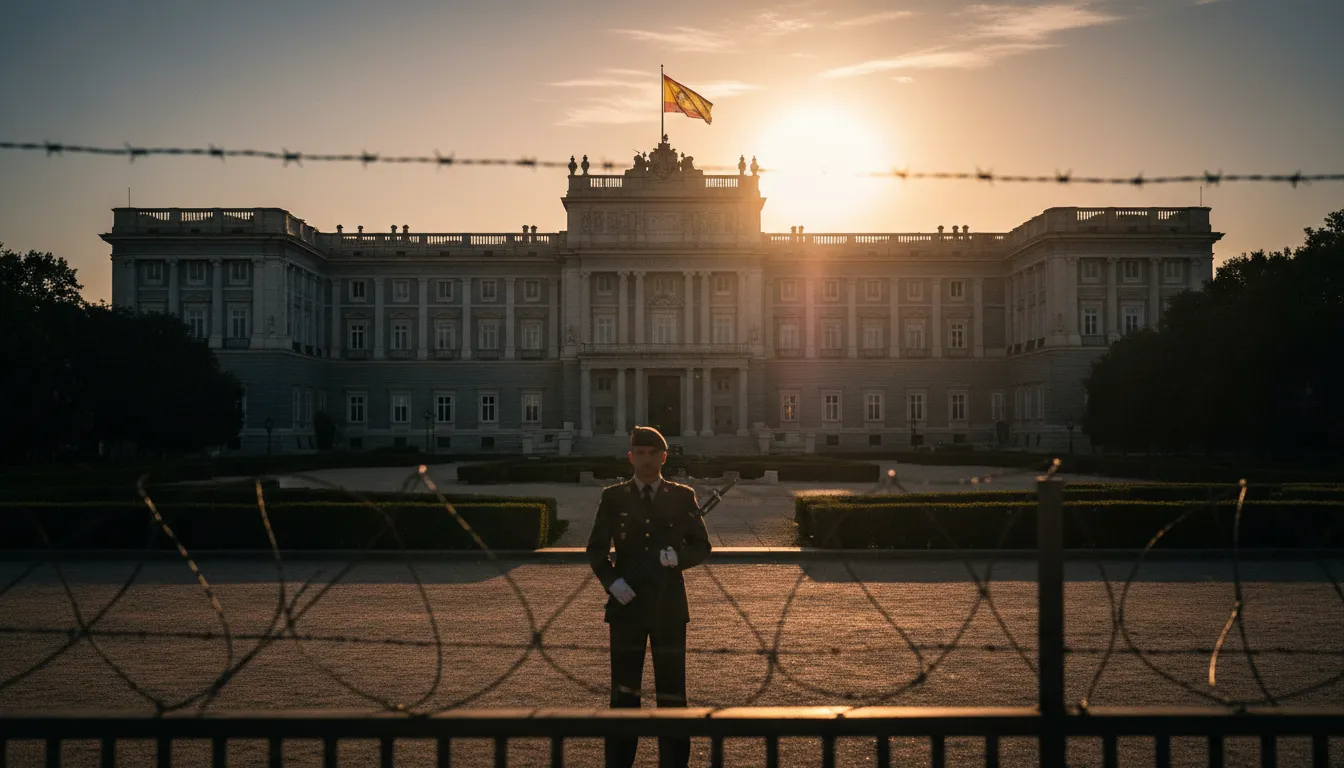
Merz behind Trump – but only on NATO spending
During Chancellor Friedrich Merz's visit to the White House, Spain became an unexpected point of contention between two EU partners. US President Donald Trump described the Spanish government as "terrible" and openly threatened a trade war, partly due to Madrid's refusal to increase NATO defense spending to five percent of gross domestic product, and partly because Spain had refused the US the use of its military bases in Rota and Morón for attacks on Iran.
Merz echoed Trump's criticism – explicitly only on the issue of defense spending. Spain is the only NATO member that refuses to accept the jointly agreed spending targets, the Chancellor said. "We are trying to convince Spain to comply with the NATO targets," Merz said at the meeting. It concerns 3.5 percent of GDP for the military and a further 1.5 percent for military infrastructure – together the new NATO target of five percent, which the alliance aims to achieve by 2035. Spain has not yet reached even the original two percent target of NATO and thus has the lowest defense spending of all alliance members.
Madrid Reacts Angrily – Accusation of Lack of Solidarity
The reaction from Spain was not long in coming. Foreign Minister José Manuel Albares said in TV interviews that he was openly surprised that Merz had not stood up for an EU partner in the Oval Office. "If you share a currency, a common trade policy and a common market, you expect the same solidarity that Spain showed Denmark in the Greenland threats," Albares said. He could not imagine that former Chancellors such as Angela Merkel or Olaf Scholz would have remained silent in a comparable situation.
The Handelsblatt described the public dispute between two EU states in the tense geopolitical situation as a "damning indictment" of the alliance's cohesion. Diplomatic efforts by Berlin to contain the conflict were initially unsuccessful: according to reports, Merz was unable to reach Prime Minister Pedro Sánchez by telephone. Spain's Deputy Prime Minister Yolanda Díaz sharply attacked Merz and warned: "We don't need any Trump vassals."
Germany as the New Pace-Setter for European Defense
Merz's positioning comes at a time when Germany is fundamentally redefining its defense role. The 2026 federal budget provides for defense spending of around 108.2 billion euros – a historic record. Of this, 82.7 billion comes from the regular budget and a further 25.5 billion from the Bundeswehr's special fund. By 2029, spending is expected to rise to 153 billion euros, which would mean that Germany would meet the new NATO target of 3.5 percent of GDP ahead of schedule.
This is supplemented by a 500 billion euro special fund for infrastructure, which can be accessed over twelve years. Merz is thus presenting Germany as a reliable anchor of European security – and is accepting tensions with southern European partners in return. The Bundeswehr is to be expanded into the strongest conventional army in Europe.
European Cohesion Put to the Test
Critics warn that Germany's new course is jeopardizing intra-European solidarity. Precisely at a time when the EU needs a united front towards Washington, Berlin and Madrid are presenting a picture of deep discord. The question of whether an alliance partner should be pressured to increase defense spending if it simultaneously takes an independent, peace-oriented position on other foreign policy issues – such as its stance on the Iran war – remains politically highly controversial.
One thing is certain: Under Merz, Germany has abandoned its decades-long restraint. The price for this is political friction within its own alliance – and the question of whether Berlin will be perceived in the future as a leading power or as Washington's extended arm in Europe.


