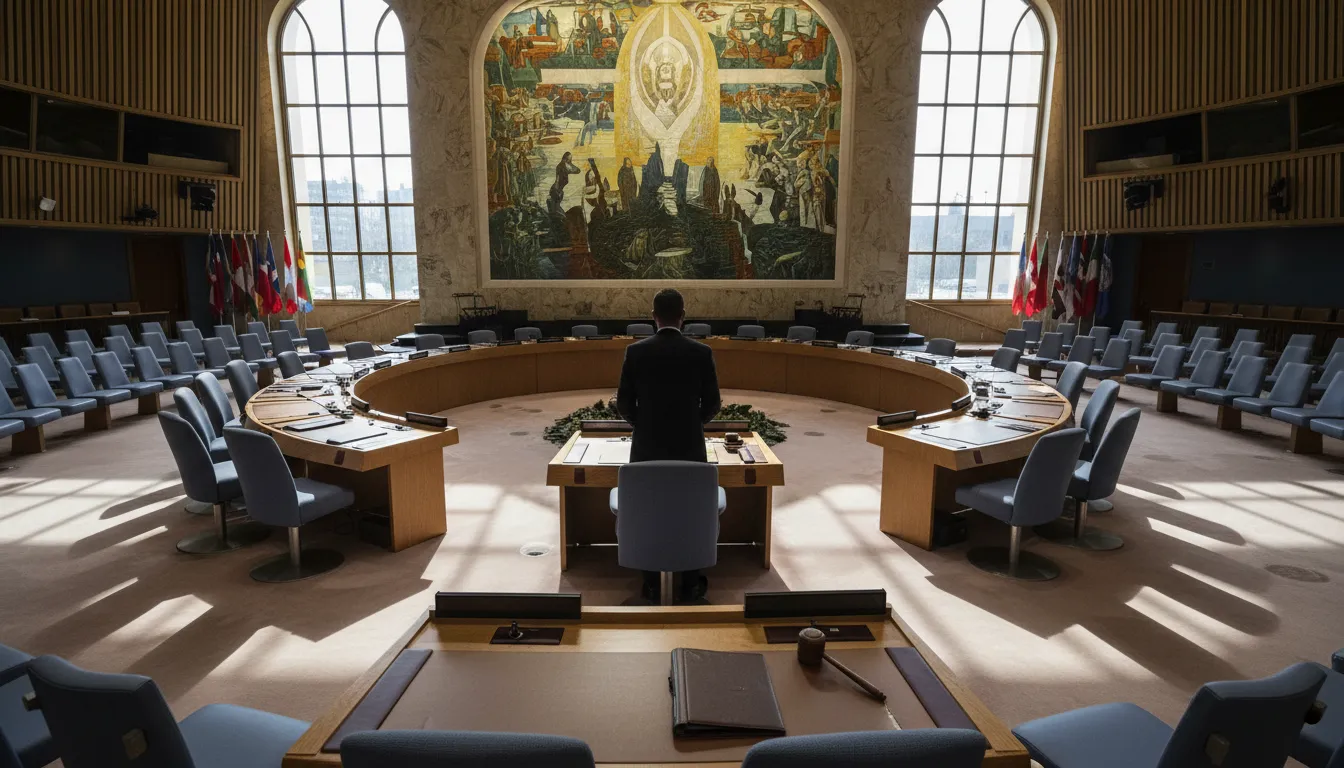
Middle East Air Crisis Grounds Millions of Travelers
The US-Israeli strikes on Iran have triggered the most severe aviation crisis since the pandemic, with over 11,000 flights cancelled, the Gulf's three mega-hubs shuttered, and hundreds of thousands of passengers stranded worldwide.
A Sky Suddenly Emptied
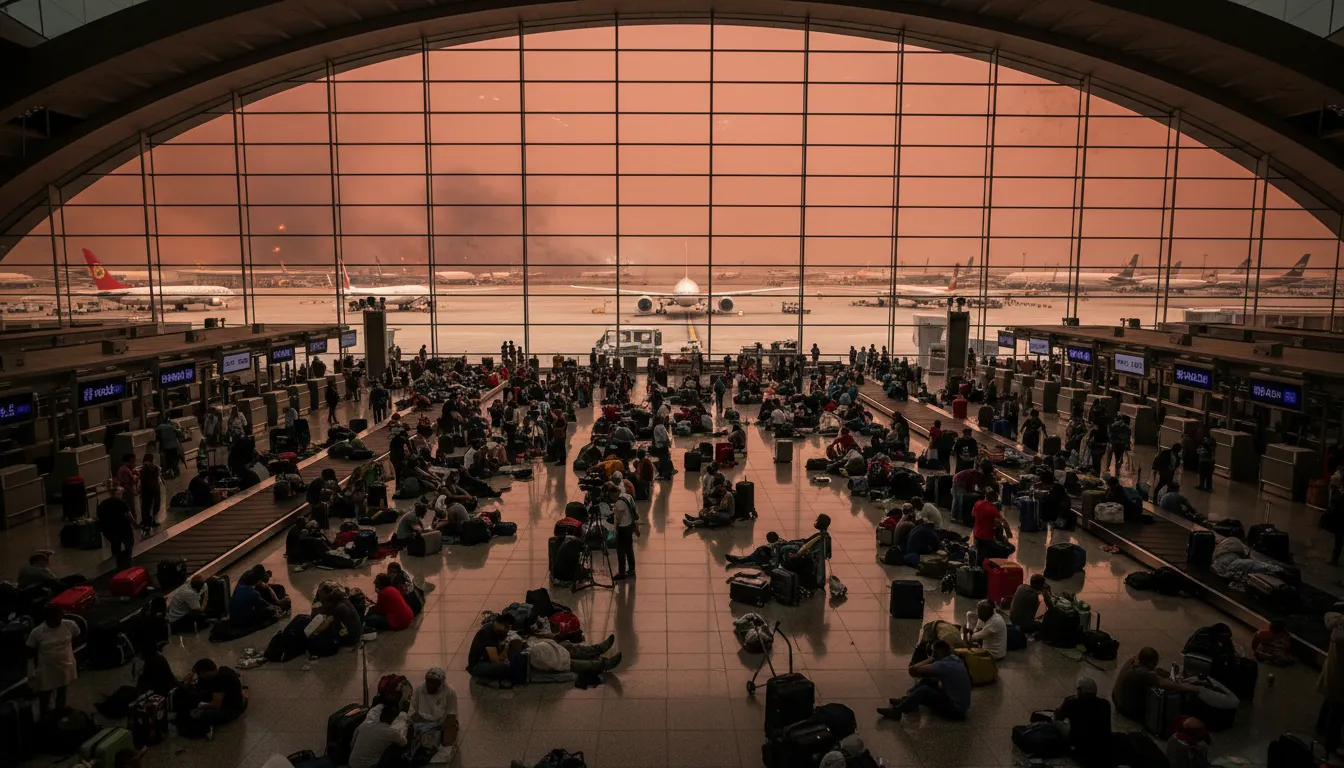
When US and Israeli forces launched strikes on Iran on February 28, the reverberations did not stop at national borders. Within hours, seven nations slammed their airspace shut, and three of the world's busiest aviation hubs — Dubai International (DXB), Hamad International in Doha (DOH), and Abu Dhabi International (AUH) — went dark. The result has been the most acute global aviation crisis since the COVID-19 pandemic.
According to aviation data firm Cirium, more than 11,000 flights in and out of the region have been cancelled since the conflict began, with over 3,400 cancelled on a single day alone. A further wave of delays pushed total disrupted flights past 19,000. Emirates, one of the world's largest carriers by passengers, suspended the vast majority of its operations; Qatar Airways, Etihad, flydubai, and dozens of foreign carriers followed.
The Scale of the Disruption
The three Gulf mega-hubs ordinarily process approximately 90,000 connecting passengers every day. Their closure has not merely stranded travelers heading to or from the Gulf — it has severed one of the planet's principal east-west air corridors, the bridge between Europe and Asia that runs over the Arabian Peninsula.
India bore an outsized share of the immediate pain. On March 1 alone, India saw 350 flights cancelled, with Mumbai Airport recording 57 cancellations in a single day, according to AirHelp data. Air China halted its Beijing–Dubai and Chongqing–Dubai routes. Australia's Virgin Australia cancelled six Doha-bound flights. Air Canada suspended all Dubai and Tel Aviv services through at least March 23. Delta Air Lines grounded its New York–Tel Aviv route until March 8.
Governments scrambled to account for their nationals. Canada acknowledged more than 85,000 registered citizens in the broader region; UK officials prepared evacuation scenarios for more than 100,000 British nationals. The UAE committed to covering hotel and meal costs for some 20,000 stranded passengers.
The Financial Toll on Airlines
Beyond the human disruption, the financial fallout is mounting rapidly. Airlines rerouting flights around the closed Tehran Flight Information Region — flying over Saudi Arabia instead — face an additional $6,000 in operating costs per flight hour, according to industry analysts cited by Fortune. These longer routes consume more fuel and stretch already strained crew rosters.
Industry analyst Henry Harteveldt warned that "ticket prices could quickly start to increase if the conflict lingers", as carriers pass elevated fuel and operational costs on to passengers. War-risk insurance premiums have also surged for flights anywhere near the affected airspace.
Paul Charles, a leading aviation consultant, described the situation as a "nightmare scenario" for airline logistics: aircraft and crews are scattered across the wrong continents, creating cascading knock-on disruptions far beyond the conflict zone itself.
Tentative Recovery Begins
By Monday evening, Dubai Airport authorities authorized a limited number of flights to resume, and Emirates cautiously restarted select routes. Etihad Airways, however, kept its commercial fleet grounded until at least Wednesday, while permitting some cargo and repatriation flights. Al Jazeera reported that the UAE was covering passenger costs as officials tried to manage the backlog.
Analysts expect 7 to 14 days before even a partial return to normal schedules, with full restoration of the pre-conflict route network likely taking more than a month — assuming the fighting de-escalates. A previous US-Israeli operation against Iran in 2025 lasted 12 days, offering a grim benchmark.
A Hub Model Under Pressure
Beyond the immediate chaos, the crisis has raised fundamental questions about the Gulf hub model. For two decades, Dubai, Doha, and Abu Dhabi built their prosperity on being indispensable waypoints between East and West. Aviation analyst Tony Stanton warned that prolonged conflict could cause a lasting "reset" of route maps, with carriers and passengers migrating to alternative hubs perceived as lower-risk — including Istanbul, Mumbai, and Singapore.
For now, hundreds of thousands of stranded passengers remain the most visible cost — waiting at gates from Bali to London for a sky that has, for the moment, closed above the Middle East.