China Solar Outpaces Wind in Historic Energy Shift
For the first time ever, China generated more electricity from solar panels than from wind turbines in 2025, marking a pivotal moment in the global clean energy transition.
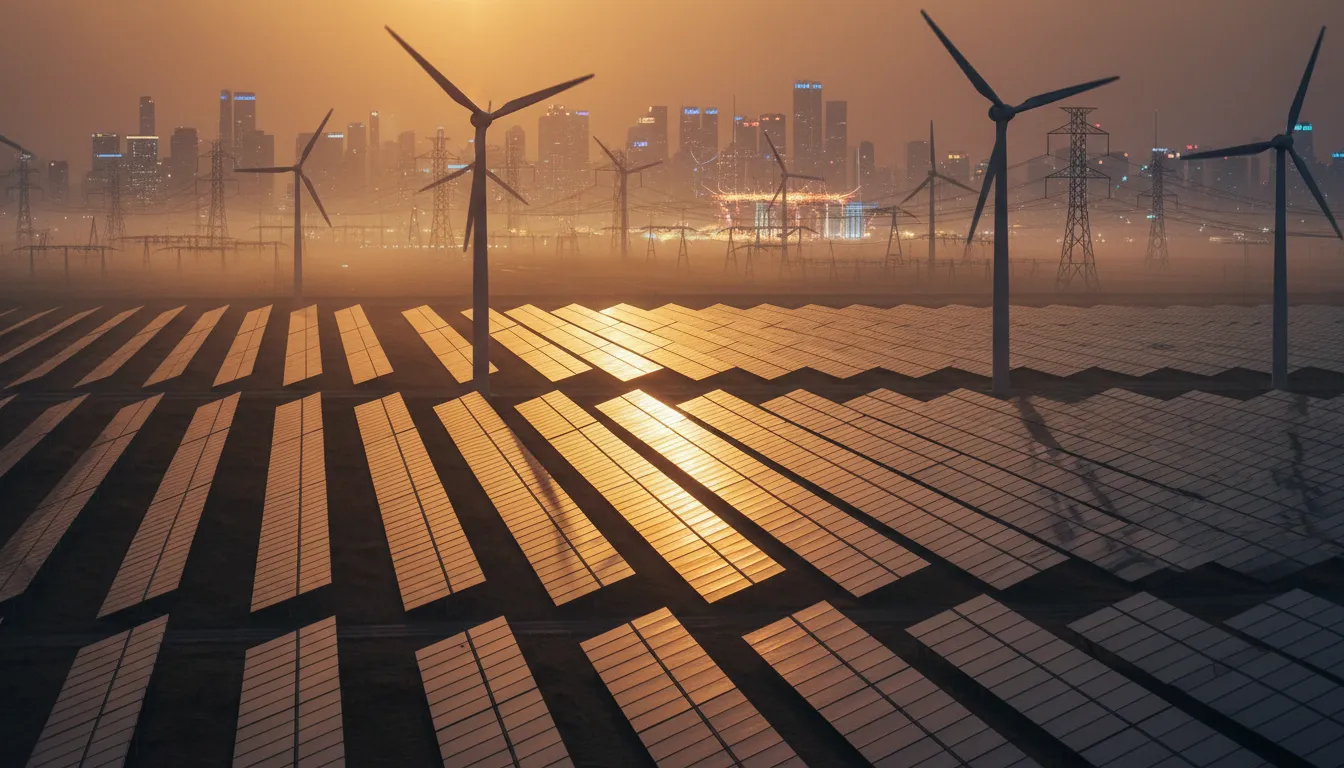
A Historic Turning Point
China has crossed a milestone that seemed unthinkable just a decade ago: for the first time in history, solar panels generated more electricity than wind turbines across the country in 2025. Reported by Bloomberg on February 28, the data reshapes how the world understands China's energy revolution — and what it means for the global climate fight.
The Numbers Behind the Shift
China produced 1.17 million gigawatt-hours (GWh) of electricity from solar power in 2025, a stunning 40% jump from the previous year, according to official government data. Wind generation, meanwhile, rose a more modest 13% to reach 1.13 million GWh — enough to remain a powerhouse, but no longer China's leading source of clean electricity.
Together, solar and wind now account for 22% of China's total electricity output — and their combined installed capacity of 1.84 terawatts has officially surpassed thermal power (coal, gas, and oil) for the first time. China also smashed its own 2030 climate target for wind and solar capacity, reaching 1,200 gigawatts six years ahead of schedule.
Why Solar Overtook Wind Only Now
The reversal raises an obvious question: if China has more solar panels than wind turbines by capacity for years, why did generation only flip now? The answer lies in physics. Wind turbines generate power for more hours per day than solar panels, which only produce electricity in daylight. It took a 40% surge in solar output — driven by an explosion in cheap panel installations — to finally tip the balance.
In 2025 alone, China added more than 430 gigawatts of new wind and solar capacity — roughly equivalent to 17,000 wind turbines and 500 million solar panels, according to Carbon Credits. That figure is approximately six to seven times larger than total US utility-scale renewable additions for the same year.
Global Climate Implications
The consequences stretch well beyond China's borders. Analysis by Carbon Brief shows that record solar growth helped cut China's CO2 emissions by 1% year-on-year in the first half of 2025 — even as overall energy demand continued to rise. China's greenhouse gas output has now been essentially flat or falling for over 21 consecutive months, raising serious hopes that the world's largest emitter may have already reached peak emissions, years before its official 2030 target.
China also accounts for 44% of the world's operating utility-scale solar and wind capacity — more than the combined total of the European Union, United States, and India combined.
The Challenge Ahead: Grids and Storage
The surge in solar creates a new problem: an oversupply of electricity during daylight hours. Analysts warn that major investment is needed in power transmission lines and energy storage to prevent electricity going to waste. Most equipment manufacturers are already struggling with losses from overcapacity and collapsing prices, a sign that the market is growing faster than the infrastructure to support it.
China's 15th Five-Year Plan, expected to be formalised in early 2026, is anticipated to set ambitious new targets for grid upgrades and storage — the next frontier in the country's energy transformation.
A Model — or a Warning?
For the rest of the world, China's solar milestone is both inspiring and sobering. The speed of the transition demonstrates what state-backed industrial policy can achieve. But it also underscores the gap between ambition and infrastructure readiness — a challenge that every country scaling up renewables will eventually face.