Milano-Cortina 2026: Sport Shines Amid Political Storm
The Milano-Cortina 2026 Winter Paralympics press forward through four days of competition, with Oksana Masters claiming her 20th Paralympic medal in Para biathlon and Austria's Veronika Aigner conquering the alpine downhill — all against the backdrop of a historic diplomatic boycott over Russia and Belarus competing under national flags.
Champions on the Snow, Tension in the Stands
The Milano-Cortina 2026 Winter Paralympic Games have delivered some of the most compelling athletic performances in recent Paralympic history — yet the competitions have been inseparable from a charged political atmosphere that has followed the Games since before the opening ceremony on March 6. Through four days of competition, the world's best Para athletes are proving that sport endures even when diplomacy falters.
Oksana Masters Makes History in Biathlon
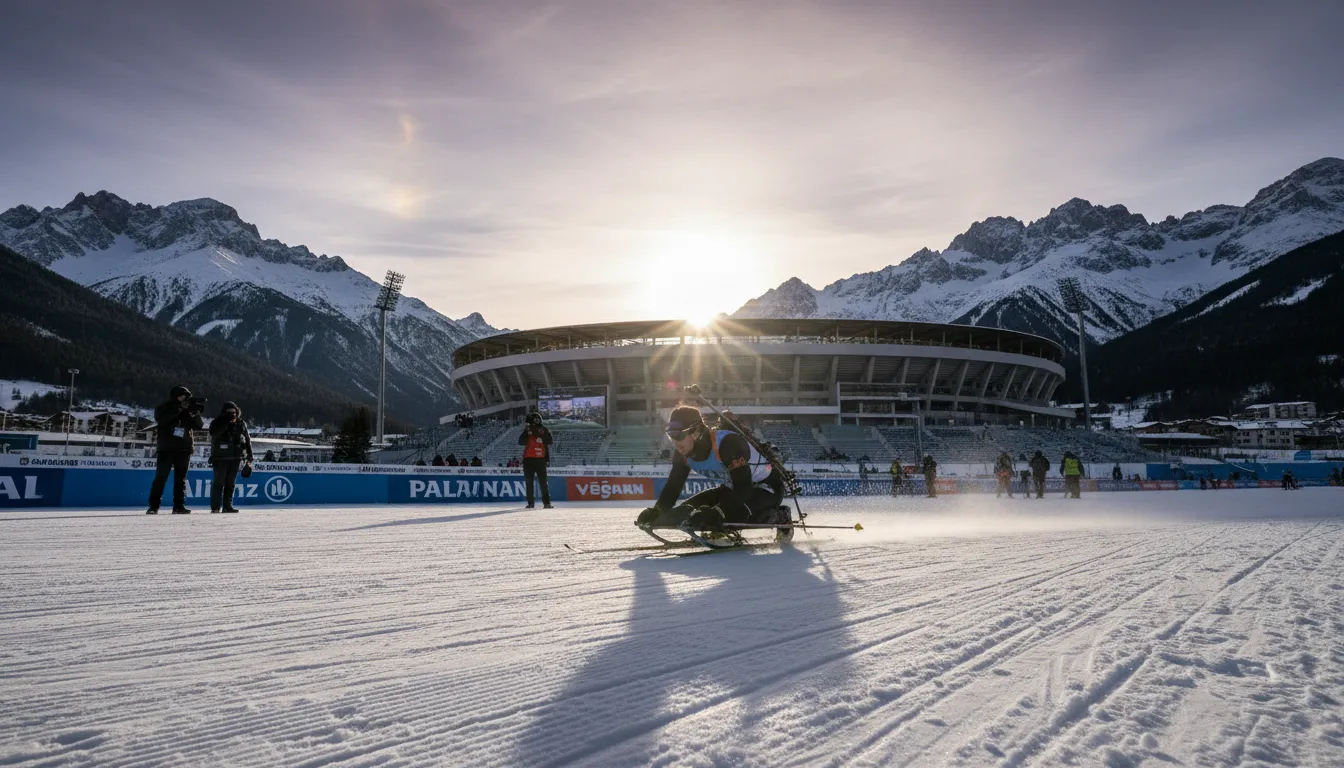
No performance has captured global attention quite like that of Oksana Masters, the American Para biathlete who claimed gold in the women's sitting sprint with a time of 21:21.3, finishing a commanding 16 seconds ahead of her U.S. teammate Kendall Gretsch. The victory marked Masters' 20th Paralympic medal and her 10th gold — a milestone that left even the champion in disbelief.
"My emotions are just pure shock," Masters told reporters after the race. Both she and Gretsch achieved a clean sweep of targets — 10 from 10 shots — but it was Masters' blistering pace on the snow that sealed the result. Germany's Anja Wicker claimed bronze, earning her fourth Paralympic medal in a career spanning 12 years.
Austria's Aigner Family Dominates the Slopes
On the alpine slopes of Cortina d'Ampezzo, Austrian skier Veronika Aigner took gold in the women's vision-impaired downhill, crossing the finish line in 1:22.55 alongside guide Lilly Sammer — stepping in after Aigner's regular guide suffered a knee injury just weeks before the Games. The victory was made sweeter by a family double: her brother Johannes Aigner also topped the podium in the men's event, making it a historic day for what Austrian media are calling "the family that skis and sings together."
Aigner, who had won the Overall Big Crystal Globe in the 2025/26 FIS Para Alpine World Cup season, was considered a pre-race favourite. Her gold confirmed her status as the dominant force in women's visually-impaired alpine racing.
Canada Joins the Gold Rush
As the Games moved into their fourth day, Natalie Wilkie of Canada claimed her country's first gold medal of the Milano-Cortina Games, winning the women's standing 12.5-kilometre biathlon to add to a growing international medal table that already features strong performances from the United States, Austria, Germany, and Switzerland.
The Shadow of Boycott
The athletic achievements have unfolded against a deeply controversial backdrop. Russia and Belarus were permitted by the International Paralympic Committee (IPC) to compete under their national flags — marking their return to national representation for the first time since 2014. The decision sparked immediate backlash: 16 countries and the European Union boycotted the opening ceremony, including Ukraine, the Czech Republic, Poland, France, Finland, and the Baltic states.
When the Russian delegation marched during the opening parade in Milan, audible boos echoed through the crowd. Critics argue the IPC's decision effectively normalises Russia's presence on the world stage while its war in Ukraine continues. Supporters of the decision contend that individual Para athletes — many of whom have no connection to the conflict — should not be denied the opportunity to compete.
"This is about the athletes, not the flags," IPC President Andrew Parsons said ahead of the Games, defending the organisation's position. Ukrainian athletes and officials remain deeply opposed to the arrangement.
Sport Continues
Despite the tensions, competition has proceeded without major incident inside the venues. With the Games running until March 15 across venues in Milan, Cortina d'Ampezzo, Livigno, and Tesero, athletes from dozens of nations are still competing for glory. The sporting achievements — Masters' milestone, the Aigner siblings' family triumph, Wilkie's Canadian gold — are drawing global audiences who find themselves watching both an athletic spectacle and a live test of how sport navigates geopolitics.