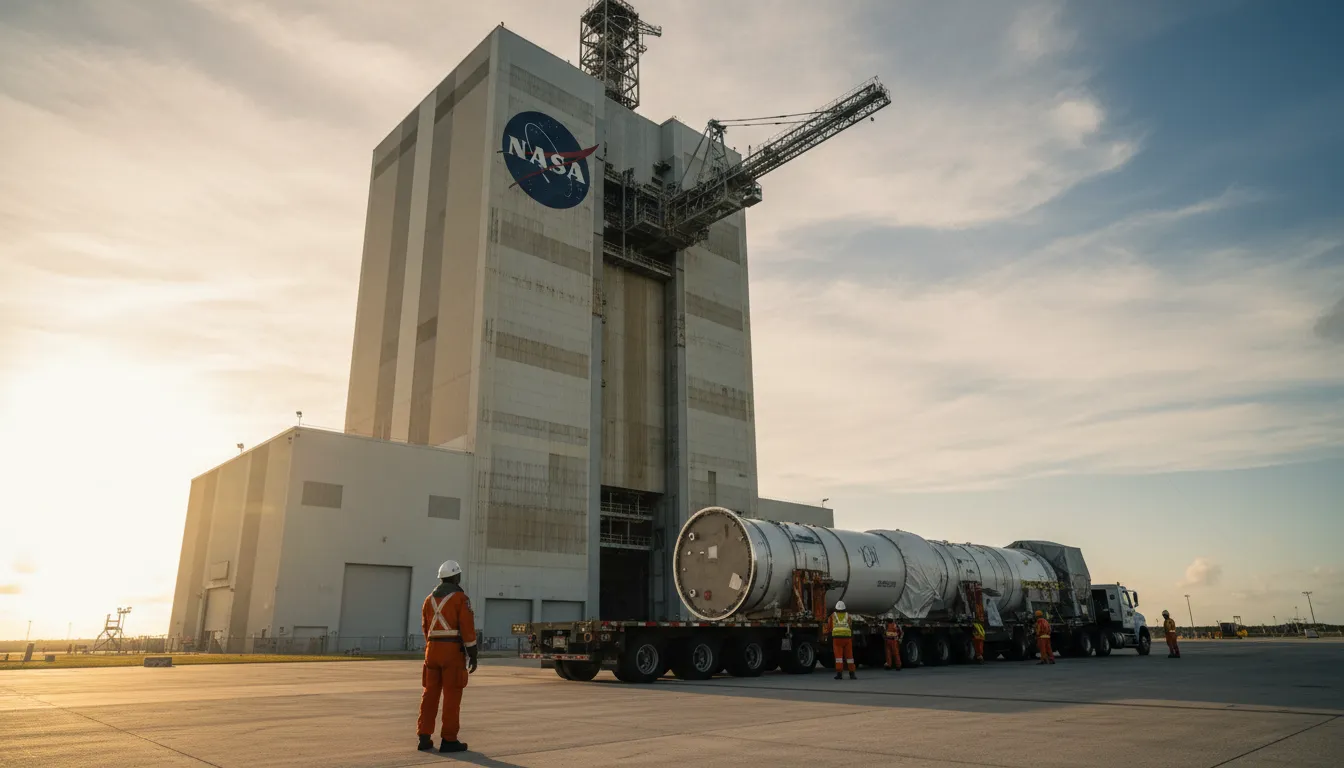
NASA Targets March 6 for First Crewed Moon Flyby in 50 Years
NASA has confirmed March 6, 2026 as the earliest launch date for Artemis II, the first crewed mission beyond Earth orbit since Apollo 17 in 1972, following a successful fueling rehearsal of the SLS rocket on February 19.
A Historic Launch Window Opens
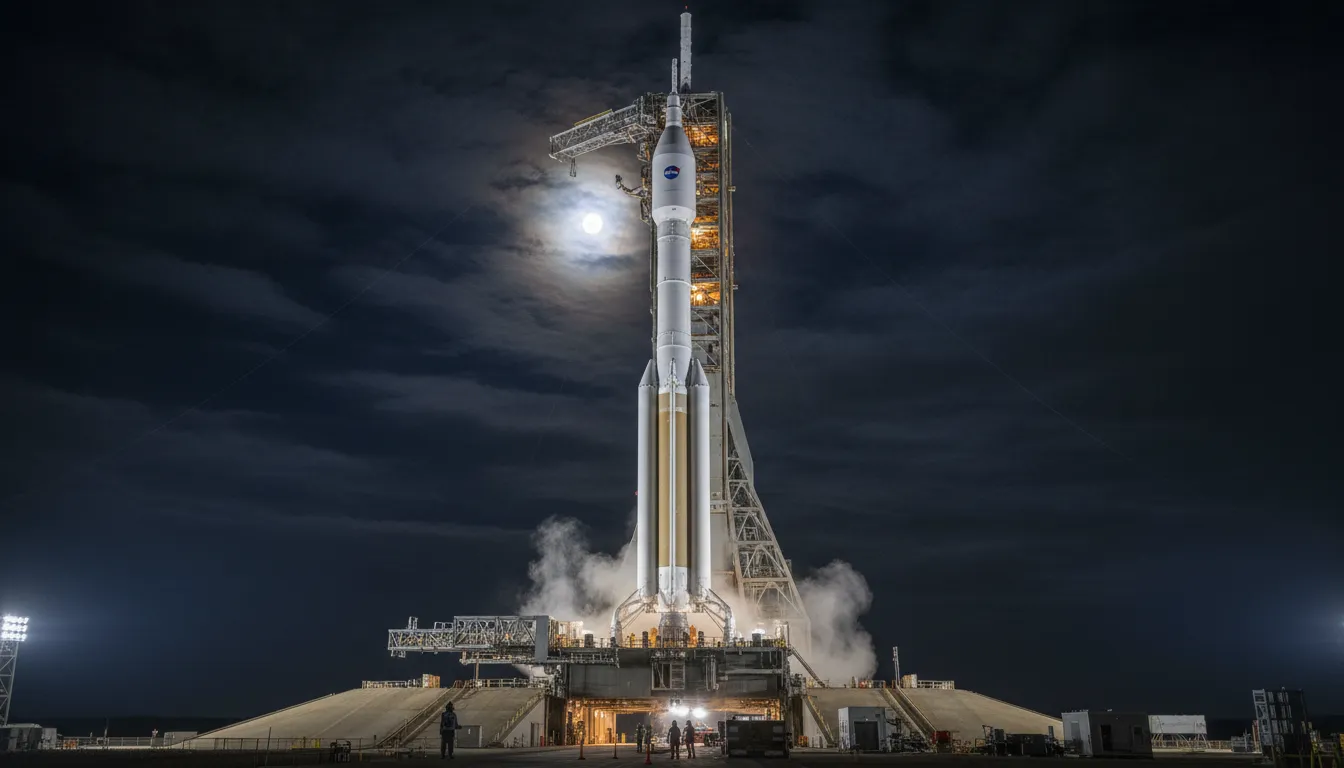
NASA has set March 6, 2026 as the earliest possible launch date for Artemis II, the first mission to carry humans around the Moon in more than half a century. The announcement came after the agency's Space Launch System (SLS) rocket successfully completed its second wet dress rehearsal at Kennedy Space Center in Florida on February 19 — a critical milestone that engineers needed to clear before committing to a launch window.
During the rehearsal, teams loaded over 700,000 gallons of cryogenic liquid propellant into the rocket's tanks, conducted two full runs of the terminal countdown, and demonstrated procedures for closing Orion's crew hatches. NASA reported minimal hydrogen leakage, well within safety limits. The countdown ran to T-29 seconds before concluding as planned. "This is really getting real," one mission official noted following the test's completion.
The Crew: Four Astronauts, Three Historic Firsts
Artemis II will carry four astronauts on a 10-day free-return trajectory looping around the Moon and back to Earth. Commander Reid Wiseman will lead the mission, joined by Pilot Victor Glover and Mission Specialist Christina Koch — both from NASA — and Mission Specialist Jeremy Hansen of the Canadian Space Agency.
The mission carries profound symbolic weight alongside its scientific significance. Glover will become the first person of color to travel beyond Earth orbit. Koch will be the first woman ever to leave low Earth orbit. And Hansen will be the first non-American astronaut to journey to the vicinity of the Moon. Together, they mark a dramatic broadening of who gets to represent humanity in deep space.
Why This Mission Matters
No human has traveled beyond Earth orbit since the crew of Apollo 17 departed the lunar surface in December 1972. Artemis II does not land on the Moon — that milestone is reserved for Artemis III — but it tests every system that will be needed for a landing: the Orion spacecraft's life support, communication, and re-entry capabilities under real deep-space conditions.
At the mission's farthest point, the crew will be roughly 4,600 miles beyond the far side of the Moon, approximately 230,000 miles from Earth — farther than any human has ventured since the Apollo era. The data gathered will directly shape planning for subsequent crewed lunar landing missions.
The path to March 6 was not without setbacks. In late 2024, NASA delayed the mission from an earlier February window after engineering investigations uncovered issues with the spacecraft's life support system and heat shield. A first wet dress rehearsal in early February 2026 surfaced minor anomalies, prompting a second attempt — the one that succeeded on February 19. The crew entered pre-launch quarantine on February 20, signaling that mission teams are confident in the hardware.
A Stepping Stone to the Moon and Beyond
Artemis II is the cornerstone of NASA's broader strategy to establish a sustained human presence near and on the Moon before eventually sending astronauts to Mars. Its success will validate the SLS and Orion stack as a reliable deep-space transportation system, clear the way for Artemis III's planned lunar landing, and — in partnership with the Canadian Space Agency — strengthen the international alliances that underpin America's space exploration agenda.
For a generation that has known human spaceflight only within the confines of low Earth orbit, March 6 represents something more elemental: the moment humanity reaches for the Moon again.