NASA's Artemis II Moon Mission: Launch Delayed to March 2026 After Hydrogen Leak
NASA has delayed the Artemis II crewed lunar flyby mission to March 6, 2026, after a liquid hydrogen leak during wet dress rehearsal. The 10-day mission will carry four astronauts including the first woman and first person of color to travel beyond E
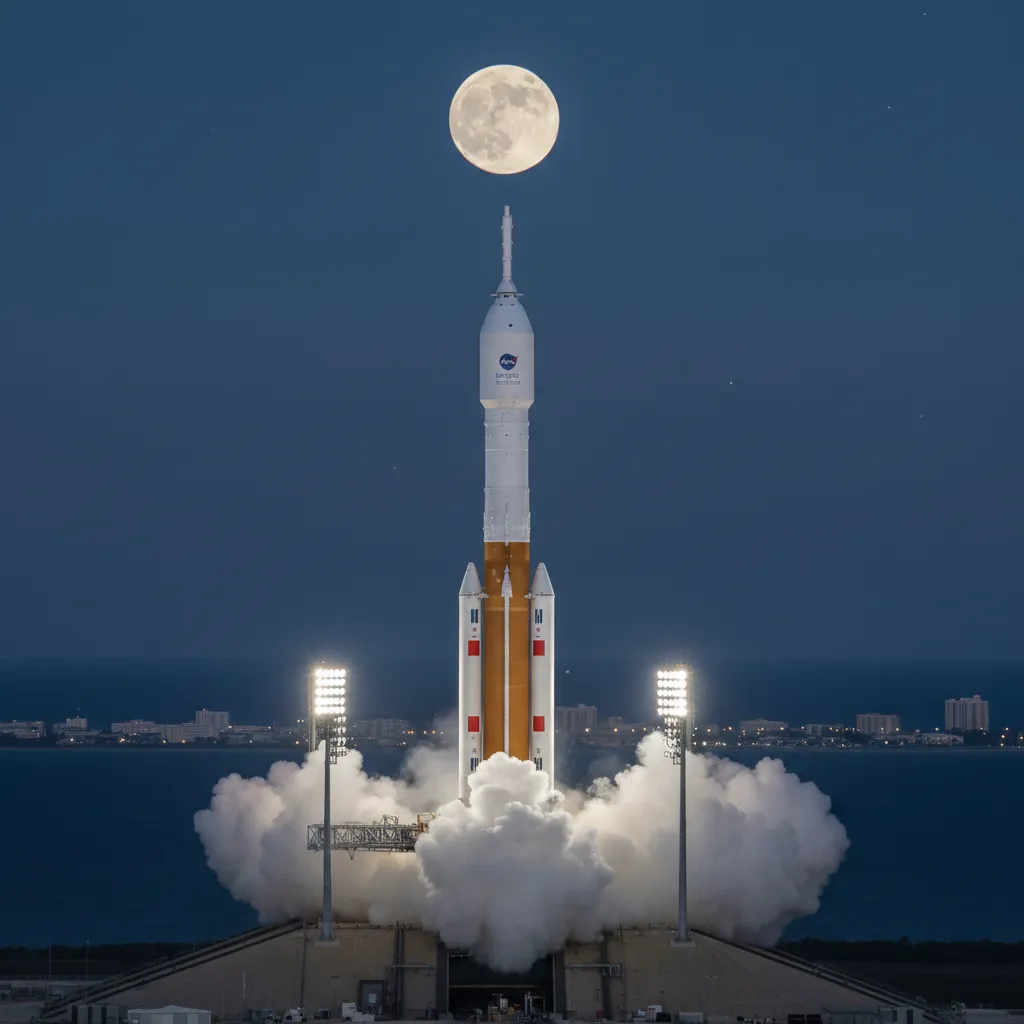
NASA's Artemis II mission, which will send humans around the Moon for the first time in over 50 years, has been delayed from its February target to no earlier than March 6, 2026. Despite the setback, the mission remains on track to achieve multiple historic milestones in space exploration.
Launch Delay Details
NASA announced on February 2, 2026, that the Artemis II launch would be postponed from its original February 5 window to March 2026. The delay resulted from a liquid hydrogen leak discovered during the wet dress rehearsal, a critical pre-launch test where the rocket is fully fueled to verify all systems.
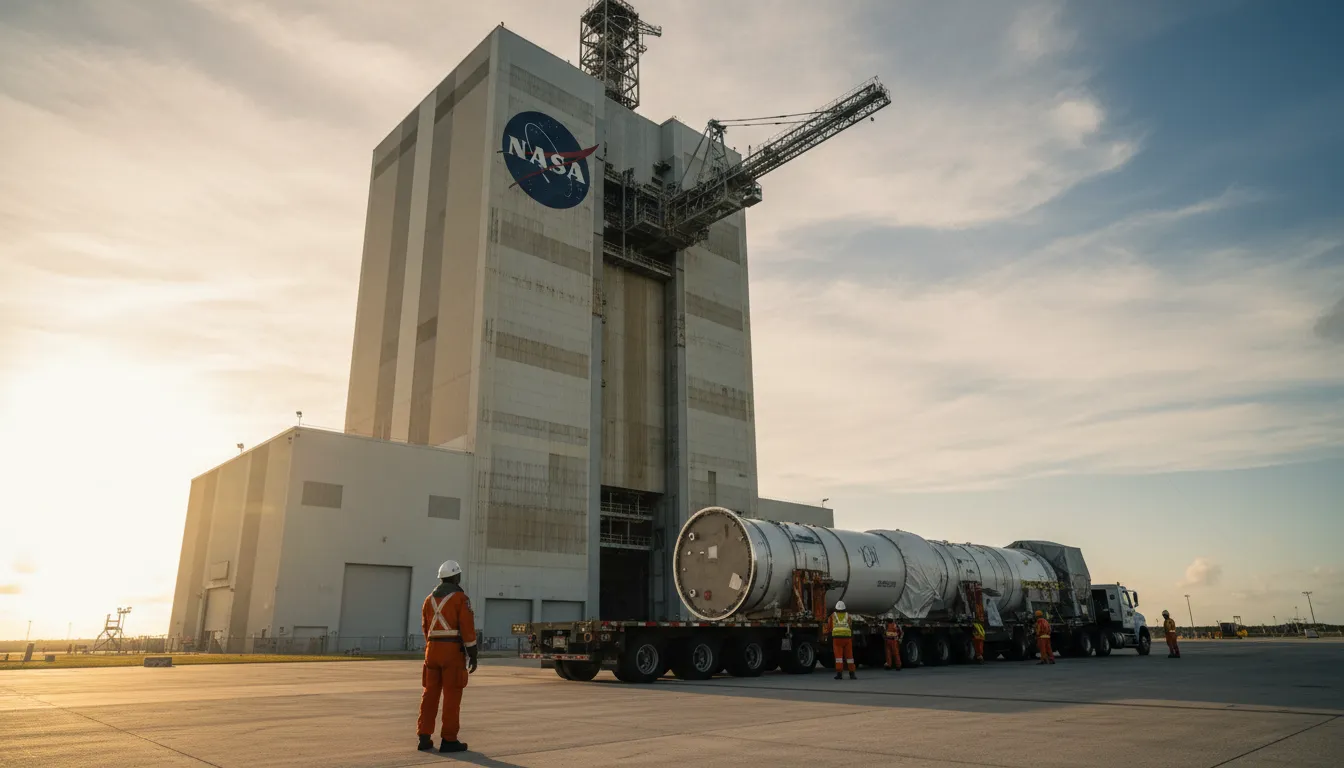
The Space Launch System (SLS) rocket had rolled out to Kennedy Space Center's Launch Complex 39B on January 17, a process that took approximately 8-10 hours. NASA engineers are addressing the hydrogen leak and conducting additional fuel tests to ensure mission safety.
Historic Crew
The 10-day mission will carry four astronauts on a free-return trajectory around the Moon and back to Earth. The crew includes NASA astronauts Reid Wiseman, Victor Glover, and Christina Koch, along with Canadian Space Agency astronaut Jeremy Hansen.
The mission will achieve several historic firsts: Glover will become the first person of color to travel beyond Earth orbit, Koch will be the first woman to fly around the Moon, and Hansen will be the first non-American to leave Earth orbit and travel to lunar distance.
Mission Profile
Unlike the Apollo missions of the 1960s and 1970s, Artemis II will not land on the Moon. Instead, the crew will fly the Orion spacecraft on a free-return trajectory that takes them approximately 6,400 miles beyond the far side of the Moon before returning to Earth. The mission serves as a crucial test of all life support and navigation systems with humans aboard before attempting a landing.
Artemis Program Timeline
Looking beyond Artemis II, NASA has outlined an ambitious schedule for lunar exploration. Artemis III, which aims to land the first woman and first person of color on the lunar surface using SpaceX's Starship Human Landing System, is expected to launch no earlier than mid-2027. Artemis IV will dock with the Lunar Gateway space station in late 2028, and Artemis V, featuring the European Space Agency's ESPRIT module, Canada's Canadarm3, and NASA's Lunar Terrain Vehicle, is planned for early 2030.
International Cooperation
The Artemis program represents the largest international space collaboration in history, with contributions from the European Space Agency, the Canadian Space Agency, the Japan Aerospace Exploration Agency, and numerous commercial partners. The inclusion of Canadian astronaut Jeremy Hansen on Artemis II underscores the program's multinational character.
Significance
Artemis II will mark humanity's return to deep space after more than half a century. The mission demonstrates renewed commitment to human space exploration and lays the groundwork for a sustained presence on and around the Moon, ultimately serving as a stepping stone for future crewed missions to Mars.
Sources: NASA Artemis II, NASA Blog, Houston Public Media, CNN