Operation Horizon Extended: 10,000 Troops on the Rails
President Karol Nawrocki has signed an order extending military Operation Horizon until the end of May 2026. Up to 10,000 soldiers will continue patrolling railway infrastructure in response to Russia's hybrid warfare and the discovery of tunnels under the border with Belarus.
Another Three Months on the Rails
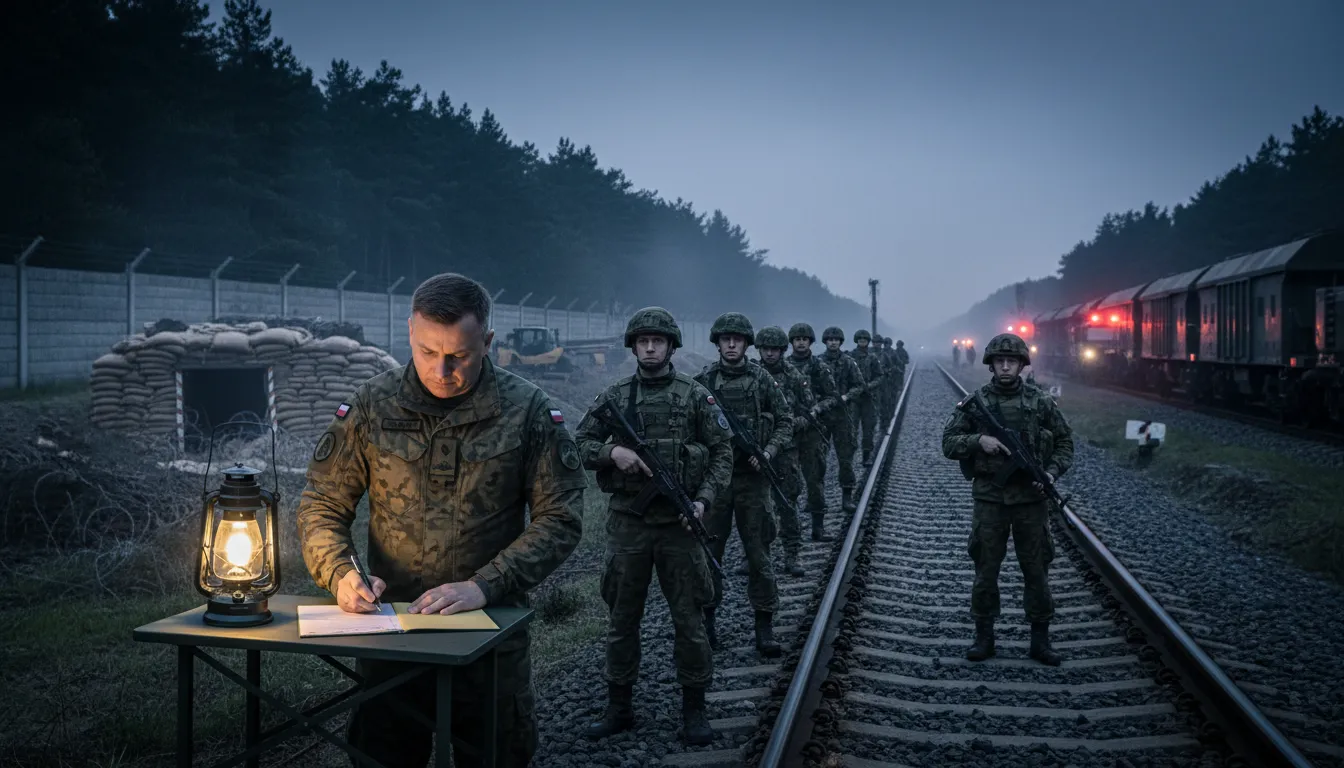
President Karol Nawrocki signed a decree on February 26, 2026, extending military operation Horizon from March 1 to May 31, 2026. The decision means that up to 10,000 soldiers of the Polish Army will continue to patrol key sections of the railway network, supporting the police and other services in protecting critical infrastructure from acts of sabotage. The President acted on the request of Prime Minister Donald Tusk – the official justification directly points to "acts of sabotage concerning railway infrastructure."
What is Operation Horizon?
The operation was launched in November 2025 as a direct response to a series of sabotage attacks on Polish tracks. Defense Minister Władysław Kosiniak-Kamysz described it as one of the largest military operations carried out on the country's territory in recent years. All types of armed forces are participating in the operation:
- Territorial Defense Forces
- Special Forces
- Cyber Forces and the Cyber Defense Component Command
- Engineering and drone units
Soldiers are conducting patrols and monitoring key railway routes. Drones play a particularly important role, providing reconnaissance in areas that previously exceeded the capabilities of the police and Railway Protection Guard.
Where Does the Threat Come From? Russian Diversion on the Rails
The direct impetus for launching the operation were two serious incidents. Near the village of Mika in Mazovia, an explosive charge destroyed a section of track. Earlier, damage to the traction network near the Gołąb station (Lublin Voivodeship) forced a train driver to brake sharply – there were 475 passengers on board the train.
Prime Minister Tusk confirmed that the attacks were carried out by "two Ukrainian nationals recruited by Russian intelligence," who fled to Belarus after committing the sabotage. The prosecutor's office has charged them with terrorist offenses punishable by up to life imprisonment. In total, more than 70 people are suspected or formally charged in connection with subversive activities in Poland.
Four Tunnels Under the Border with Belarus
Russia's hybrid strategy towards Poland is not limited to sabotage on the tracks. The Polish Border Guard has discovered four tunnels dug under the Polish-Belarusian border, used to smuggle illegal immigrants. The largest of them, discovered near the village of Narewka, was over 60 meters long and 1.5 meters high – it allowed approximately 180 migrants from Afghanistan and Pakistan to enter Poland.
According to military experts quoted by The Telegraph, the construction of such advanced structures requires specialized engineering knowledge, which is only available to a few organizations – including Hamas, Hezbollah, or Kurdish armed groups. The Polish Ministry of the Interior attributes all responsibility for organizing the smuggling to the regime of Alexander Lukashenko and his Russian backers.
A Signal for NATO and Europe
Warsaw is increasingly signaling to its allies that Russia is conducting a systematic destabilization campaign aimed at the entire eastern flank of NATO. Railway sabotage, migration tunnels, meteorological balloons with contraband, and cyber attacks create a coherent picture of hybrid warfare below the threshold of armed conflict. Poland and Ukraine have established a joint working group to identify Russian agents and prevent further acts of sabotage.
Operation Horizon is a military response, but also a clear political signal – Poland does not intend to passively observe the progressive erosion of infrastructure security. Soldiers remain on the tracks until the threat drops to a level that the civilian services can handle on their own.