Orbán Blocks €90 Billion EU Loan to Ukraine
Hungary will not approve the disbursement of the EU's €90 billion loan to Ukraine until Kyiv resumes oil supplies via the Druzhba (Friendship) pipeline, which was damaged by a Russian drone strike on January 27.
Announcement of the Blockade
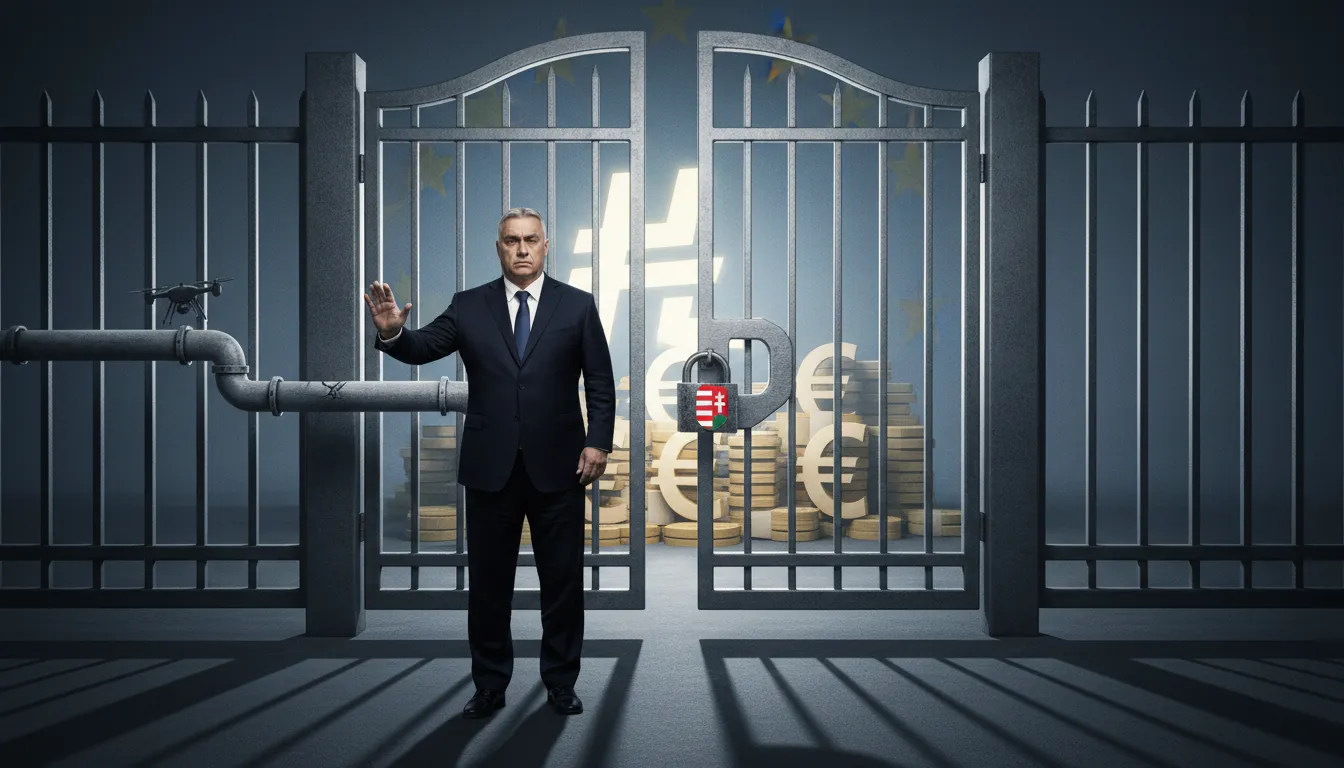
Foreign Minister Péter Szijjártó announced on February 20 that Hungary will not allow the disbursement of the European Union's €90 billion loan to Ukraine until Kyiv restarts oil shipments via the Druzhba (Friendship) pipeline. Prime Minister Viktor Orbán stated unequivocally the next day: "As long as Ukraine blocks the Druzhba pipeline, Hungary will block the €90 billion Ukrainian war loan." Budapest claims that Ukraine violated its association agreement with the EU by refusing to continue oil transit.
The Druzhba Pipeline and the January 27 Incident
Russian crude oil has not arrived in Hungary and Slovakia via the Soviet-era Druzhba (Friendship) pipeline since January 27. According to Ukraine, a Russian drone strike damaged the Brody pumping station, making oil transport impossible. The European Union itself has acknowledged that repair work is hampered by the risk of further Russian air attacks.
Within the EU, only Hungary and Slovakia have refineries that process Russian crude oil arriving via the Druzhba pipeline. Budapest has identified the Adria pipeline as an alternative, through which seaborne crude oil could arrive via Croatian ports.
Conflicting Positions
Budapest and Bratislava accuse Kyiv of deliberately delaying repairs and using the suspension of oil supplies for political pressure – especially in light of the Hungarian parliamentary elections scheduled for April 12. Péter Szijjártó claims that Ukraine, in coordination with Brussels and the Hungarian opposition, is trying to make domestic fuel more expensive.
Ukraine strongly rejects these accusations. Ukrainian spokespersons have stated: "Hungary knows perfectly well that the Druzhba pipeline was attacked by Russia." Kyiv says that the repair poses serious technical challenges amidst ongoing Russian airstrikes.
Details of the €90 Billion Loan Package
The European Parliament adopted the €90 billion loan package on February 11, which covers approximately two-thirds of Ukraine's financial needs for 2026–2027. The package allocates €30 billion to support the Ukrainian state budget – tied to rule-of-law conditions – and €60 billion for military spending and arms procurement programs.
A key element of the package requires amending the EU's long-term budget, which requires unanimous approval from the Council – ensuring Budapest's effective veto power. Hungary, Slovakia, and the Czech Republic have already been granted exemptions from joint debt issuance, so the blockade is primarily a step with political impact.
Escalation and Domestic Political Implications
The conflict is deepening further: Hungary and Slovakia suspended diesel fuel exports to Ukraine on February 18 in response to the suspension of oil transit. According to Euronews, the European Commission has convened an extraordinary energy coordination consultation.
The announcement came three weeks before the April 12 elections. Opinion polls suggest that Orbán's Fidesz party is lagging behind opposition leader Péter Magyar by approximately ten percentage points. Analysts suggest that the tough stance against Brussels and Ukraine is partly a campaign strategy.
Outlook
Ukraine's financial situation is critical: the first tranche of the loan package is scheduled to be disbursed in the second quarter of 2026, and a sustained Hungarian veto could cause serious disruptions to Kyiv's war financing. The key to a solution lies in the pace of repairs to the Druzhba pipeline and the success of diplomatic negotiations – while Hungary's direct energy security interests and the EU's geopolitical priorities are increasingly clashing.