Poland Withdraws from Ottawa Treaty, Prepares Mines for the East
On February 20, 2026, Poland officially withdrew from the Ottawa Treaty banning anti-personnel mines. Prime Minister Tusk announced readiness to mine the eastern border within 48 hours using the Bluszcz system.
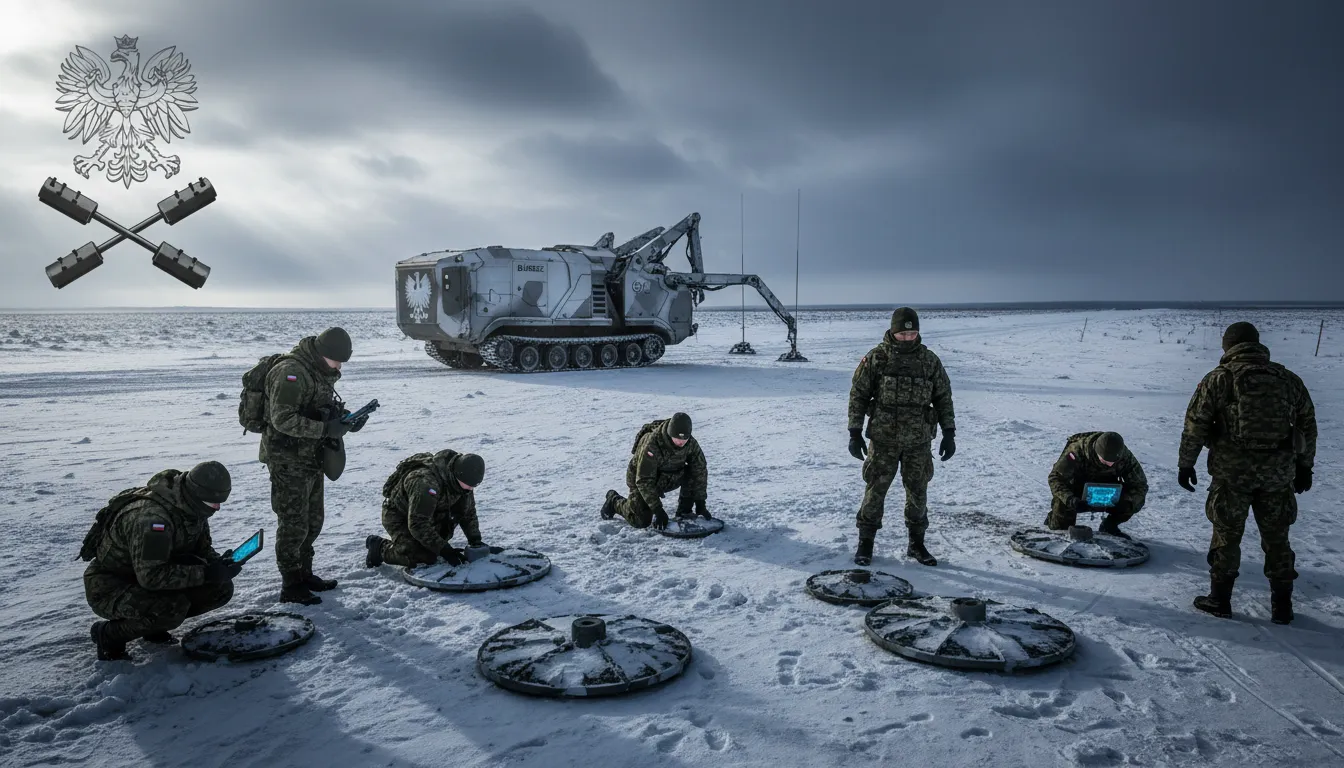
A Historic Step — Poland Exits the Ottawa Treaty
On February 20, 2026, Poland officially ceased to be a party to the Ottawa Treaty — an agreement prohibiting the use, stockpiling, production, and transfer of anti-personnel mines. This is a historic moment: Poland has become the last of a group of Eastern European NATO allies to withdraw from the treaty in a coordinated manner, citing the dramatically changed security situation in the east of the continent.
Prime Minister Donald Tusk announced this fact during the presentation of the Bluszcz system — an unmanned ground vehicle designed for the rapid laying of minefields. "Poland will be ready to mine the eastern border within 48 hours," Tusk told Reuters, emphasizing that this applies to the border with both Russia and Belarus.
The Bluszcz System — Unmanned Mining in 48 Hours
Bluszcz is a vehicle developed by the Polish company Belma S.A. in cooperation with a military research institute. Based on the Taero platform, it operates in a fully automated mode — the minefield is laid from a remote control station, without exposing the operators to direct fire. The system is an integral part of the Eastern Shield program, which includes the comprehensive fortification of Poland's eastern flank.
The Deputy Prime Minister responsible for defense also announced the resumption of domestic production of anti-personnel and anti-tank mines — for the first time since the end of the Cold War. Poland, which ratified the convention in 2012 and destroyed its own mine stockpiles by 2016, is now focusing on self-sufficiency in the defense industry.
Solidarity of NATO's Eastern Flank
Warsaw's decision is not isolated. In March 2025, the defense ministers of Estonia, Latvia, Lithuania, and Poland jointly announced a recommendation to withdraw from the convention, pointing to the growing threat from Russia. Finland joined the group — its withdrawal came into effect on January 10, 2026. Lithuania and Finland also declared the resumption of mine production and readiness for their possible export to Ukraine.
According to the AOAV (Action on Armed Violence) organization, the withdrawal of five European countries from the treaty is unprecedented and may weaken the global mine ban regime. Critics point to the tragic experiences with mines in Cambodia, Angola, and Bosnia, where these devices have claimed civilian lives for decades after the end of conflicts. However, Polish authorities assure that mines will be deployed only in the event of a real threat of aggression and that their use will be strictly limited to border areas.
Reactions: From Moscow to Brussels
Russian Foreign Ministry spokeswoman Maria Zakharova stated that Poland's decision "leads to escalation." Humanitarian organizations, including the International Campaign to Ban Landmines (ICBL), also expressed criticism. In Poland itself, the decision enjoyed broad parliamentary support — as many as 413 MPs voted in favor of the law on withdrawal from the convention in June 2025, with only 15 against.
A New Logic of Defense in the East
Withdrawal from the Ottawa Treaty is an expression of a deeper change in thinking about security on the Vistula. Poland spends more than 4 percent of its GDP on defense — the most in all of NATO — and consistently expands fortifications on the border with Russia and Belarus. Anti-personnel mines are to be another element of a multi-layered barrier that is intended to stop or delay potential aggression before allied assistance can arrive.