Orbán Raises Terror Alert Level Due to Iran War
The Hungarian government has raised the country's terror threat level by one notch following strikes by the United States and Israel against Iran. Viktor Orbán believes the risk of terrorist attacks in Europe may increase, but Hungary is in a more favorable position. However, the conflict also poses a serious threat to energy security.
Higher Level of Alert
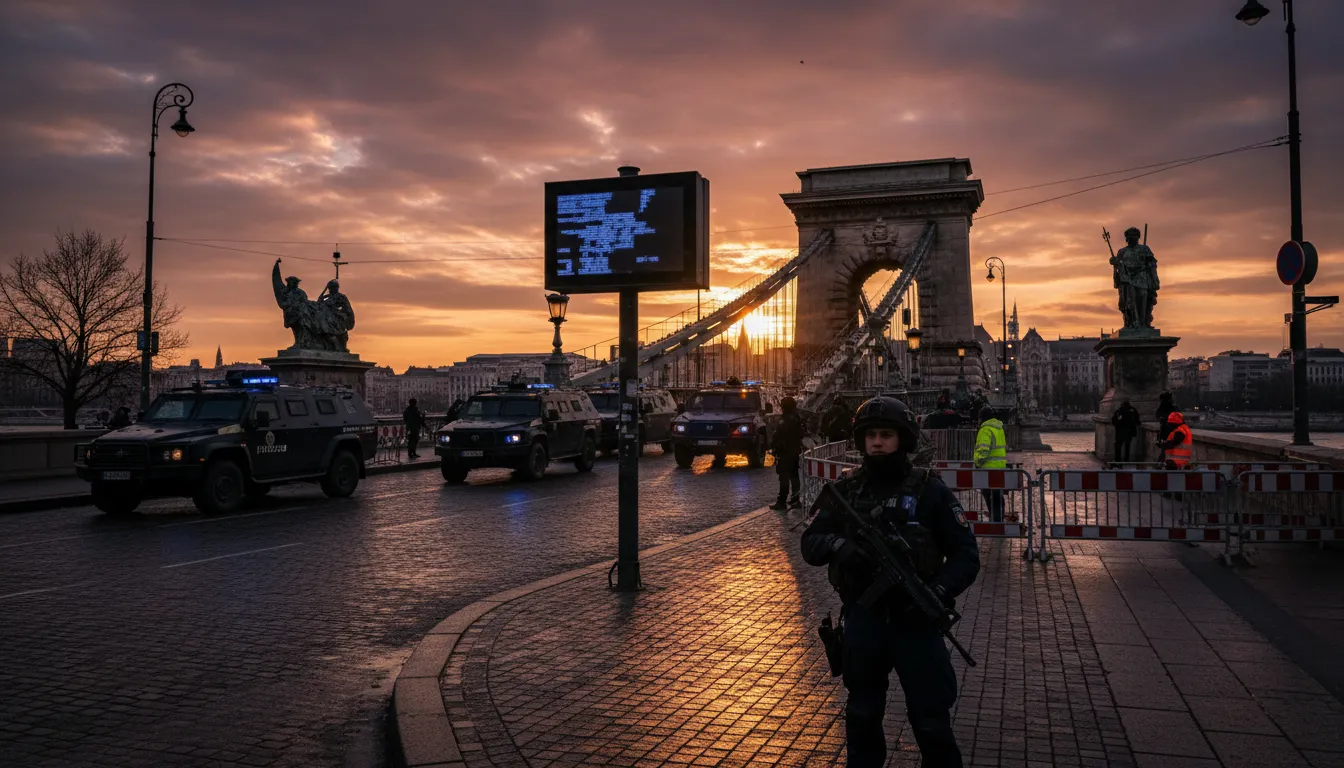
On February 28, following an extraordinary meeting of the National Security Council, the Hungarian government announced that it was raising the country's terror threat preparedness level by one degree. The immediate trigger for the measure was the joint military strikes by the United States and Israel against Iran, during which – according to press reports – Iranian Supreme Leader Ali Khamenei also died.
Prime Minister Viktor Orbán informed the public about the decision in a video message. "We have raised the terror threat preparedness level by one notch," he said, adding that this is an unprecedented step in Hungary's system in place since 2016, as the country had previously remained at the medium, level three, for many years.
Orbán: Hungary is in a More Favorable Position
According to the Prime Minister, the likelihood of terrorist attacks may increase throughout Europe, especially in Western countries with large immigrant communities. He said that Middle Eastern terrorist organizations have strengthened in Western Europe in recent years, and there is a real danger that these cells will be activated as a result of the Iranian conflict.
At the same time, Orbán emphasized: "Hungary is in a more favorable position," referring to the fact that the country's strict migration policy reduces the risk of radicalized individuals entering the country. However, analysts have also pointed out that the announcement of the increased threat may also be politically beneficial for the government ahead of the upcoming elections – the security narrative reinforces Fidesz's traditional message.
TEK: Increased Controls at Airports and Embassies
The head of the Counter-Terrorism Center (TEK) Director General's Office announced that the increased level of alert serves to ensure the more effective implementation of preventive measures. The police have reinforced security at Liszt Ferenc International Airport, placed foreign embassies, government buildings, and public transport hubs under increased surveillance. The authorities are also paying attention to religious institutions and schools.
Energy Security Risk: In the Shadow of the Strait of Hormuz
In addition to the terrorist threat, Viktor Orbán identified energy security as the other major challenge. Iran is one of the world's largest oil producers, and the Iranian Revolutionary Guard has threatened to close the Strait of Hormuz – through which about 20 percent of global seaborne oil trade, about 20 million barrels of oil per day, passes.
According to analyses by Al Jazeera and NPR, oil prices immediately jumped by about 8 percent when the conflict broke out, and European gas prices rose by nearly 20 percent. According to Foreign Minister Péter Szijjártó, Hungary is able to protect itself from the worst-case scenarios through its independent energy policy – Orbán also reiterated his call for the authorization of Russian oil transit through Ukraine.
Regional Instability, European Consequences
According to an Euronews analysis, the Iranian war places a double burden on Europe: it must face both rising energy prices and increased security risks. Hungary's situation is further complicated by the fact that, amid efforts to reduce Russian energy dependence, another Middle Eastern crisis is also affecting supply chains.
HVG analysts also raise questions: was raising the terror alert level justified and lawful, and is the step proportionate to the actual threat? The answer is still open – what is certain is that Budapest is seeking its own path in the shadow of regional instability in the dual challenge of security and energy supply.