Qatar's LNG Force Majeure Plunges Energy Markets into Chaos
Iranian drone and missile strikes on Qatar's Ras Laffan complex have halted 20% of global LNG supply, triggering force majeure declarations by QatarEnergy, Shell, and TotalEnergies — sending Asian spot prices doubling to $24–25/MMBtu and leaving India, Europe, and Asia scrambling for alternatives.
The Strike That Shook Global Energy
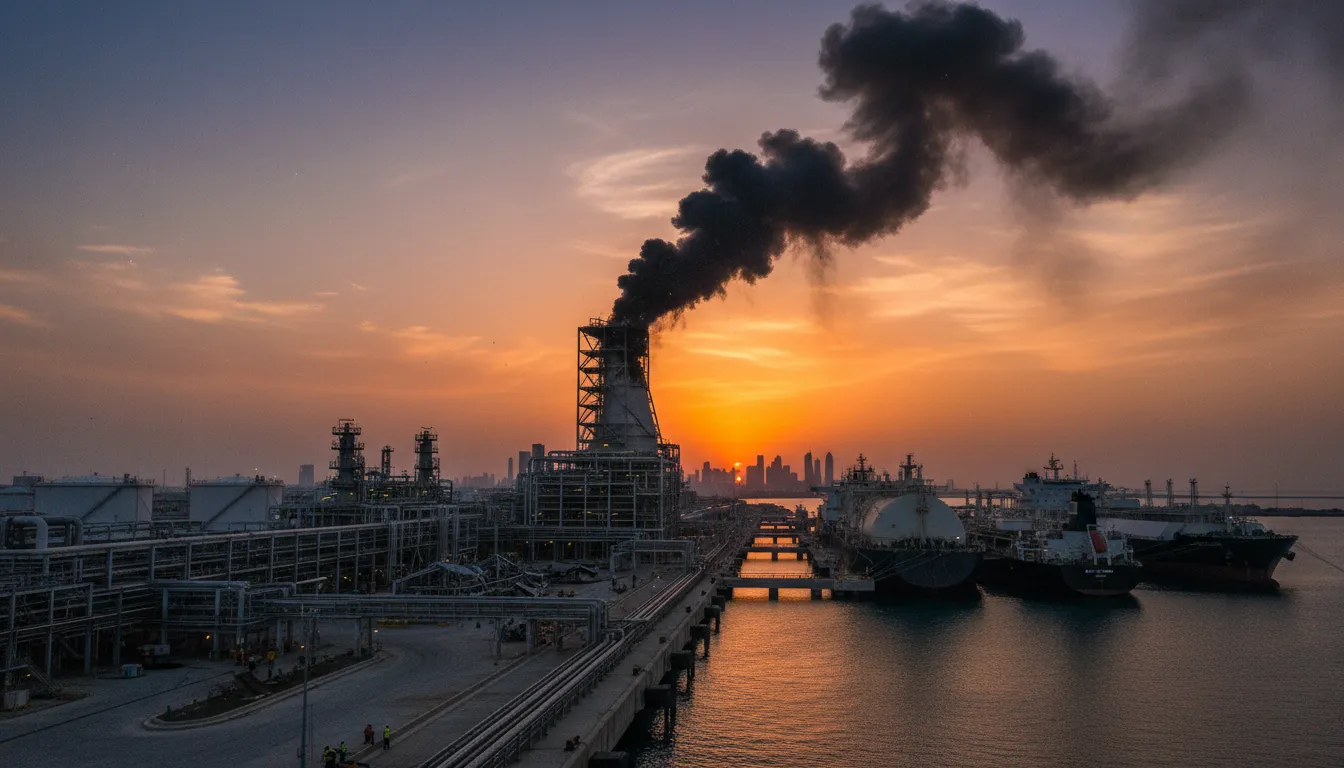
In the early hours of March 2, 2026, Iranian drones struck two of Qatar's most critical industrial sites — the Ras Laffan Industrial City and the Mesaieed complex — forcing QatarEnergy, the world's largest liquefied natural gas exporter, to suspend all production. The consequences rippled instantly across global energy markets: European wholesale gas prices surged nearly 50%, while Asian LNG benchmark prices jumped close to 39% in a single session.
Qatar accounts for roughly 20% of the world's LNG supply, operating approximately 77 million metric tons per year of liquefaction capacity. When that volume disappears overnight, there is no easy substitute.
Force Majeure Cascades Through the Industry
Within days, QatarEnergy formally declared force majeure on all contractual LNG deliveries — the legal mechanism that releases a party from obligations when extraordinary, unforeseeable events intervene. The declaration did not stay isolated for long. Shell, which lifts around 6.8 million tons per year from Qatar, and TotalEnergies, which takes approximately 5.2 million tons annually, both issued their own force majeure notices to downstream customers, according to Reuters. It was the first clear sign that Qatar's export stoppage was cascading through the entire global LNG trading architecture.
Vessel-tracking data told a stark story: five consecutive days without a single LNG shipment from Qatar — the longest interruption since 2008. No LNG carriers have transited the Strait of Hormuz since February 28, as Iran effectively choked the waterway in retaliation for U.S.-Israeli strikes that killed Supreme Leader Ayatollah Ali Khamenei. Around 150 vessels remain anchored outside the strait, with traffic down 86%.
Asia Bears the Brunt
Asian spot LNG prices have nearly doubled, reaching $24–25 per MMBtu — levels not seen since the peak of Europe's 2022 energy crisis. The hardest hit is India, which sources close to 45% of its LNG imports from Qatar. With no quick remedy in sight, Indian authorities have directed industry to cut gas consumption by 10 to 20 percent. The fertilizer sector, which relied on LNG for 80% of its gas demand in 2025, faces the sharpest pressure.
Bangladesh and Pakistan, already energy-stressed economies, face equally acute shortfalls. China, by contrast, is better insulated: Australia supplies 34% of its natural gas imports, reducing its direct exposure to the Gulf disruption.
Europe: Shielded but Not Safe
Europe receives only a fraction of Qatari LNG directly — roughly 18% of QatarEnergy's sales go westward. But the continent is not immune. Cargoes originally bound for Europe are being diverted to higher-priced Asian markets, squeezing availability for European utilities just as winter storage drawdowns near their seasonal peak. Analysts note that the worst of the heating season may be behind Europe, limiting the immediate crisis — but a prolonged shutdown extending into next winter would severely test European storage rebuild targets.
Escalation on March 18–19
The situation deteriorated sharply when a second Iranian missile barrage on March 18 caused what QatarEnergy described as "extensive damage" at Ras Laffan, sparking major fires across several LNG facilities. Qatar's energy minister warned that even if conflict ceased immediately, restoring full production could take weeks to months.
The diplomatic fallout followed swiftly. Qatar expelled Iran's military attaché and security attaché — effectively dismantling the Iranian military diplomatic presence in Doha. Saudi Arabia declared it reserved the right to take military action against Iran. And U.S. President Donald Trump threatened to "massively blow up" Iranian gas fields if Iran attacked Qatar again, raising the specter of a direct superpower confrontation over Gulf energy infrastructure.
A Structural Shock, Not a Blip
What began as a regional military escalation has become a test of the global gas market's resilience. Qatar's dominance in LNG — built over decades of deliberate strategy — has long been considered a stabilizing force. The events of March 2026 expose the other side of that concentration: when the world's largest supplier goes offline, there is no single replacement. The question now is not whether this will hurt — it already has — but how long the world can absorb the pain.