Thousands March for Women's Rights Across Slovakia
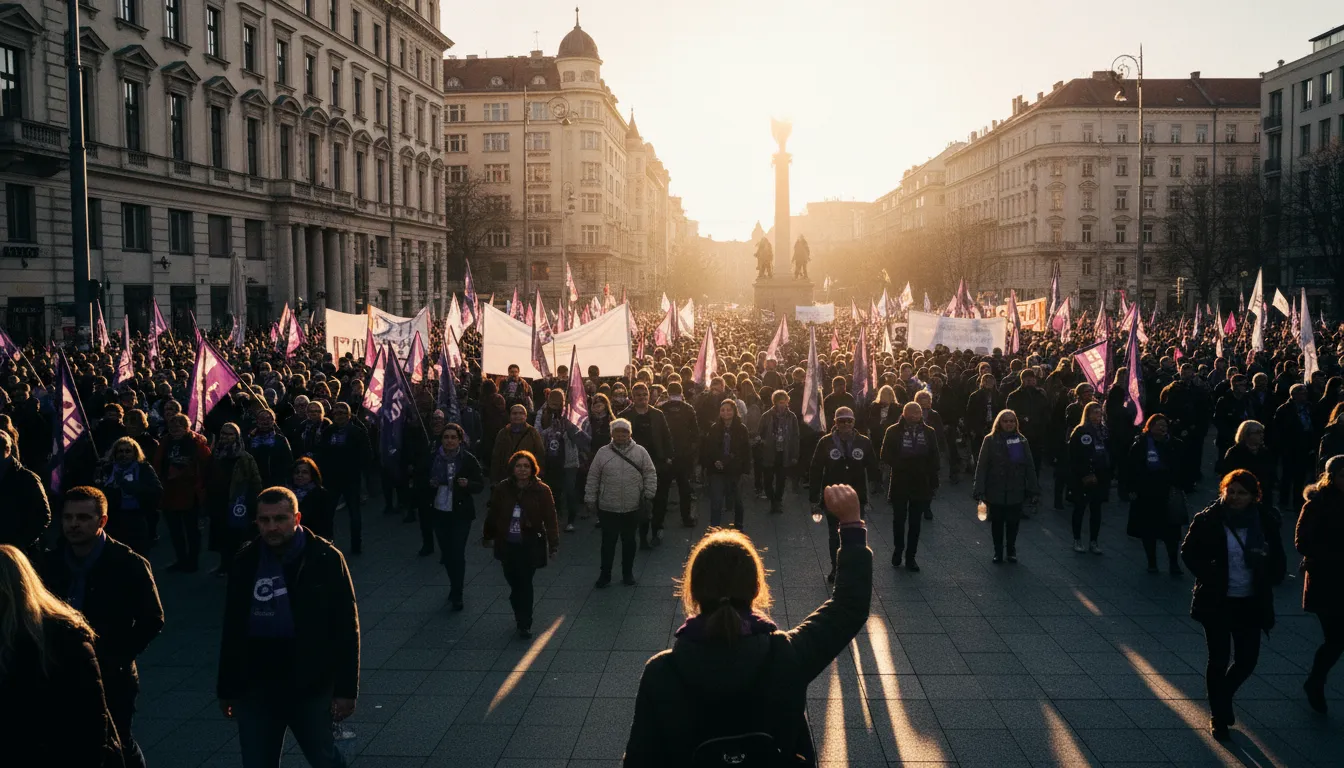
On Sunday, March 8, 2026, thousands of people gathered in Bratislava and other Slovak cities for marches and public gatherings to mark International Women's Day. Organizers are demanding equal pay, protection from violence, and access to healthcare.
Slovakia Joins Global March for Equality
On Sunday, March 8, 2026, thousands of people gathered in Bratislava and other Slovak cities to mark International Women's Day. The marches and public gatherings were organized by civil society, trade unions, and women's organizations with a unified message: women's equality is not a gift, but a fundamental human right. Cities across Slovakia joined Bratislava – a pattern repeated in most European capitals.
UN Theme: Rights, Justice, Action
This year's global theme, announced by the UN and UN Women, is "Rights. Justice. Action for all women and girls." The theme is directly linked to the 70th session of the UN Commission on the Status of Women (CSW70), taking place from March 9 to 19, 2026, in New York – the largest annual international forum on gender equality. According to UN Women, women worldwide have access to only 64 percent of the legal rights compared to men, and at the current rate of change, it would take another 286 years to achieve equal legal protection.
Situation in Slovakia: Capacities Lag Behind Europe
The Institute for Labour and Family Research (IVPR), together with the Coordination and Methodological Centre for the Prevention of Violence Against Women, issued a press release on March 8, highlighting serious shortcomings in the system of protection for women in Slovakia. The capacity of support services – crisis centers and safe houses – covers only approximately 50 percent of the Council of Europe's recommendations, with significant regional disparities in access to assistance.
According to the European Union Agency for Fundamental Rights, nearly one in three women in the EU has experienced violence in their lifetime. Organizations are therefore demanding accessible legal aid, gender-sensitive justice, and the expansion of counseling centers to European standards. "Women don't need flowers on International Women's Day. They demand equality every day of the year," the organizers' manifesto stated. In case of emergency, a free helpline is available 0800 212 212 (24/7).
In Bratislava, a discussion "Stand Up for Women's Safety – On International Women's Day and Every Day" was held concurrently with the march at the Music House, organized as part of the Contexts: Women Shape the Story of Bratislava program.
Key Demands of Organizers
- Equal pay for women and men for equal work
- Effective protection against domestic violence and accessible safe houses
- Equal access to healthcare, including reproductive rights
- Strengthening legal guarantees and gender-sensitive justice
Slovakia in a European Context
Celebrations of International Women's Day in Slovakia began as early as March 3 with events in Michalovce and Prešov. Mass marches are typical for most European cities in 2026: in Paris, demonstrators took to the streets calling for a feminist strike, while hundreds of thousands participated in Madrid and Barcelona. The International Trade Union Confederation (ITUC) emphasized that 2026 brings increased pressure on women's rights in connection with rising populism and the questioning of gender equality in many countries: "When women have access to justice, democracy wins."
Outlook: Commitments Are Not Enough
The March 8, 2026 marches are part of a broader push on governments ahead of the CSW70 meeting. Slovak women's organizations announce that monitoring of the fulfillment of commitments will continue throughout the year. A key test will be whether Slovakia increases the capacity of crisis centers to European standards – and whether equal pay remains just a slogan on banners or is translated into concrete legislation.