What Are Critical Minerals and Why Nations Fight Over Them
Critical minerals like lithium, cobalt, and rare earth elements power everything from smartphones to electric vehicles, yet their dangerously concentrated supply chains have made them a flashpoint in 21st-century geopolitics.
The Building Blocks of the Modern World
Open a smartphone, power up an electric vehicle, or spin a wind turbine, and you are relying on a short list of materials that most people have never heard of. Critical minerals — a category that includes lithium, cobalt, nickel, graphite, gallium, germanium, and 17 so-called rare earth elements — are the essential ingredients of the clean energy economy and the digital age. Governments worldwide now treat securing them as a matter of national security.
The United States Geological Survey designates a mineral as "critical" when it is both economically vital and at risk of supply disruption. The EU and other major economies maintain their own lists, but the overlap is substantial: the same handful of elements keeps appearing because they are genuinely irreplaceable in key technologies.
What Each Mineral Actually Does
Different minerals serve very different purposes:
- Lithium is the lightest metal on Earth and the core of virtually every rechargeable battery, from the one in your laptop to those powering grid-scale energy storage.
- Cobalt stabilizes lithium-ion battery cathodes, dramatically extending their lifespan and safety, though manufacturers are racing to reduce dependence on it.
- Rare earth elements such as neodymium and dysprosium are critical for the permanent magnets found in EV motors and offshore wind turbines — no substitutes currently exist at scale.
- Copper, while more abundant, is the backbone of every electrical grid: a single offshore wind farm can require thousands of tonnes of it.
- Gallium and germanium are used in semiconductors, military radar systems, and fiber-optic communications.
According to the International Energy Agency, demand for these minerals could grow as much as 17 times for lithium and six times for nickel by 2040 under net-zero scenarios. Expected supply from existing mines will meet only about half of projected lithium and cobalt needs by 2030.
Why Supply Chains Are Dangerously Concentrated
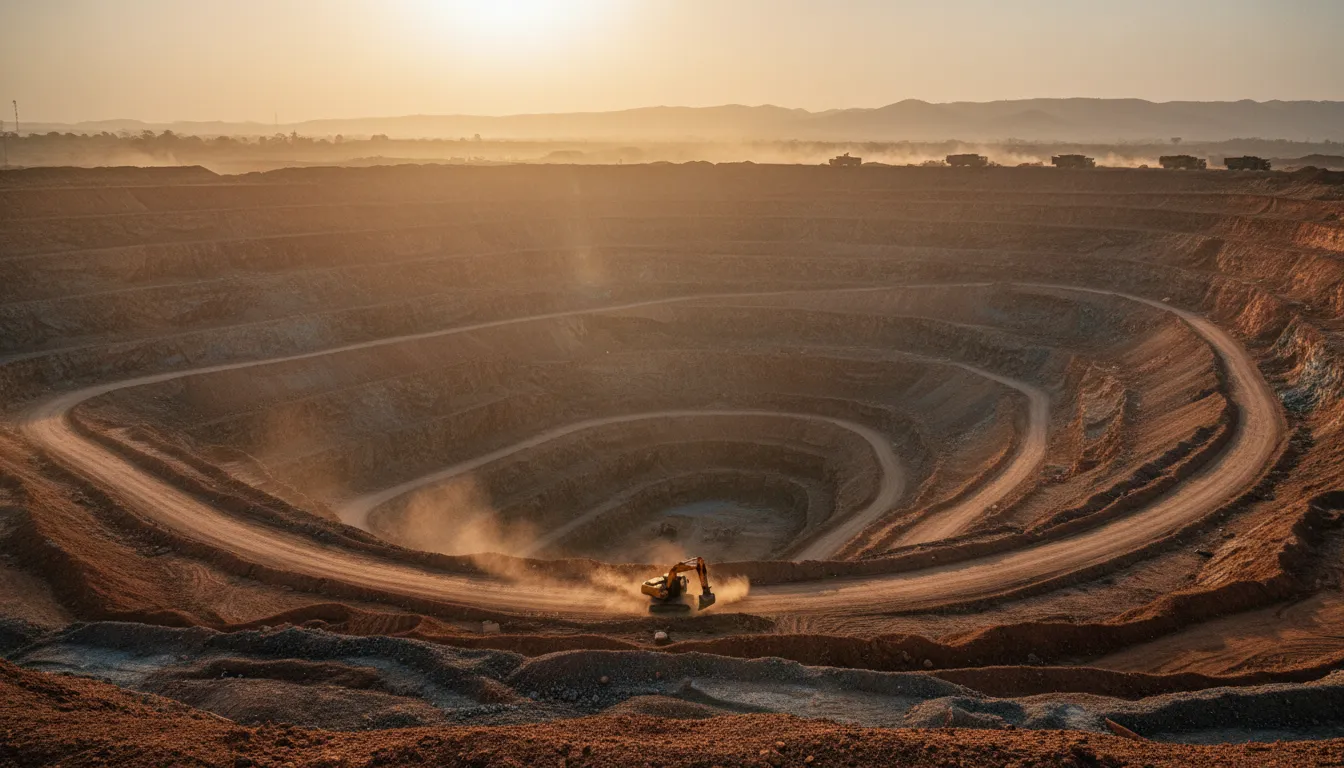
The central problem is geography. Unlike oil, which is spread across dozens of countries, critical minerals are extracted and — crucially — processed in very few places. The Democratic Republic of Congo produces more than 70 percent of the world's cobalt. Chile and Australia dominate lithium mining. But mining is only the first step.
Refining and processing are where the real chokepoint lies. According to the Harvard Belfer Center, China controls roughly 85 percent of global rare earth refining capacity and leads processing for 19 of the 20 most strategically important minerals. This concentration, built through decades of state subsidies and lower environmental standards, gives Beijing extraordinary leverage over global supply chains.
China's Strategic Grip — and How It Uses It
China has not hesitated to use minerals as a geopolitical tool. In 2010, it restricted rare earth exports to Japan during a territorial dispute, sending prices soaring and rattling global markets. More recently, Beijing imposed export controls on gallium and germanium in 2023, graphite later that year, and escalated restrictions on seven medium- and heavy-rare-earth elements in 2025 — all in response to U.S. semiconductor export restrictions, according to an analysis by the Center for Strategic and International Studies.
These moves have forced Western governments to confront a stark reality: the green energy transition they have promised depends on supply chains that run through a strategic competitor.
The Race to Diversify
The response has been a global scramble. The United States has signed critical minerals partnership agreements with Australia, Japan, the Democratic Republic of Congo, Ukraine, and most recently Chile, which holds the world's largest known lithium reserves. The EU's Critical Raw Materials Act aims to ensure that no single country supplies more than 65 percent of any strategic mineral to European industry by 2030.
New mines are opening in Canada, Australia, and Greenland. African nations like Zambia and Malawi, rich in cobalt and copper, are being courted simultaneously by Washington and Beijing. Yet diversification takes time — building a mine from discovery to production typically takes 10 to 17 years, and refining infrastructure takes even longer, notes the Overseas Development Institute. China's head start is measured in decades, not years.
The Stakes Beyond Geopolitics
Supply shortfalls could slow the rollout of electric vehicles and renewable energy, pushing net-zero targets further out of reach. They could raise the cost of consumer electronics and threaten defense industries unable to manufacture precision-guided weapons or radar systems without secure access to gallium and rare earths.
Critical minerals have quietly become what oil was to the 20th century: the resource that underpins economic power, military strength, and technological leadership. The countries that secure reliable access to them — through mining, alliances, recycling breakthroughs, or all three — will hold a decisive advantage in the decades ahead.