What Is ECMO and How Does It Keep People Alive?
ECMO — extracorporeal membrane oxygenation — is a life-support machine that does the work of the heart and lungs outside the body. Here is how it works, when doctors use it, and what the risks are.
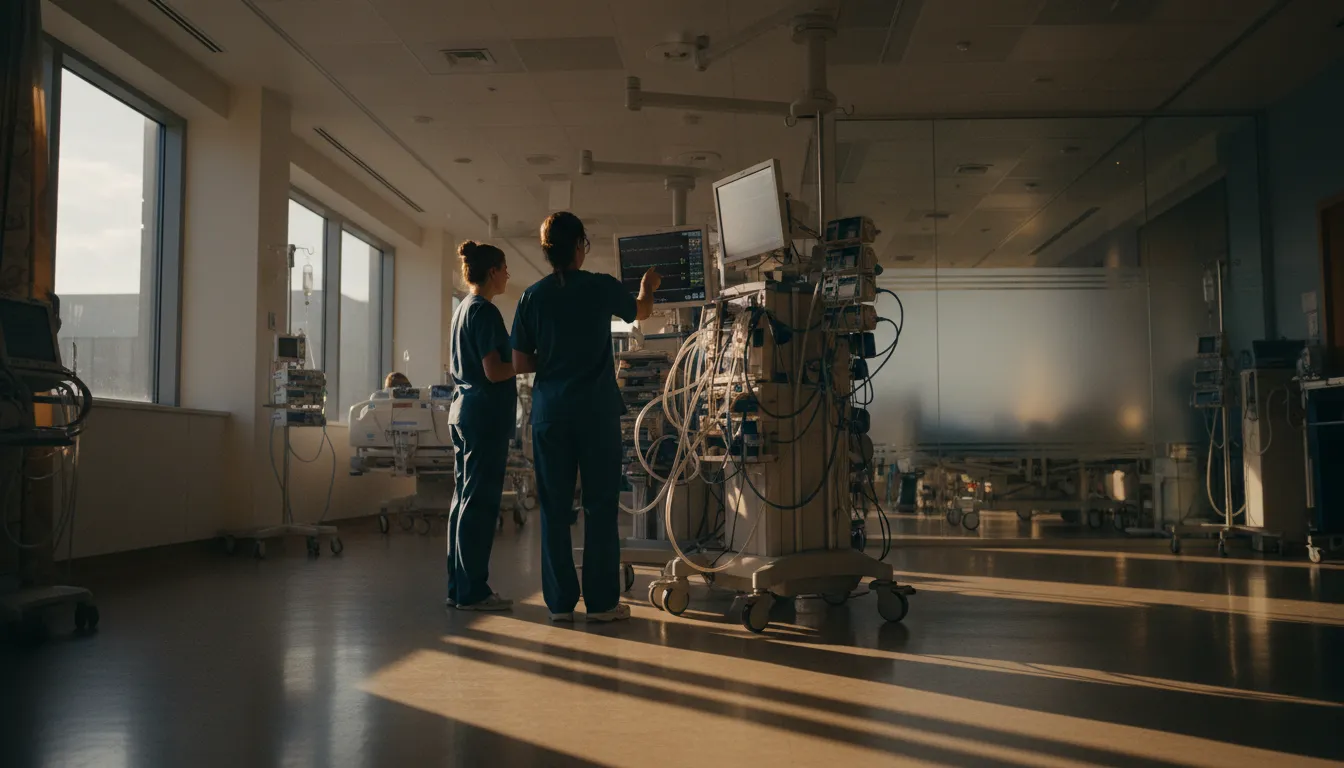
A Machine That Breathes for You
When the heart stops pumping effectively or the lungs can no longer absorb oxygen, doctors have a last-resort option that sounds like science fiction: remove the blood from the body, oxygenate it with a machine, and pump it back in — all while the patient is still alive. That technology is called ECMO, short for extracorporeal membrane oxygenation (extracorporeal means "outside the body"), and it has saved thousands of lives in situations where nothing else would.
How ECMO Works
At its core, an ECMO circuit is a sophisticated pump-and-oxygenator system connected to the patient by plastic tubes called cannulas, which are inserted into large veins and arteries — typically in the neck, chest, or groin. Blood drains out through one cannula, passes through a centrifugal pump that keeps it flowing, then enters an artificial membrane oxygenator — a device that mimics the lungs by adding oxygen and stripping out carbon dioxide. The freshly oxygenated blood is then returned to the body through a second cannula.
There are two main configurations. Veno-venous (VV) ECMO supports only the lungs: blood is drawn from a vein, oxygenated, and returned to a vein, allowing the heart to keep pumping on its own. Veno-arterial (VA) ECMO supports both the heart and lungs simultaneously, bypassing both organs entirely and taking over the full job of circulating blood around the body.
When Doctors Turn to ECMO
ECMO is reserved for situations where conventional treatments — mechanical ventilators, medications, CPR — have failed or are unlikely to be enough. Common indications include:
- Severe acute respiratory distress syndrome (ARDS) — when the lungs are so inflamed that a ventilator cannot force enough oxygen in
- Cardiac arrest that does not respond to resuscitation
- Heart failure following cardiac surgery or a massive heart attack
- Severe pneumonia, including cases caused by influenza or other viruses
- Newborn respiratory failure — ECMO has been used in neonates since the 1970s
The guiding principle is that ECMO buys time. It keeps the patient alive while the underlying cause of the failure — an infection, inflammation, a correctable heart defect — is treated or allowed to heal on its own.
A Brief History
ECMO grew out of the heart-lung bypass machines used during open-heart surgery in the 1950s and 60s, which could only support a patient for a few hours. According to Northwestern Medicine, the technology was pioneered by surgeon Robert H. Bartlett, who led the first successful use of prolonged ECMO in a trauma patient in 1972. Bartlett then adapted the technique for critically ill newborns, famously saving a baby named Esperanza in 1976, and reported a 90% survival rate for neonatal respiratory failure by 1984. He went on to found the Extracorporeal Life Support Organization (ELSO) in 1989, which today maintains the world's largest ECMO registry and sets clinical standards globally.
Survival Rates and What They Mean
ECMO is not a cure — it is a bridge. According to ELSO registry data compiled by NCBI StatPearls, survival rates vary widely by patient group: roughly 75% for neonatal respiratory failure, around 56% for pediatric respiratory failure, and approximately 55% for adult respiratory failure. For adults in cardiac arrest placed on VA-ECMO, in-hospital survival falls to around 40%. Among patients who survive 30 days on ECMO, five-year survival climbs to roughly 70–73% — suggesting that those who make it through the acute phase often recover well.
The Serious Risks
ECMO is one of the most complex and invasive treatments in critical care, and the risks are substantial. Cleveland Clinic and Mayo Clinic list the major complications:
- Bleeding — affects up to 50% of patients, because blood thinners are required to prevent clots in the circuit
- Stroke — clots can form and travel to the brain
- Infection — the cannulas create a direct route into the bloodstream
- Limb ischemia — reduced circulation in a leg can, in severe cases, lead to amputation
- Kidney failure — reduced perfusion may require dialysis
Duration matters: infection rates jump from about 6% for patients on ECMO for a week or less to over 30% for those requiring it beyond two weeks.
Who Can Use ECMO — and Where
Johns Hopkins Medicine notes that ECMO requires a highly specialized team — perfusionists, intensivists, surgeons, and nurses trained specifically in the technology. It is therefore concentrated in large academic medical centers and dedicated ECMO programs. Research consistently shows that outcomes are significantly better at high-volume ECMO centers, reinforcing the importance of transferring critically ill patients to specialized facilities when the technology may be needed.
Why ECMO Matters More Than Ever
The COVID-19 pandemic accelerated ECMO's profile: hospitals worldwide deployed it for the most severe cases of viral pneumonia when ventilators were not enough. As cardiac surgery becomes more aggressive and more patients survive conditions that once proved immediately fatal, demand for ECMO expertise is growing. It remains a technology of last resort — but for the patients who need it, it is often the only resort.