Why Peru Can't Keep a President—9 Leaders in a Decade
Peru has cycled through nine presidents since 2016, more than any other democracy. A vague constitutional clause, extreme party fragmentation, and endemic corruption explain why no elected leader has finished a full term.
A Revolving Door at the Presidential Palace
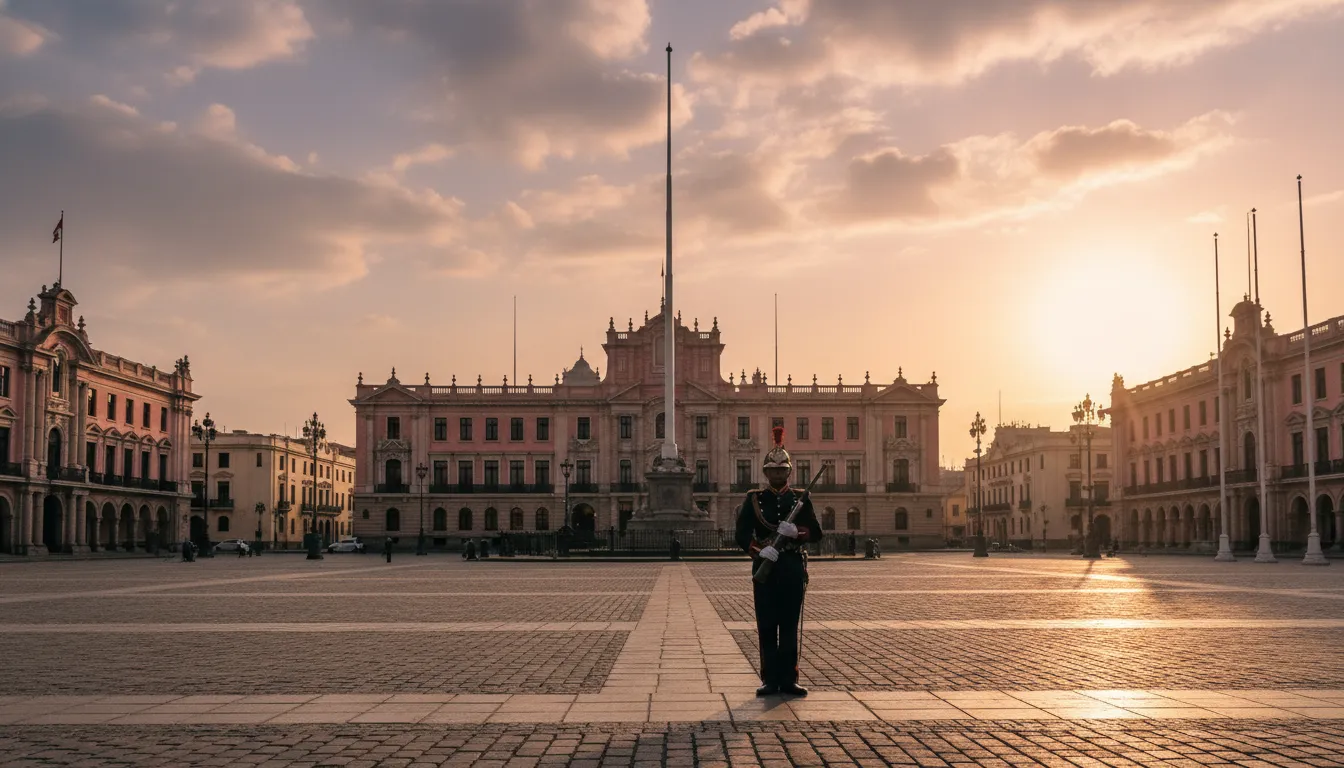
Peru holds a distinction no democracy wants: since 2016, the country has burned through nine presidents. No elected leader has completed a full term. Presidents have been impeached, forced to resign, arrested, and in one case ousted after just five days in office. The pattern has left Peru in a state of near-permanent political crisis—and voters heading to the polls yet again.
Understanding why requires looking at three reinforcing forces: a constitutional loophole inherited from a dictator, one of the weakest party systems in the Western Hemisphere, and a corruption epidemic that has touched virtually every leader who enters the presidential palace.
The "Moral Incapacity" Clause
At the heart of the instability lies Article 113 of Peru's constitution, which allows Congress to declare the presidency vacant due to "permanent moral incapacity." The clause dates back to the 19th century and was originally intended to cover situations where a president became mentally or physically unable to govern. But the current constitution—drafted in 1993 under authoritarian president Alberto Fujimori—left the term deliberately vague.
Since 2016, Congress has reinterpreted "moral incapacity" to mean political or ethical misconduct, effectively turning it into a low-threshold impeachment tool. Removal requires a two-thirds vote—87 of 130 lawmakers—but no formal trial, no judicial review, and no clearly defined standard of proof. Constitutional expert Alonso Gurmendi has called the mechanism "a practical fix to a once-in-a-lifetime crisis" that has instead become "a precedent that can be used and abused."
Nine Presidents, One Decade
The cascade began with Pedro Pablo Kuczynski (2016–2018), who resigned facing impeachment over ties to the Brazilian construction giant Odebrecht. His successor, Martín Vizcarra, was removed in November 2020 by a Congress in which 68 of 130 members faced their own corruption investigations. Manuel Merino lasted five days before mass protests—in which police killed two demonstrators—forced his resignation. Interim leader Francisco Sagasti held the seat until elections brought Pedro Castillo to power in 2021.
Castillo attempted to dissolve Congress in December 2022 and was promptly impeached and arrested. Vice President Dina Boluarte took over and survived eight impeachment attempts before finally being removed in October 2025. Her successor, José Jerí, was ousted after just four months over secret meetings with a Chinese businessman. The current interim president, José María Balcázar, is the ninth leader in under a decade.
A Democracy Without Parties
The constitutional clause is the weapon, but Peru's shattered party system is what makes it so easy to pull the trigger. Since Fujimori's regime collapsed in 2000, Peru has functioned as what scholars call a "democracy without parties." Political organizations are built around individuals, not ideologies. They form before elections and dissolve shortly after.
The fragmentation is extreme. The 2026 presidential race features 35 candidates from nearly 40 registered parties—a national record. In Congress, parliamentary groups routinely splinter mid-term; the legislature elected in 2016 with six blocs had doubled that number by the time it was dissolved. Without stable majorities, every president governs at the mercy of shifting congressional coalitions that can assemble the 87 votes needed for removal at almost any time.
Corruption as the Constant
Binding the cycle together is endemic corruption. The Odebrecht bribery scandal alone implicated four Peruvian presidents. According to an Ipsos survey, 67 percent of Peruvians rank corruption as a top national concern, just behind insecurity at 68 percent. Congress frequently removes presidents over corruption allegations—while its own members face identical charges. The result is a system where the accusation of wrongdoing functions less as accountability and more as a political tool wielded by actors who are themselves compromised.
Can the Cycle Be Broken?
Analysts point to several structural reforms that could help: raising the threshold for presidential removal, requiring judicial oversight of "moral incapacity" proceedings, strengthening party registration requirements, and creating an independent anti-corruption body with real prosecutorial power. But each reform requires action from the very Congress that benefits from the status quo.
Peru's next elected president will take office on July 28, 2026. History suggests the odds of finishing a full five-year term are slim—unless the rules of the game fundamentally change.