2026 Municipal Elections: The Battle for Paris Intensifies
With four days until the first round, the Paris mayoral race is shaping up to be the most closely watched contest in the French municipal elections, with Emmanuel Grégoire leading in the polls against Rachida Dati, the former minister who resigned to run. The election will serve as a national barometer ahead of 2027.
Paris: An Unprecedented Left-Right Duel
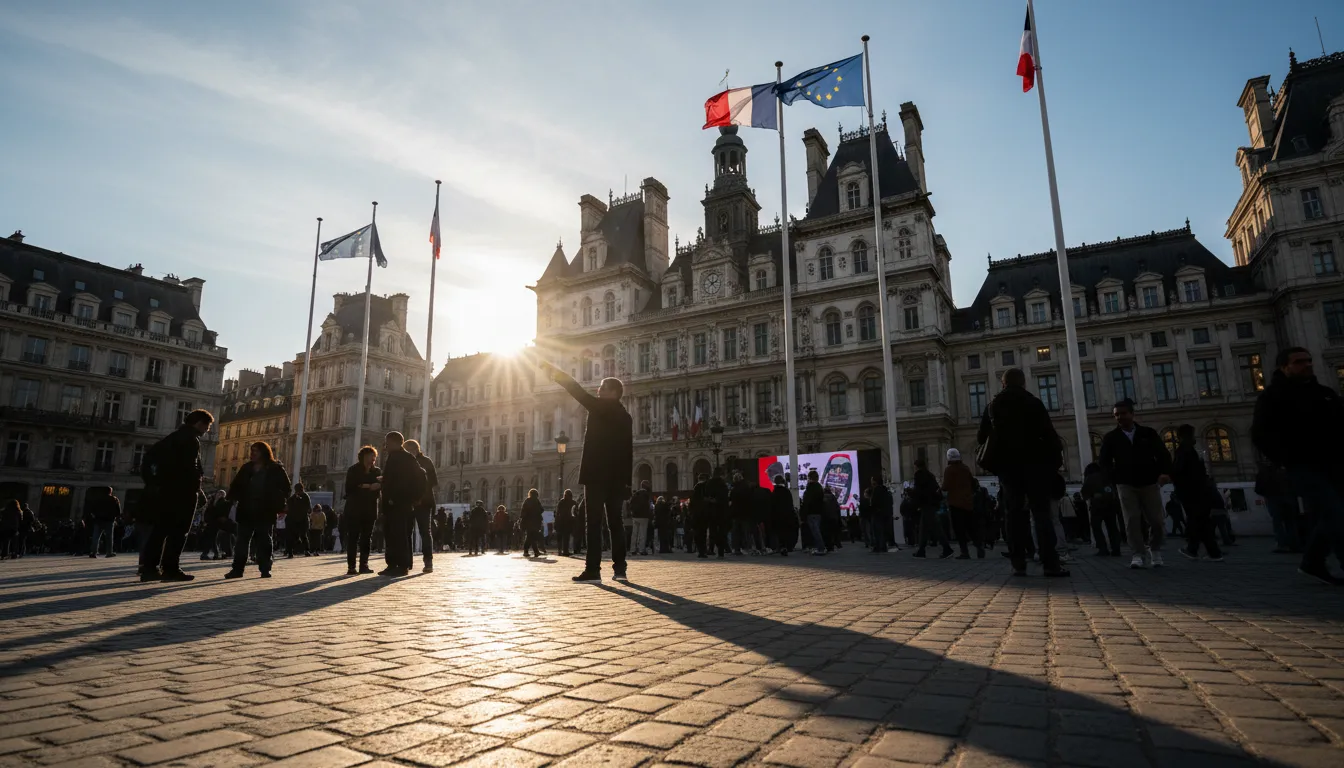
With four days until the first round, the battle for the Paris mayoralty has entered its decisive phase. Emmanuel Grégoire, leading the list of the left-wing union—Socialists, Ecologists, and PCF, without La France Insoumise—is ahead in the polls against Rachida Dati, the Republican candidate supported by MoDem and UDI. According to an Ipsos-BVA poll published in early March, Grégoire has 35% of voting intentions in the first round, compared to 27% for Dati.
The most significant political move of the campaign was Rachida Dati's resignation from the Ministry of Culture at the end of February. After more than two years in government, the former minister submitted her resignation to Emmanuel Macron to fully dedicate herself to her campaign. Her Socialist rival simply commented: "Finally."
A Vote with Multiple National Stakes
With nearly 35,000 municipalities called to the polls on March 15 and 22, the 2026 municipal elections constitute the first major electoral test since the dissolution of the National Assembly in 2024, and the last before the 2027 presidential election. According to the French electoral survey by Ipsos, 82% of French people declare themselves interested in this vote, which all parties consider a true national barometer.
In Paris, the dominant themes are security, street cleanliness, housing, and local taxation. Grégoire is banking on the continuity of a managerial left, while Dati promises a break on quality of life. Around these two leading figures, the race remains open: Pierre-Yves Bournazel (Horizons-Renaissance) and Sarah Knafo (Reconquête!) are each credited with around 11.5%, Sofia Chikirou (LFI) obtains 10%, and the RN candidate Thierry Mariani is stuck at 4%. The second round is expected to be particularly tight, depending entirely on the transfer of votes.
Marseille: Drug Trafficking at the Heart of the Debate
In Marseille, the campaign is taking place under the shadow of violence linked to drug trafficking. The assassination of Mehdi Kessaci in November 2025, followed by a second homicide linked to drug trafficking near the Saint-Charles train station, has deeply marked the public. The Rassemblement National candidate, Franck Allisio, has made it the heart of his campaign, proposing the doubling of the municipal police and a massive deployment of video surveillance. The outgoing mayor Benoît Payan, credited with around 30% of voting intentions—equal with Allisio—defends his record and promises 800 additional officers.
The RN Plays its Presidential Card
For the Rassemblement National, these municipal elections represent an opportunity to convert its national electoral power into lasting local roots. The party is targeting Toulon and dreams of conquering Marseille. According to Public Sénat, the strategy is clear: to build a legitimacy of territorial governance before the 2027 deadline. A victory in a major metropolis would constitute a strong political symbol.
For the traditional Republican parties, the challenge is the opposite: to preserve their strongholds and demonstrate their relevance. As La Libre Belgique points out, the result of March 15 will be scrutinized well beyond French borders—it will redraw the balance of power before the presidential election.