Apple's March Blitz: iPhone 17e, MacBook, New iPads
Apple is rolling out at least five new devices between March 2–4, 2026, skipping a traditional live keynote in favor of a three-day product wave that spans iPhones, laptops, and tablets — capped by a Gemini-powered Siri upgrade.
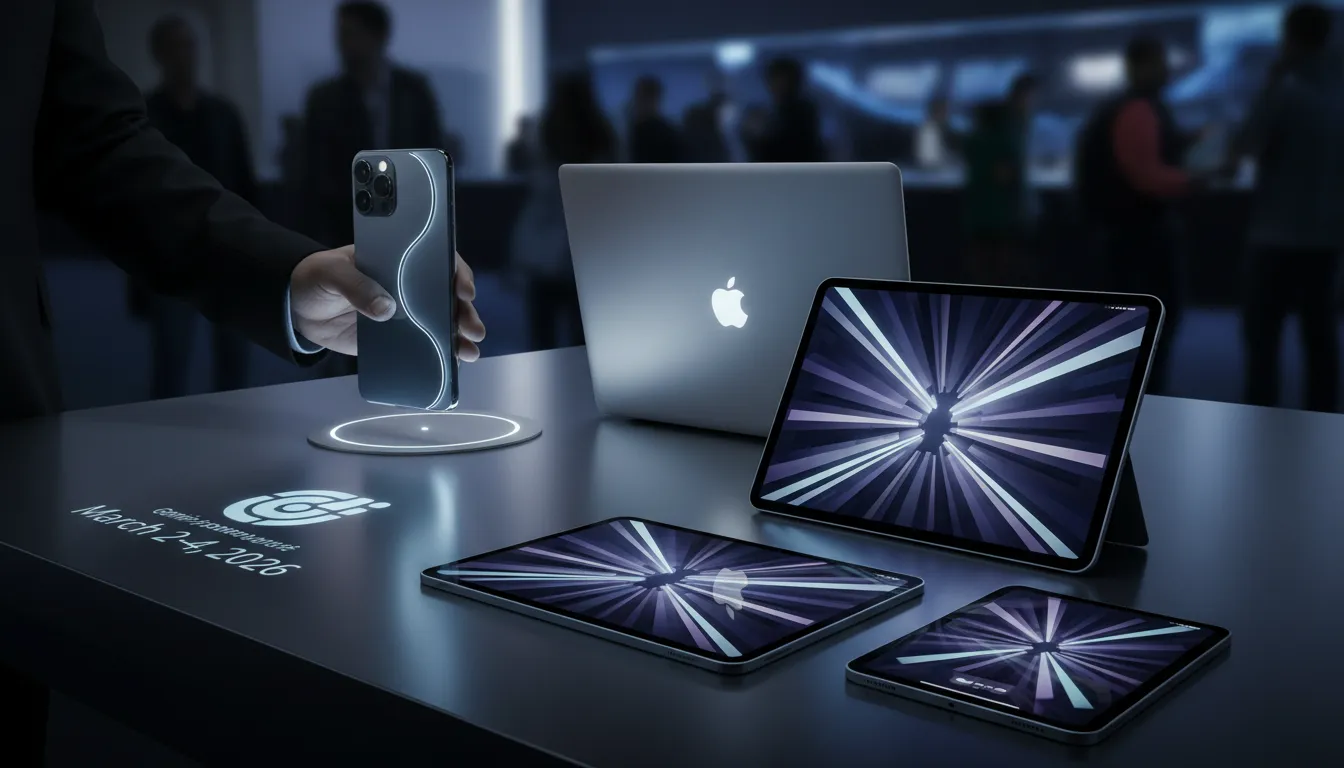
No Keynote, No Problem
Apple is forgoing its customary live event this week, opting instead for a rolling series of press releases and hands-on media sessions in New York, Shanghai, and London on March 4. The strategy lets Cupertino saturate headlines across three consecutive days — and the product list is substantial: at least five new devices spanning every major hardware category the company sells.
iPhone 17e: Budget Phone Gets Serious Upgrades
The headline consumer launch is the iPhone 17e, Apple's entry-level smartphone successor to the iPhone 16e. It arrives with the A19 chip — the same silicon found in the flagship iPhone 17 — representing a significant jump in processing power for a $599 device. Perhaps more importantly for accessory owners, the 17e finally gains MagSafe support, enabling 25W wireless charging, a feature conspicuously absent from its predecessor.
The display retains a 6.1-inch OLED panel at 60Hz. Rumors have persisted that Apple will swap the legacy notch for a Dynamic Island, though sourcing on that detail remains conflicted. An upgraded 18MP front camera is widely expected. Pricing holds steady at $599, according to MacRumors.
Low-Cost MacBook: A Mac Runs on iPhone Chips
The most architecturally unusual launch of the week is a new 12.9-inch MacBook — Apple's attempt to fill the gap below the $999 MacBook Air. Rather than using an M-series processor, the device is powered by the A18 Pro chip, making it the first Mac to use Apple's mobile-derived A-series silicon instead of the dedicated M line. Apple reportedly believes the machine will be "an incredible value" capable of convincing Windows users to switch, according to a 9to5Mac report citing sources familiar with Apple's internal positioning.
The machine is expected to ship in vivid aluminum colors — yellow, blue, pink, green, silver, and dark gray — at a starting price around $699. Compromises include no backlit keyboard, a slower SSD, and no Thunderbolt port. Students and first-time Mac buyers are the clear target demographic.
iPad Air and iPad 12: Intelligence for Everyone
Two iPad refreshes round out the hardware wave. The iPad Air moves from the M3 to the M4 chip, bringing up to 30 percent faster CPU performance and Apple's new N1 networking chip for Wi-Fi 7 support. Pricing is expected to remain at $599 for the 11-inch model.
The entry-level iPad 12 makes an arguably more significant leap: an upgrade to the A18 chip with 8GB of RAM means the base iPad will support Apple Intelligence for the first time. Previously, the affordable tablet was locked out of Apple's AI features due to the A16's 6GB memory ceiling. The addition of the N1 chip also brings Wi-Fi 7 to the $349 device.
Siri Reborn: Google Gemini Under the Hood
The software thread connecting all five devices is a revamped Siri powered by Google Gemini. Apple and Google confirmed a multi-year partnership in January, with CNBC reporting that Gemini will serve as the large language model backbone for Siri's new conversational abilities. Apple is routing requests through its Private Cloud Compute infrastructure to preserve user privacy — a key selling point as rivals face scrutiny over data handling.
The upgraded Siri is expected to ship with iOS 26.4 in late March or early April, available on iPhone 15 Pro and newer — and, critically, on all devices announced this week. For Apple, the March launch wave is less about any single product and more about ensuring that its AI ambitions reach every price point in its lineup simultaneously.