Baden-Württemberg Election 2026: Dramatic Race Between CDU and Greens
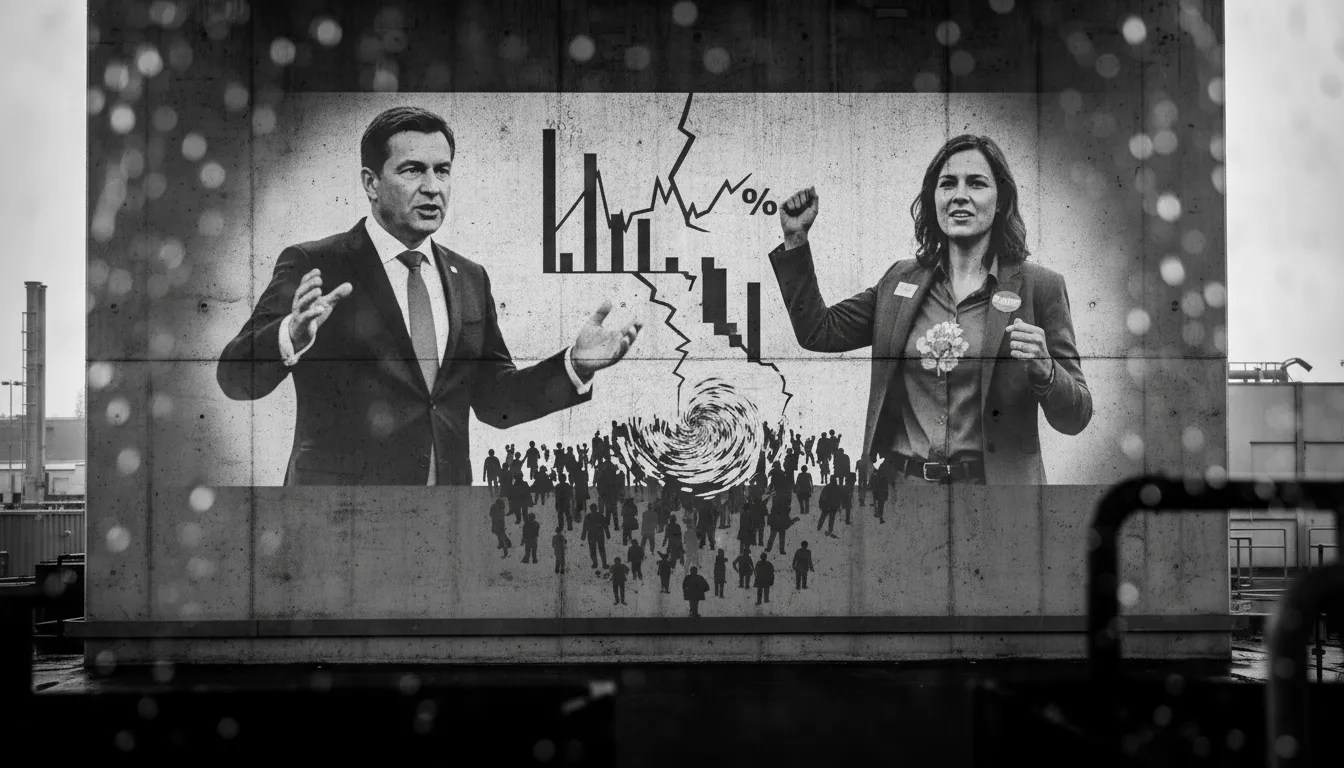
Four days before the state election in Baden-Württemberg on March 8, 2026, the CDU and the Greens are locked in a historically tight race. According to recent polls, the two parties are separated by only one to two percentage points — and about a third of voters are still undecided.
Tension Ahead of the Polls
On Sunday, March 8, 2026, Baden-Württemberg will elect a new state parliament — and the starting position is as open as rarely before. After 15 years, the era of Winfried Kretschmann, the only Green Minister-President in the history of the Federal Republic, comes to an end. Around 7.7 million citizens are eligible to vote, including 16 and 17-year-olds for the first time — about 180,000 new first-time voters who could tip the scales.
Hagel vs. Özdemir: An Unequal Duel
On the CDU side, Manuel Hagel is running, 37 years old and chairman of his party since 2023. If he succeeds, Hagel would be the youngest Minister-President in the history of Baden-Württemberg. His goal: to lead the CDU back to the top of the state after 15 years in opposition. On the other side is Cem Özdemir, former Federal Minister of Agriculture for the Greens and a nationally known figure, who wants to take over the Kretschmann legacy.
In a direct comparison, Özdemir is clearly ahead: 47 percent of those surveyed would prefer to see him as Minister-President, while CDU candidate Hagel only gets 25 percent according to the ZDF Politbarometer. This personal popularity of the Green candidate makes the situation extremely explosive for the CDU despite a narrow lead in the party ratings.
A Dramatic Catch-Up
In October 2025, the CDU was still around nine percentage points ahead of the Greens in polls — a comfortable lead that has since shrunk dramatically. The latest surveys by Infratest dimap see the CDU at 28 to 29 percent and the Greens at 27 percent: a difference of only one to two percentage points, which is within the statistical margin of error. The ZDF Politbarometer from February 27 shows CDU 27, Greens 25 percent — with a third of voters still undecided.
Behind them is the AfD with 19 percent, the SPD comes to 9 percent, FDP and Left each lie at around 6 percent. Compared to the 2021 election, the Greens have lost considerably — at that time they achieved their record result of 32.6 percent. The CDU, on the other hand, is recovering strongly from the historic low of 24.1 percent five years ago.
First Test for Merz
The election on March 8 is considered the first nationwide vote since the formation of the new federal government under Friedrich Merz — and thus an early gauge for the new Berlin politics. The CDU hopes for a tailwind effect from Berlin, the Greens want to prove that they are still strong in the regions despite nationwide losses. However, political scientists urge caution: state elections are primarily decided on regional issues and personalities.
In terms of content, the economic crisis dominates the election campaign: In mechanical engineering alone, around 7,600 jobs were lost in 2025. In addition, debates about migration, education and internal security shape the final sprint — issues in which CDU and AfD rely on approval, while the Greens insist on climate protection and social cohesion.
Coalition and Outlook
According to the Federal Agency for Civic Education, the most likely government option remains a new edition of the Green-Black coalition — but possibly with reversed signs in the office of Minister-President. Who will lead the negotiations as the strongest on Sunday evening will be decided in the course of that night. The undecided voters are likely to significantly shape the result — and thus also the political starting signal for the new era after Kretschmann.