Cashless Payments: Slovakia Pushes Back Mandate to May
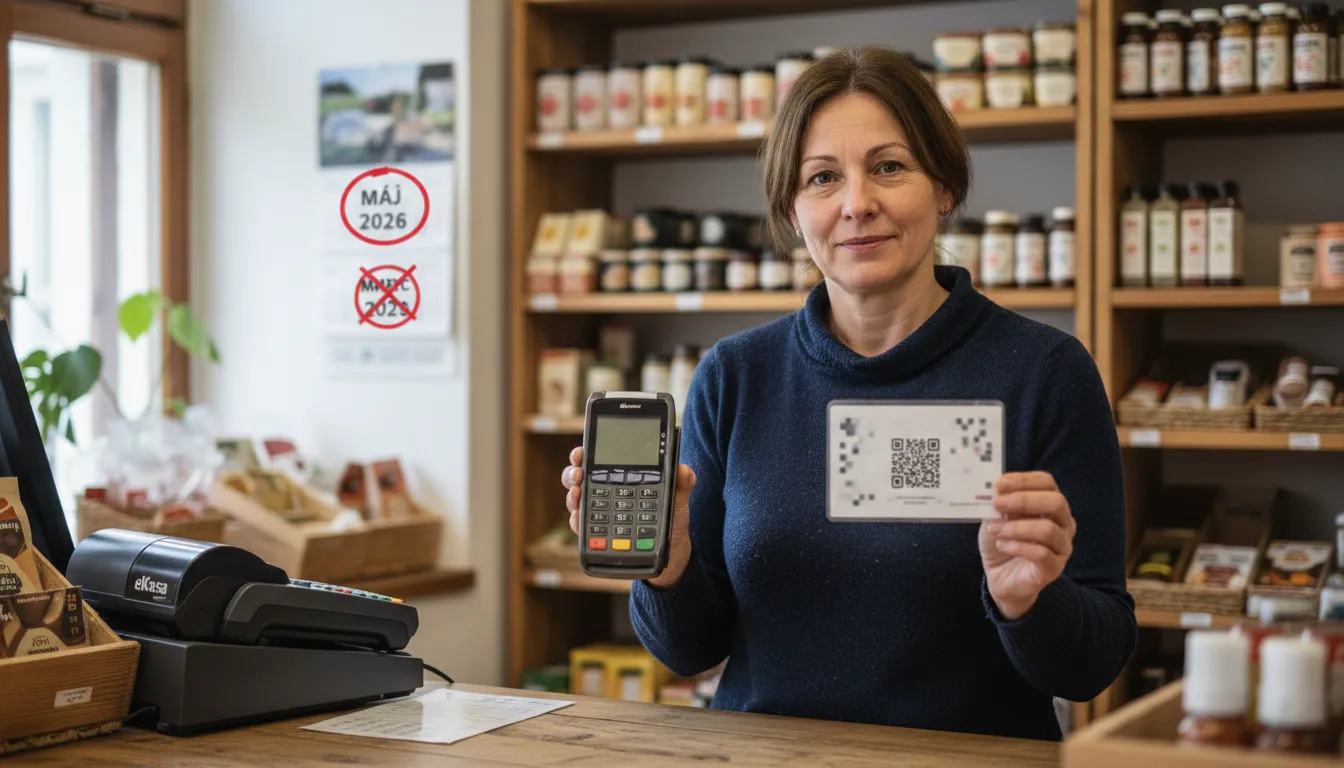
The obligation for businesses to accept cashless payments for transactions over €1 has been postponed from March 1st to May 1st, 2026. Small businesses can choose between a payment terminal, a QR code from eKasa, or a static IBAN code.
Two-Month Delay for Businesses
The Slovak Parliament approved at the end of February 2026 a postponement of the obligation to allow customers to pay cashless, from the original date of March 1st to May 1st, 2026. Small businesses, tradespeople, and artisans have thus been given an additional two months to prepare – whether for the installation of a payment terminal or the setup of a QR code. Cash payments, however, remain legal and must still be accepted.
The new legislation, enshrined in an amendment to the Payment Services Act, mandates that every business must accept at least one form of cashless payment for transactions over one euro. The law does not prescribe a specific technology – businesses can choose the solution that best suits them.
What Options Do Businesses Have?
The law offers several ways to fulfill the new obligation:
- Payment Terminal – classic card payments; for those who already have a terminal, no further obligation arises.
- QR Code from eKasa – the cash register automatically generates a unique code with a specific amount; the customer scans it and confirms the payment in their mobile banking application.
- Static QR Code with IBAN – a printed code with the account number; after scanning, the customer enters the amount manually.
- QR Code from the Merchant's Banking App – generated directly through the seller's bank's mobile application.
Why Did Parliament Postpone the Deadline?
There were several reasons for the postponement. Smaller businesses and trades that have not previously used eKasa systems or payment terminals need time for the technical integration of new solutions. Furthermore, February and March are administratively the most difficult months for the self-employed – it is when they file their tax returns and settle social security and health insurance contributions.
The two-month extension also allowed banks to expand the availability of the QR payment system. According to the Slovak Banking Association, two banks already offer QR payments; two more will join by May, extending coverage to approximately 80 percent of the Slovak population.
Free QR Payments Until 2027
The amendment to the law also includes protection for businesses against rising costs. Banks are not allowed to charge fees for notifications related to cashless payments made through the technical solution of the Financial Directorate of the Slovak Republic – at least until the end of 2027. QR payments will therefore be temporarily free for businesses, which should lower the barrier to the introduction of this technology, especially in small establishments.
A Step Towards Retail Digitization
Despite the postponement, the new obligation represents a significant step forward in the digitization of Slovak retail. Slovakia has long been among the countries with a relatively high proportion of cash transactions compared to Western European countries. The introduction of the obligation of at least one cashless option should gradually change these habits – without customers losing the right to pay in cash.
For businesses that have not yet prepared for the change, May 2026 is the definitive deadline. Violation of the obligation may, according to the law, lead to sanctions by the relevant control authorities. Experts therefore recommend using the remaining weeks and choosing a suitable solution – the easiest way for those without a terminal remains a static QR code, which does not require any expensive equipment or software integration.