The World's Forests Are Becoming Dangerously Uniform as Fast-Growing 'Sprinter' Trees Take Over
A sweeping global analysis of more than 31,000 tree species published in Nature Plants reveals that the world's forests are losing their diversity, with fast-growing but fragile species increasingly dominating at the expense of the slow-growing
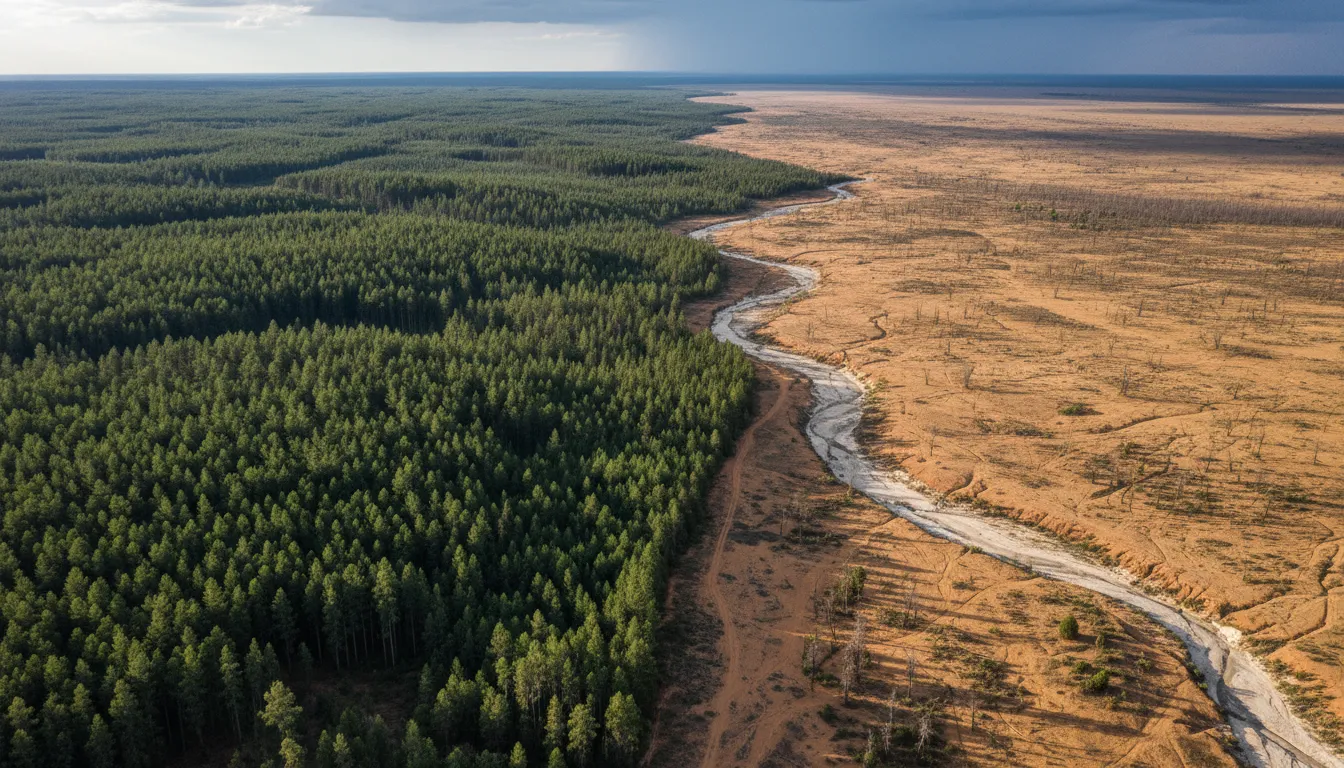
A Forest Revolution Hiding in Plain Sight
A massive international study analyzing more than 31,000 tree species has revealed a transformation unfolding in forests worldwide that could have profound consequences for the planet's climate and biodiversity. Published in Nature Plants, the research shows that forests are becoming increasingly uniform, dominated by what scientists call 'sprinter' trees: fast-growing species with light leaves and low wood density that thrive in disturbed environments.
The sprinters include familiar names like acacia, eucalyptus, poplar, and pine. These species excel at rapid colonization and short-term growth, but they come with a critical weakness: they are more vulnerable to drought, storms, pests, and climatic shocks than the species they are replacing.
The Loss of Forest Backbone
The species being displaced are the slow-growing specialists that form the backbone of forest ecosystems. These trees, characterized by thick leaves, dense wood, and long lifespans, are adapted to the stable conditions of moist tropical and subtropical forests. They contribute disproportionately to stability, long-term carbon storage, and resilience to environmental change.
The drivers of this shift are well known: climate change, deforestation, and habitat fragmentation create conditions that favor opportunistic species over specialists. As old-growth forests are cleared or degraded, the sprinters rush in. When native trees are displaced through extinction or range contraction, the functional diversity of forests collapses.
Consequences for Carbon and Climate
The implications for global carbon management are significant. Dense, slow-growing hardwoods store far more carbon per unit of biomass than their fast-growing replacements. As forests shift toward lighter-wooded species, their total carbon storage capacity declines even if the number of trees remains constant or increases. This means that reforestation efforts that focus on fast-growing species may produce impressive tree counts while delivering far less climate benefit than expected.
The study also raises concerns about forest resilience in an era of increasing climate extremes. A forest dominated by sprinter species is like an economy dominated by startups: dynamic and fast-growing but fragile and prone to cascading failures when conditions turn adverse. A single severe drought or pest outbreak could devastate vast tracts of uniform forest, releasing stored carbon and triggering further ecosystem degradation.
A Call for Smarter Conservation
The researchers emphasize that understanding these functional shifts is essential for effective conservation and restoration strategies. Protecting remaining old-growth forests, with their irreplaceable diversity of slow-growing specialist species, becomes even more urgent in light of these findings. Restoration projects must prioritize functional diversity over simple tree counts, ensuring that replanted forests include the slow-growing species that provide long-term stability.
The study serves as a reminder that the health of the world's forests cannot be measured by area alone. What matters equally is the composition of those forests, and by that measure, the trend is deeply concerning.