Friendship Pipeline Dispute: Orbán Blocks EU's 20th Sanctions Package
Hungary is vetoing the EU's 20th package of sanctions against Russia and a €90 billion aid package for Ukraine until Ukraine resumes oil transit through the Friendship pipeline.
The Shutdown of the Friendship Pipeline Sparks Crisis
On January 27, the flow of Russian crude oil through the Friendship pipeline to Hungary and Slovakia stopped. Kyiv claims that Russian missile and drone strikes damaged the pipeline, so the Ukrainian side cannot guarantee transit. Budapest, however, considers the shutdown to be political blackmail: Foreign Minister Péter Szijjártó says that Ukraine is deliberately hindering the restoration of oil supplies to cause fuel shortages and price increases in Hungary — especially before the upcoming parliamentary elections on April 12.
Veto Against Sanctions
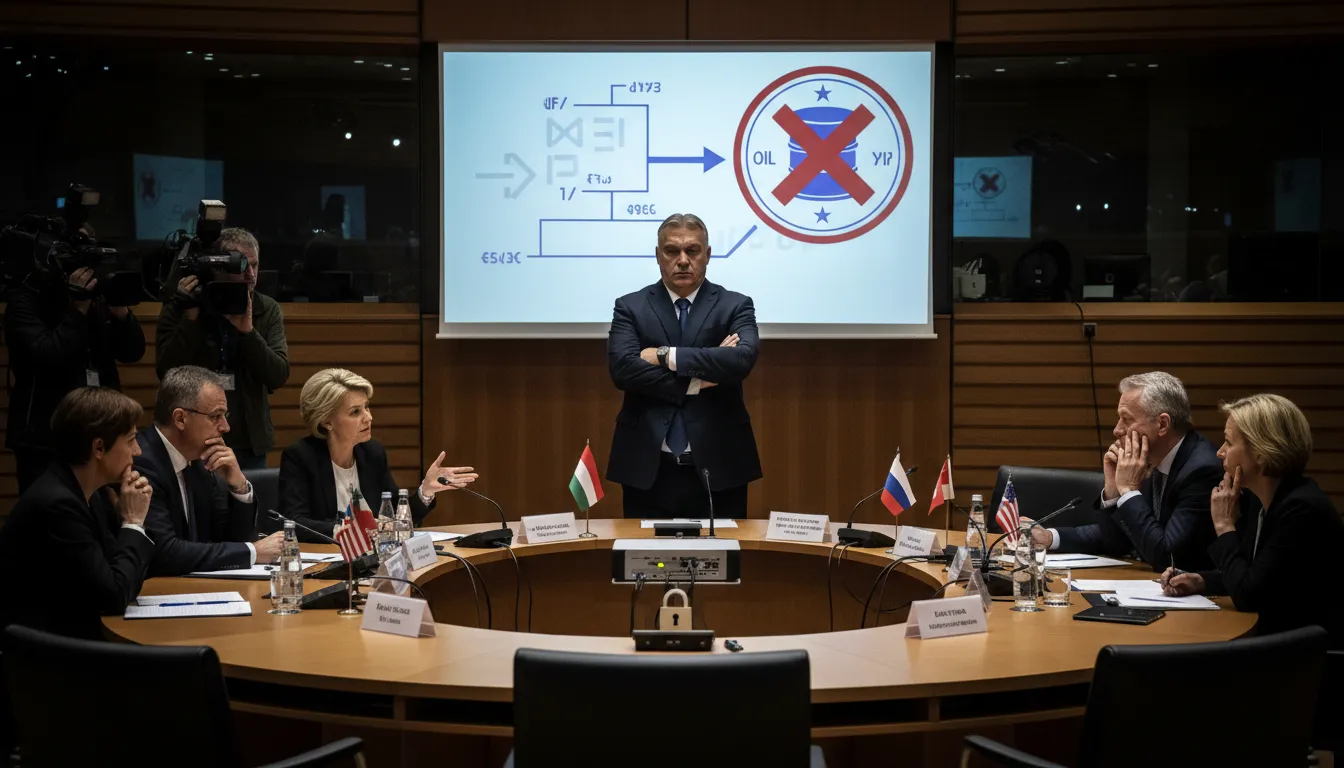
On February 22, the Hungarian government announced that it would prevent the adoption of the European Union's 20th package of sanctions against Russia. Péter Szijjártó stated clearly: Hungary will not agree to any EU decision important to Ukraine until the Ukrainian side restarts oil transit through the Friendship pipeline.
"We do not agree to the adoption of the 20th sanctions package, because we have previously stated clearly: as long as the Ukrainians do not restart oil supplies to Hungary, we will not allow decisions that are important to Ukraine." – Foreign Minister Péter Szijjártó
It is noteworthy that Hungary had previously — despite earlier threats of veto — ultimately agreed to all previous sanctions packages. However, in the case of the 20th package, according to 444.hu, Budapest is actually blocking its adoption this time.
The €90 Billion Loan and the IMF Chain
Budapest is not only blocking the sanctions: Hungary has also vetoed the adoption of the EU's planned €90 billion military and economic loan package for Ukraine. The approval of the loan requires a unanimous decision by member states, so a single veto is sufficient to block it. The consequences could ripple through: the IMF's $8 billion Ukrainian loan program is conditional — Kyiv can only receive it if the EU loan arrives first. Therefore, a single Hungarian veto could jeopardize Ukraine's entire external financing system.
Countermeasures: Diesel Stop and Energy Security Council
The two affected countries were not satisfied with verbal threats: Hungary and Slovakia have suspended diesel exports to Ukraine, on which Kyiv depends for its own fuel supply. Viktor Orbán announced four countermeasures, including convening an energy security consultation. According to the Prime Minister, Kyiv and Brussels are trying to create chaos in Hungary in a coordinated manner before the elections.
Ukraine Rejects Ultimatum
The Ukrainian Ministry of Foreign Affairs strongly rejects the Hungarian and Slovak ultimatums, calling them "blackmail and playing into the hands of the occupying state." Kyiv also offered an alternative solution: to transport crude oil to the two neighboring countries via the Odessa-Brody oil pipeline and by sea. Péter Szijjártó, however, did not accept this and asked Croatia to help Hungarians access Russian oil through the Adria oil pipeline.
In the Shadow of the Anniversary
The clash is taking place in a particularly sharp political context: February 24 marks the fourth anniversary of the outbreak of the Russian-Ukrainian war. EU member states are urging ever stronger unity against Russia, while Hungary's veto once again highlights that Budapest and Brussels are fundamentally diverging in their handling of the conflict. There is no prospect of compromise for the time being: Budapest insists on the condition of oil transit, Ukraine rejects the ultimatum — and the fourth year of the war begins with increasing pressure.