Housing Market Stalls as Mortgage Rates Hit 7-Month High
US mortgage rates climbed to 6.46%, their highest in seven months, as the war in Iran drives oil prices higher and reignites inflation fears — but rising inventory may offer savvy buyers a window of opportunity.
Geopolitical Shock Reverses Rate Progress
The U.S. housing market's promising spring season has hit a wall. The average 30-year fixed mortgage rate surged to 6.46% for the week ending April 2, 2026 — its highest level since September 2025, according to Freddie Mac. Just weeks earlier, in late February, rates had briefly dipped below 6% for the first time in over three years.
The culprit is geopolitical turmoil. Since coordinated U.S.-Israeli military strikes on Iran began on February 28, global oil prices have spiked above $100 per barrel, reigniting inflation fears and sending 10-year Treasury bond yields sharply higher. Mortgage rates, which closely track those yields, followed suit — climbing nearly half a percentage point in a matter of weeks.
A Spring Season in Limbo
The rate reversal has "seriously complicated the spring buying season," according to analysis from Realtor.com, with many prospective buyers postponing purchases amid the uncertainty. The Mortgage Bankers Association's Refinance Index plunged 17% in late March, signaling that both buyers and refinancers are retreating.
The Federal Reserve, which had been expected to resume rate cuts in 2026, now appears likely to hold its benchmark at 3.50%–3.75% for the foreseeable future. Earlier predictions of easing have been effectively erased by the war's inflationary pressure on energy costs.
J.P. Morgan Global Research projects U.S. home prices will stall at 0% growth in 2026 — a dramatic slowdown after nearly a decade in which values roughly doubled. The firm estimates the nation's actual housing shortage at approximately 1.2 million units, substantially below some more aggressive industry estimates.
A Silver Lining for Prepared Buyers
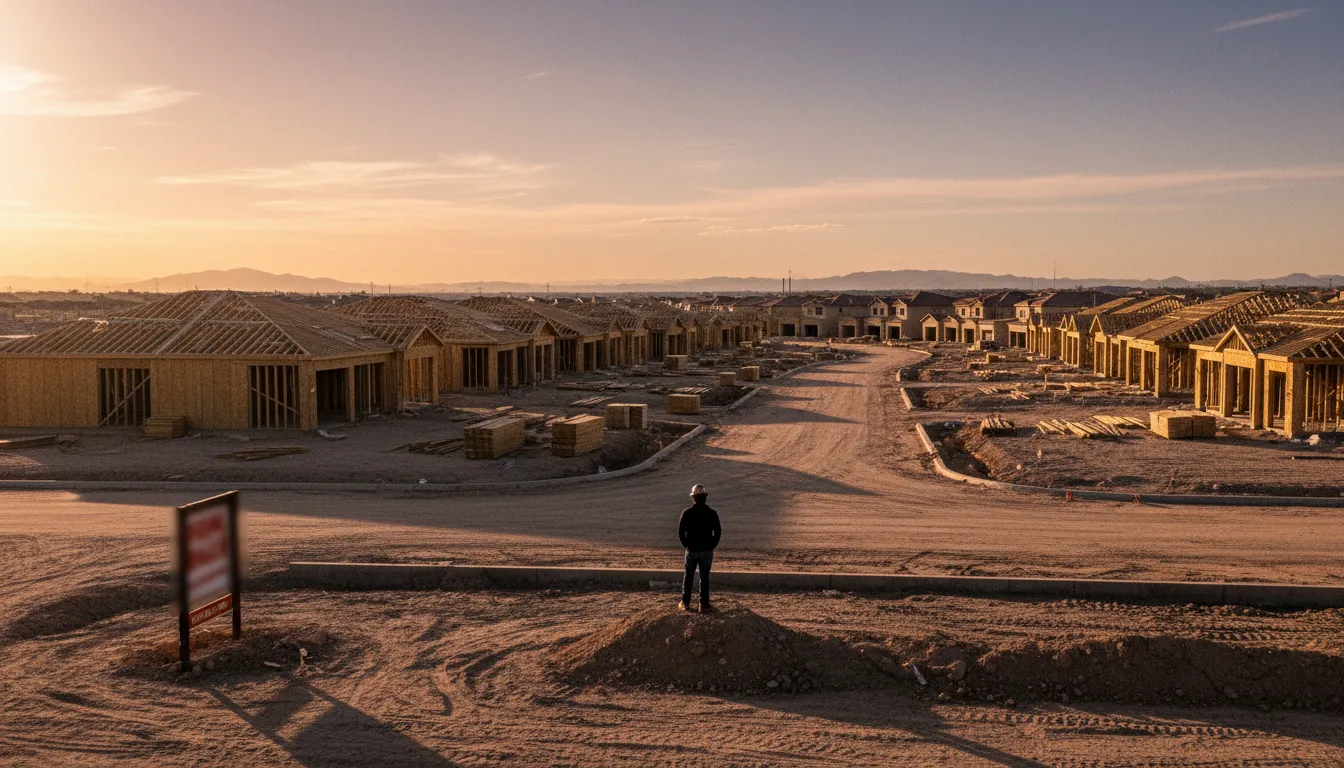
Paradoxically, buyers who can weather the higher rates may find themselves in a stronger negotiating position than at any point in recent years. National housing inventory has risen roughly 8% year-over-year, and approximately 16.2% of active listings have undergone price reductions — a sign that sellers are adjusting to the new reality.
In markets across the Sun Belt and West Coast, supply is climbing particularly fast. The share of listings with price cuts reached 34.7% in recent weeks, according to HousingWire, compared to roughly 33% during the same period last year.
Adjustable-rate mortgages now account for about 9% of all applications, as buyers seek lower initial payments. Government-backed VA and FHA loans remain comparatively attractive, with rates between 5.80% and 6.25%. Builder rate buydowns are also becoming more common as developers try to move inventory.
What Comes Next
Analysts suggest that any de-escalation in the Middle East could trigger a rapid retreat in oil prices and, by extension, mortgage rates — creating a brief but potentially significant buying window. John Sim, head of Securitized Products Research at J.P. Morgan, noted that "lower adjustable-rate mortgage rates and builder buydowns could shift demand higher while supply increases subside."
For now, the housing market finds itself caught between two forces: geopolitical uncertainty pushing costs higher, and growing inventory pulling prices lower. The result is a stalemate — and for patient, well-positioned buyers, possibly an opportunity.