How Alcohol Hides in Flower Nectar—and Why Animals Drink It
Flower nectar routinely contains ethanol produced by fermenting yeasts. A new UC Berkeley survey found alcohol in 26 of 29 plant species, revealing that hummingbirds, bees, and other pollinators consume surprising amounts daily without apparent intoxication.
A Hidden Bar in Every Blossom
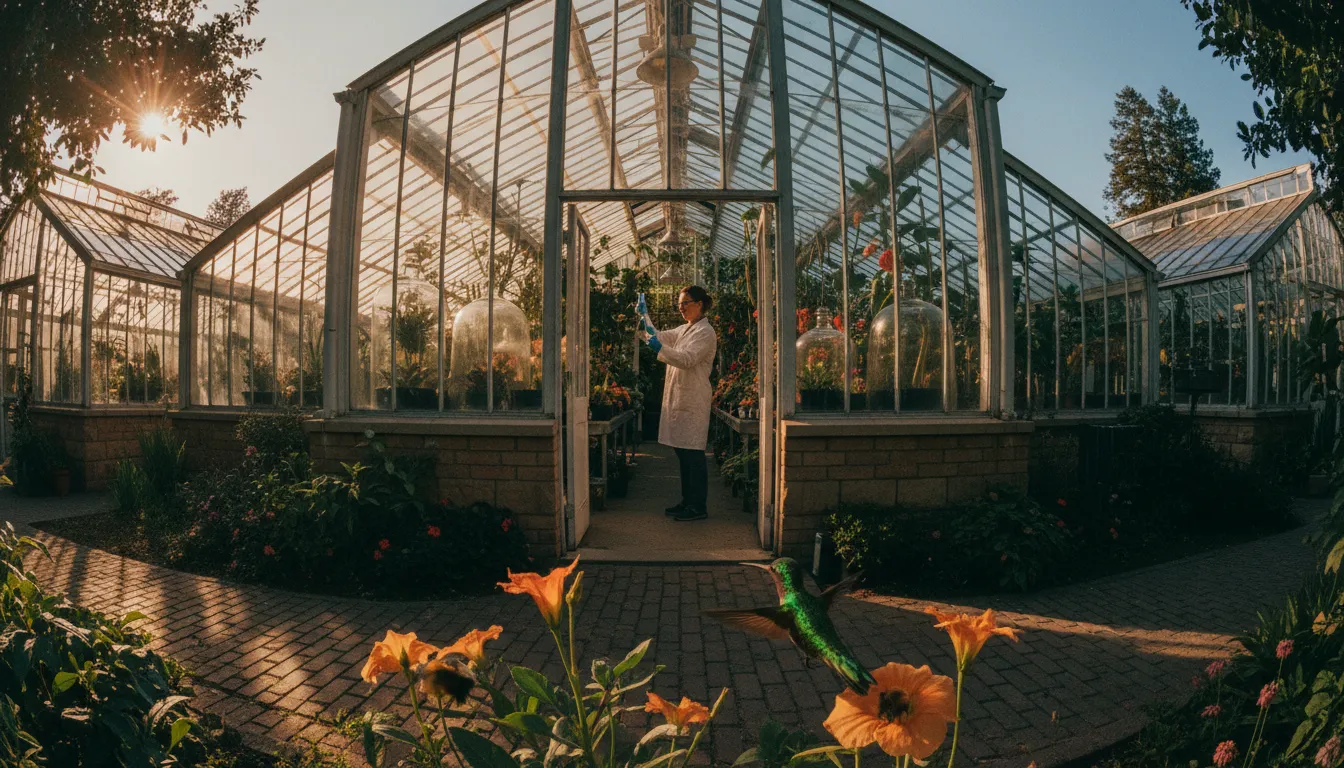
When a hummingbird dips its beak into a flower, it is not just sipping sugar water. It is also drinking alcohol. Yeasts colonize floral nectar and ferment its sugars into ethanol—the same compound found in beer and wine—turning blossoms into tiny, naturally occurring cocktail bars.
Scientists have long known that fermenting fruit can intoxicate animals, from waxwings stumbling after gorging on berries to elephants rumored (though debated) to get tipsy on marula fruit. But the role of alcohol inside flowers themselves has received far less attention—until now.
The First Large Nectar Alcohol Survey
A team at the University of California, Berkeley, led by doctoral student Aleksey Maro and professor Robert Dudley, has published the first broad survey of ethanol in floral nectar. Their study, appearing in Royal Society Open Science, tested nectar from 29 plant species and detected ethanol in at least 26 of them.
Concentrations were generally low. Most samples contained only trace amounts, but the highest reading reached 0.056% ethanol by weight—roughly one-tenth of a proof. The source is straightforward: wild yeasts from the genus Metschnikowia and related species land on flowers, colonize the sugar-rich nectar, and begin fermenting it almost immediately.
How Much Are Pollinators Actually Drinking?
The numbers become striking when scaled to body size. An Anna's hummingbird (Calypte anna), common along the Pacific coast of North America, drinks between 50% and 150% of its body weight in nectar each day. The Berkeley team estimates this translates to roughly 0.2 grams of ethanol per kilogram of body weight daily—the equivalent of a human having one standard alcoholic drink.
Other nectar-feeding species fall in a similar range. Sunbirds consume an estimated 0.19–0.27 g/kg/day, while honeybees take in about 0.05 g/kg/day. At the extreme end, the pen-tailed tree shrew of Southeast Asia—which feeds on naturally fermented palm nectar—ingests about 1.4 g/kg/day, the highest chronic alcohol intake documented in any wild animal.
Why Don't They Get Drunk?
Despite consuming what would be a noticeable dose for a human, these animals show no visible signs of intoxication. The explanation likely lies in their extraordinary metabolisms.
"Hummingbirds are like little furnaces. They burn through everything really quick, so you don't expect anything to accumulate in their bloodstream." — Aleksey Maro, UC Berkeley
Hummingbirds have among the highest metabolic rates of any vertebrate. Their bodies process sugars—and apparently ethanol—at blistering speed. Analysis of hummingbird feathers has revealed ethyl glucuronide, a byproduct of alcohol metabolism also found in humans, confirming that these birds absorb and break down the ethanol rather than simply passing it through.
Behavioral tests by the same group showed that hummingbirds willingly drink sugar water containing up to 1% alcohol but reduce visits by half when the concentration reaches 2%. "Somehow they are metering their intake," Dudley noted, suggesting the birds self-regulate to stay within concentrations they encounter in the wild.
Why It Matters for Ecology
The presence of alcohol in nectar has implications beyond animal physiology. If pollinators preferentially visit flowers with fermenting nectar—attracted by taste, caloric value, or volatile aromas produced by yeast—it could reshape scientific understanding of plant-pollinator relationships.
Ethanol contains nearly twice the calories per gram of carbohydrates, making fermented nectar a richer energy source. Some research suggests that bumblebees remove significantly more nectar from flowers colonized by yeasts than from sterile controls, hinting that fermentation may actually benefit plants by attracting more visitors.
Conversely, chronic low-level alcohol exposure could affect pollinator navigation, foraging efficiency, or long-term health in ways that are not yet understood. As habitats change and floral communities shift, understanding these subtle chemical dynamics becomes increasingly important.
A New Lens on an Ancient Relationship
The relationship between alcohol and animals is far older than human brewing. Fermenting fruit and nectar have been part of ecosystems for millions of years, and many species appear to have evolved metabolic machinery to handle the exposure. The Berkeley findings suggest that for nectar feeders, alcohol is not an occasional accident—it is a routine part of every meal.
"The comparative biology of ethanol ingestion deserves further study," Dudley said. His team, funded by the National Science Foundation, is now expanding investigations into alcohol's role in animal diets across tropical regions, where nectar diversity—and fermentation—may be even greater.