How Arctic Sea Ice Works—and Why Its Loss Matters
Arctic sea ice is far more than frozen water at the top of the world. It regulates global temperatures, drives ocean circulation, and sustains entire food webs — and its rapid decline is reshaping the planet's climate system.
More Than Just Frozen Ocean
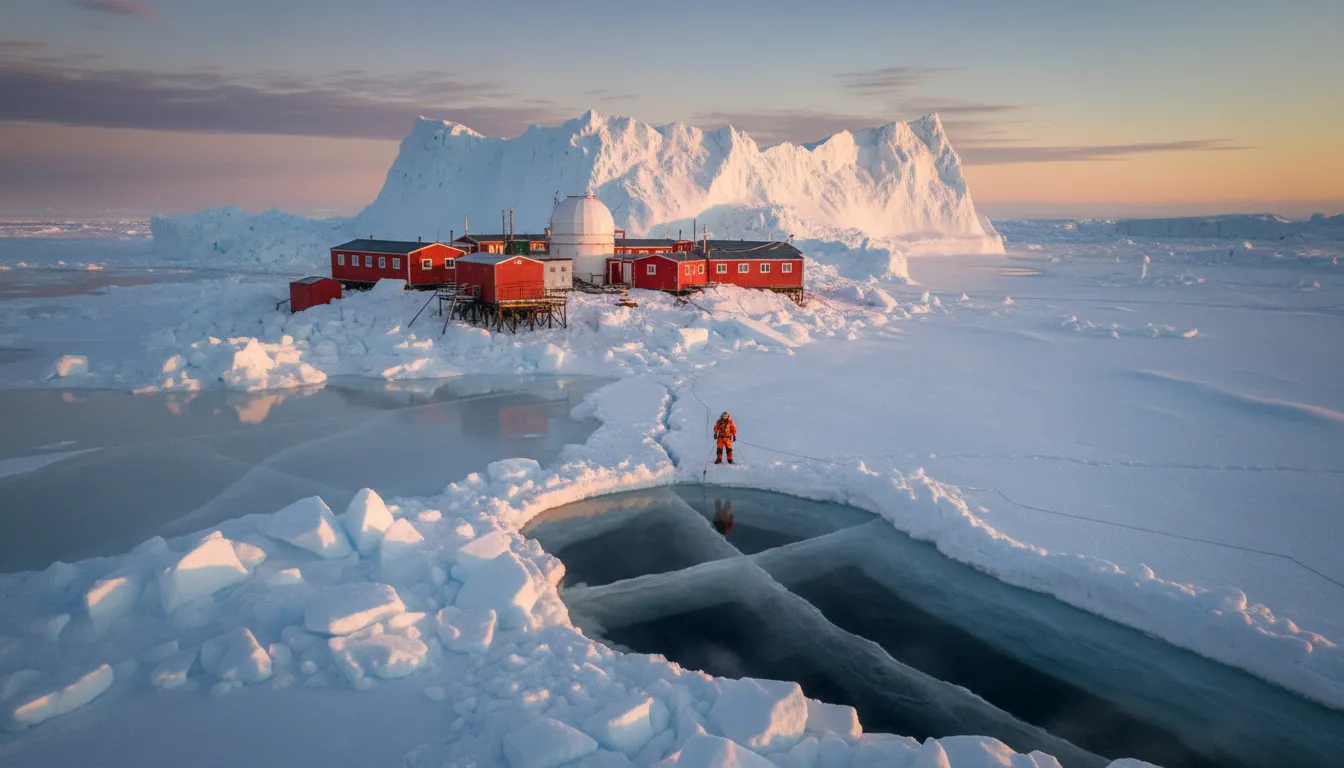
At first glance, Arctic sea ice looks like a static white blanket covering the top of the world. In reality, it is one of the most dynamic and critically important components of Earth's climate system — a seasonal engine that helps regulate temperatures, weather patterns, and ocean currents across the entire planet.
Sea ice is fundamentally different from glaciers or ice sheets. While glaciers form on land from compacted snow, sea ice is frozen ocean water that grows and shrinks with the seasons. Each winter, Arctic sea ice expands across millions of square kilometers. Each summer, it retreats. The difference between its winter maximum and summer minimum has been widening dramatically in recent decades.
How Sea Ice Forms
When Arctic Ocean surface temperatures drop to around -1.8°C — the freezing point of saltwater — ice crystals begin to form. As they do, the freezing process expels most of the salt back into the water below, leaving the new ice relatively fresh. This process has a profound side effect: the water beneath the forming ice becomes saltier and denser, causing it to sink toward the ocean floor.
That sinking of cold, dense polar water is the engine behind the global ocean conveyor belt — the thermohaline circulation that redistributes heat across the planet. Without sea ice formation, this circulation would weaken, with far-reaching consequences for climates as distant as Western Europe.
Over multiple winters, ice that survives the summer melt season becomes multiyear ice, which can grow 4–5 meters thick. This older, thicker ice is far more stable and reflective than the thin, first-year ice that now dominates the Arctic — a shift that scientists say has significantly weakened the ice pack's resilience.
The Planet's Air Conditioner
Sea ice's most important climate function is its extraordinary reflectivity, known as albedo. Bright white ice reflects roughly 80% of incoming solar radiation back into space. Open ocean water, by contrast, absorbs more than 90% of that energy as heat. This difference is enormous.
As the Arctic warms and ice retreats, more dark ocean surface is exposed. That surface absorbs more heat, which warms the water further, which melts more ice — a self-reinforcing cycle known as the ice-albedo feedback loop. It is one of the key reasons the Arctic is warming two to three times faster than the global average, a phenomenon scientists call Arctic amplification.
The Ecosystem It Supports
Sea ice is, as the National Snow and Ice Data Center puts it, "to the Arctic what soil is to the forest." Tiny algae grow within the ice's salt channels during winter, releasing into the water when the ice melts in spring. This triggers phytoplankton blooms that fuel the entire marine food web — from zooplankton to Arctic cod, to ringed seals, to polar bears.
Walruses use sea ice as resting platforms between dives. Female polar bears dig dens in snow drifts near the ice edge to give birth. Seals pup on stable ice floes. The loss of sea ice does not merely shrink a habitat — it dismantles an entire ecological network built over millennia.
What Happens When It Disappears
The consequences of Arctic sea ice loss extend far beyond the polar region. Research from NOAA and NSIDC suggests that a shrinking Arctic ice cap distorts the jet stream — the high-altitude river of wind that steers weather systems across the Northern Hemisphere. A weakened jet stream tends to meander more widely and move more slowly, potentially trapping weather systems in place and intensifying extreme events: prolonged heatwaves, cold snaps, flooding rains, and droughts.
Sea ice loss also contributes indirectly to sea level rise. While floating sea ice itself does not raise sea levels when it melts (it already displaces its own volume), Arctic warming driven by ice loss accelerates the melting of Greenland's land-based ice sheet — which does raise sea levels significantly.
A System Under Stress
Since satellite monitoring began in 1979, Arctic sea ice extent has declined at a rate of roughly 13% per decade in summer. The ice that remains is predominantly thin, first-year ice rather than the thick multiyear ice that once dominated. Scientists now consider an ice-free Arctic summer — defined as less than one million square kilometers of sea ice — not a distant possibility but a near-term likelihood within decades.
Understanding how Arctic sea ice works is essential not just for polar science, but for grasping the interconnected systems that keep Earth's climate stable. What happens at the top of the world does not stay there.