How Dust Storms Create Electricity on Mars
Mars dust devils and storms generate static electricity strong enough to spark, reshaping the planet's chemistry and posing challenges for future missions. Here's the science behind this electrifying phenomenon.
A Planet Crackling With Sparks
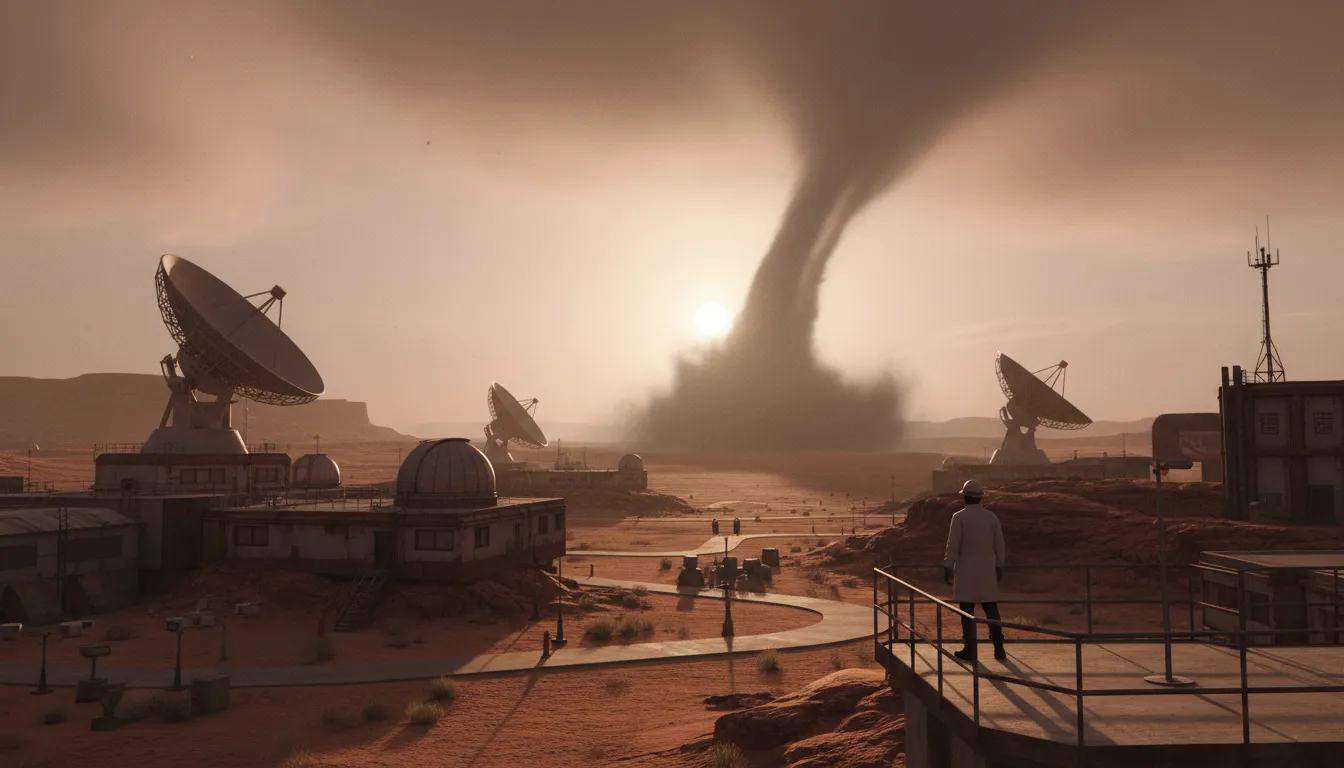
Mars may look like a silent, rust-colored desert, but its surface is far from quiet. Powerful dust storms and swirling dust devils generate static electricity strong enough to produce faint glowing discharges—tiny lightning-like sparks—that ripple across the planet. Long theorized by planetary scientists, this phenomenon has now been confirmed by direct observation, opening a new chapter in our understanding of the Red Planet.
The Triboelectric Effect: Friction Meets Thin Air
The mechanism behind Martian electricity is surprisingly familiar. It relies on triboelectric charging—the same process that makes a spark jump from your finger to a doorknob after shuffling across a carpet in socks. When countless tiny dust grains collide and rub against one another inside a dust devil or storm, electrons transfer between particles. Smaller grains tend to pick up negative charges while larger ones become positive, building up powerful electrical fields.
On Earth, our thick atmosphere acts as a strong insulator, requiring enormous charge buildups before sparks can fly. Mars is different. Its atmosphere is roughly one hundred times thinner than Earth's and composed mostly of carbon dioxide. That means far less electrical charge is needed to trigger a discharge. Even modest dust events can produce short electric arcs just a few centimeters long.
Perseverance Heard It Happen
The key evidence came from NASA's Perseverance rover, which landed in Jezero Crater in 2021. Its SuperCam instrument, equipped with a sensitive microphone, captured audio recordings of electrical discharges—crackling sparks and mini-sonic booms—as dust devils passed overhead. The results, published in Nature, documented 55 distinct electrical events over the course of the mission, sixteen of them recorded when dust devils swept directly over the rover.
Separately, NASA's MAVEN orbiter detected the first confirmed lightning whistler in Mars's atmosphere—an electromagnetic signature produced when electrical discharges send radio waves along the planet's magnetic field lines.
Rewriting Martian Chemistry
These sparks do more than crackle. Researchers at Washington University in St. Louis showed that electrostatic discharges drive significant chemical reactions in Mars's atmosphere and soil. The electrical energy is sufficient to break apart molecules and create highly oxidizing compounds, including chlorates and perchlorates—toxic salts found across the Martian surface that have long puzzled scientists.
The discharges also produce volatile chlorine species, activated oxides, and airborne carbonates. They may even destroy trace amounts of methane, a gas whose sporadic detection on Mars has fueled debate about possible biological sources. In short, dust-generated electricity appears to be a major, previously underestimated driver of the planet's chemical cycles.
What It Means for Future Explorers
For engineers designing hardware for Mars, the findings carry practical weight. Electrical discharges could interfere with sensitive electronics on spacesuits, rovers, and landing vehicles. NASA engineers are already considering countermeasures: pointed needles that slowly leak off accumulated charge, and suits built from poorly conducting materials that resist charge buildup.
The perchlorates created by these electrical processes also pose a health risk. These compounds are toxic to humans and could contaminate soil that future astronauts might encounter daily. Understanding how and where they form is essential for planning safe landing sites and habitat designs.
A Livelier World Than We Thought
Mars was once dismissed as geologically and atmospherically dead. The discovery that its dust storms actively generate electricity and drive complex chemistry paints a far more dynamic picture. Every dust devil that skitters across Jezero Crater is a tiny electrochemical reactor, reshaping the soil and atmosphere in ways scientists are only beginning to map. For anyone dreaming of setting foot on Mars, understanding this invisible electrical landscape is not optional—it is essential.