How El Niño Works—and Why Super Events Hit Harder
El Niño is a recurring climate pattern driven by warming waters in the tropical Pacific that reshapes weather worldwide. Here is how the ocean-atmosphere feedback loop works, what distinguishes a super El Niño, and why it matters for food, floods, and global temperatures.
A Pattern Born in the Pacific
Every few years, a vast stretch of the tropical Pacific Ocean warms beyond its usual temperature, setting off a chain reaction that alters weather patterns on every inhabited continent. Scientists call this phenomenon El Niño—Spanish for "the little boy"—and together with its cold counterpart La Niña, it forms the Earth's most powerful year-to-year climate swing: the El Niño–Southern Oscillation (ENSO).
Understanding how El Niño works is essential because its effects ripple far beyond the ocean. It can spike global temperatures, trigger droughts and floods thousands of kilometers apart, and threaten food supplies for hundreds of millions of people.
How El Niño Develops
Under normal conditions, strong trade winds blow from east to west across the equatorial Pacific. These winds push sun-warmed surface water toward Southeast Asia and Australia, piling it up in the western Pacific. Meanwhile, cooler, nutrient-rich water wells up along the coast of South America—a process called upwelling.
An El Niño event begins when those trade winds weaken or reverse. Without the winds pushing it westward, warm water sloshes back toward the central and eastern Pacific. This deepens the thermocline—the boundary between warm surface water and the cold deep ocean—suppressing upwelling off South America.
What makes the system so powerful is a self-reinforcing loop known as Bjerknes feedback. Warmer eastern Pacific waters heat the air above them, which further weakens the trade winds, which allows still more warm water to spread east. The ocean and atmosphere egg each other on until the cycle peaks, typically lasting 9 to 12 months before conditions swing back.
Global Weather Disruption
By redistributing heat across the planet's largest ocean basin, El Niño shifts the position and strength of the jet streams, producing side effects worldwide:
- Southern United States tends to see wetter, cooler winters, while the northern tier stays warmer and drier.
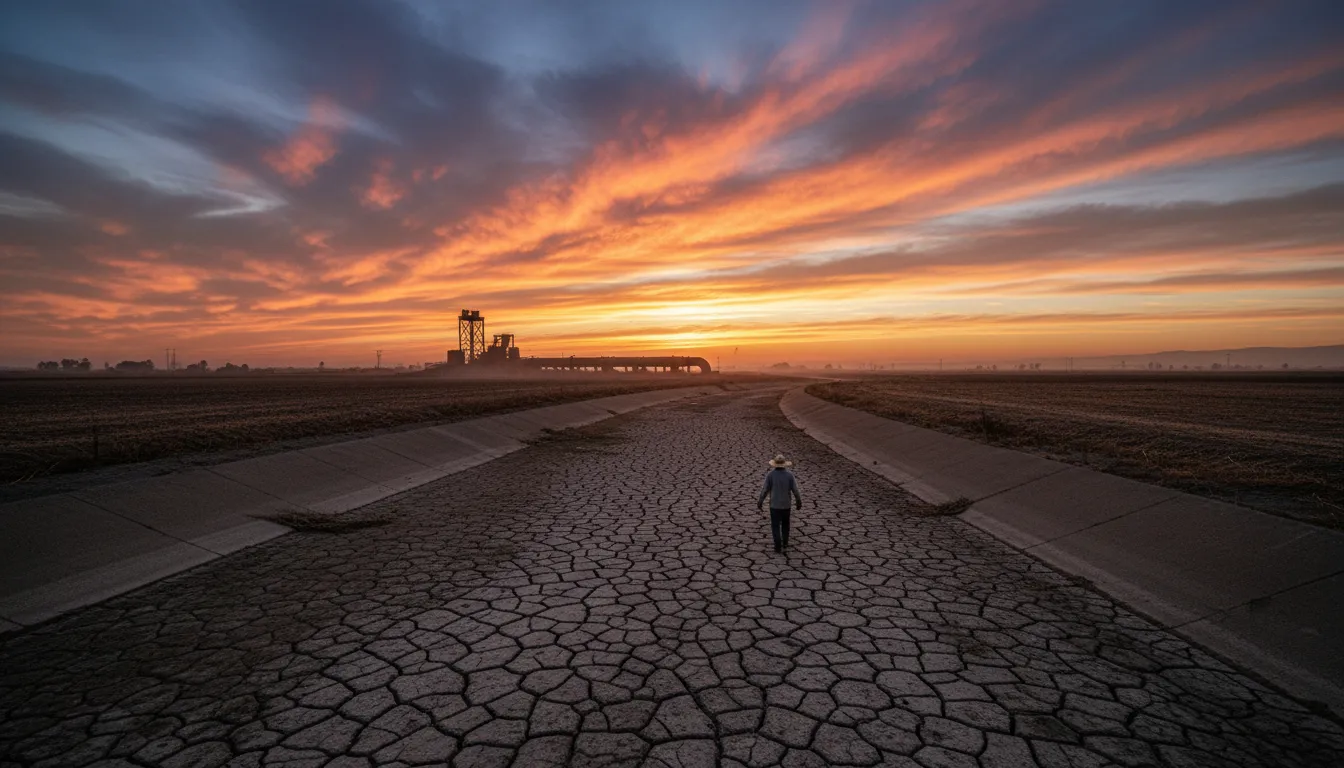
- Southeast Asia and Australia typically experience drought, raising wildfire risk and straining water supplies.
- East Africa often receives above-average rainfall between October and December, increasing the risk of flooding and landslides.
- Southern Africa and India face reduced monsoon rainfall during their main growing seasons.
- South America's western coast sees heavy rains and flooding, while the Amazon basin dries out.
El Niño also suppresses Atlantic hurricane formation by increasing wind shear over the basin, while amplifying typhoon activity in the central Pacific.
What Makes a "Super" El Niño
Not all El Niño events are equal. Informally, forecasters use the term "super El Niño" when sea surface temperatures in the key Niño 3.4 region exceed 2 °C above average. Only three events in the modern record have crossed that threshold: 1982–83, 1997–98, and 2015–16.
The 1997–98 event is often cited as the most destructive, causing an estimated $35 billion in damage and 23,000 deaths worldwide. The 2015–16 event slightly surpassed it in ocean temperatures and helped push global average temperatures to record highs.
During super events, the standard impacts intensify, last longer, and reach farther. Droughts deepen, floods worsen, and coral bleaching events can devastate entire reef systems.
Why It Matters for Food Security
El Niño's disruption of rainfall and temperature patterns directly threatens agriculture. According to research published in Nature Communications, El Niño can reduce global maize yields by up to 4% while modestly boosting soybean production. The UN Food and Agriculture Organization estimates that El Niño impacts crop yields on roughly 25% of global croplands, with smallholder farmers in tropical developing countries bearing the heaviest burden.
Major agricultural exporters—Brazil, India, Indonesia, and Australia—are especially exposed. Reduced harvests of rice, wheat, coffee, and palm oil can drive global commodity prices higher, fueling food inflation far from the affected regions.
Predicting What Comes Next
Scientists monitor ENSO using a network of ocean buoys, satellites, and computer models. Forecasting has improved dramatically since the 1980s, but a persistent challenge remains: the so-called "spring predictability barrier," which makes forecasts issued between March and May less reliable. Once an El Niño is established by mid-year, however, models can track its evolution with reasonable confidence through the following winter.
Climate change adds another layer of uncertainty. While researchers debate whether warming will make El Niño events more frequent, there is growing evidence that future events may be more intense, amplified by higher baseline ocean temperatures. In a world already running a fever, each El Niño pushes the thermometer a little higher—making understanding this ancient climate cycle more urgent than ever.