How FCC Broadcast Licenses Work—and What Can Revoke Them
Every radio and TV station in the United States operates under a federal license tied to the public interest. Here is how those licenses are granted, renewed—and in rare cases, taken away.
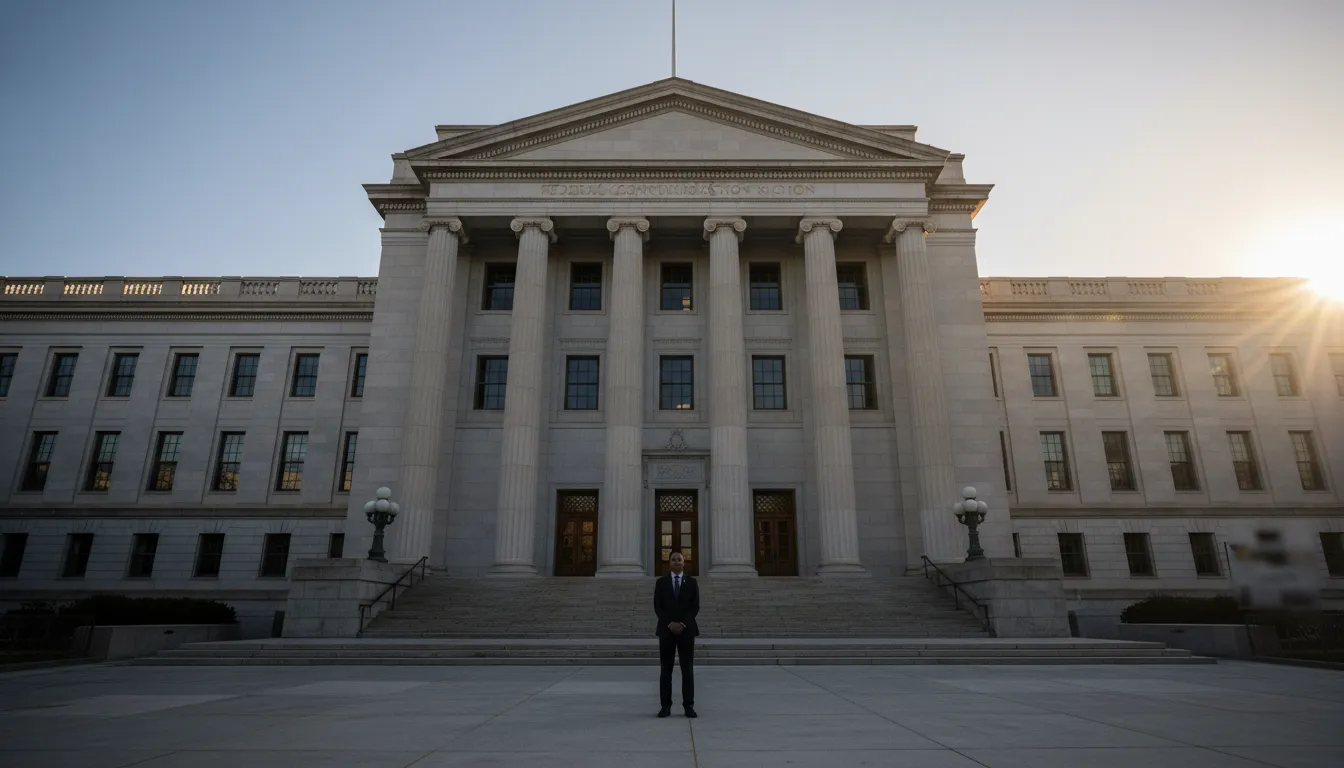
The Airwaves Belong to the Public
When you tune into a local TV news broadcast or a commercial radio station, you are listening to a signal that travels over publicly owned airwaves. Because the electromagnetic spectrum is a finite, shared resource, no private company can simply claim a frequency the way it might buy a piece of land. Instead, broadcasters must obtain permission from the federal government—in the form of a broadcast license—before they can transmit a single signal.
That permission comes from the Federal Communications Commission (FCC), an independent federal agency created by the Communications Act of 1934. The law replaced a patchwork of earlier radio regulations and gave Washington broad authority to oversee the nation's airwaves in the public interest.
The Spectrum Scarcity Doctrine
The legal foundation for broadcast licensing rests on a concept called spectrum scarcity: because there are only so many usable frequencies, some form of government allocation is necessary to prevent chaos. Without licensing, multiple stations broadcasting on the same frequency would drown each other out—exactly the problem that plagued early radio in the 1920s.
The U.S. Supreme Court affirmed this rationale in Red Lion Broadcasting Co. v. FCC (1969), ruling that the scarcity of the airwaves justified placing public obligations on broadcasters that would not apply to newspapers or magazines. That decision remains the cornerstone of broadcast regulation, though many legal scholars argue it is increasingly outdated in an era of cable, satellite, and internet media.
The Public Interest Requirement
Every broadcast license comes with a core obligation: the station must operate in the "public interest, convenience, and necessity." In practice, this means airing programming responsive to the local community—covering local news, public affairs, emergencies, and political candidate access.
Stations must maintain a public inspection file documenting how they have met this obligation, and file quarterly reports with the FCC. Since the agency cannot monitor every station constantly, it relies largely on self-reporting and public complaints to flag potential violations, according to the FCC's own guidance on public broadcasting obligations.
How Licenses Are Renewed
Broadcast licenses are issued for eight-year terms—a period set by the Telecommunications Act of 1996, which extended the previous five-year term and streamlined the renewal process. Historically, competing applicants could challenge a license at renewal time, putting incumbents at real risk of losing their frequency. The 1996 reforms made that far harder.
Today, renewal is largely routine. The FCC reviews whether a station has met its public interest obligations, paid its regulatory fees, and avoided serious violations. A station that clears these bars can expect renewal with minimal scrutiny—a process critics call a "postcard renewal" because of how simple it has become, as noted by CNBC's analysis of broadcast license law.
What Can Actually Get a License Revoked?
Revocation is the FCC's nuclear option—described by communications lawyers as the "death penalty" of broadcast regulation. It is extraordinarily rare. Grounds for revocation include:
- Fraud or misrepresentation in dealings with the FCC
- Failure to pay regulatory fees
- Willful or repeated violations of FCC rules, such as obscenity violations or technical interference
- Character issues, including criminal convictions involving fraud or dishonesty
- Foreign ownership exceeding statutory limits
Even when the FCC initiates revocation proceedings, the process is lengthy: a preliminary decision is issued, a hearing before an administrative law judge follows, and the full Commission then reviews the ruling. The whole process can take years and is subject to federal court appeal.
The First Amendment Firewall
One area where the FCC's authority hits a hard constitutional wall is editorial content. The Communications Act explicitly prohibits the FCC from censoring broadcast material, and the First Amendment bars the government from punishing broadcasters for their viewpoints, as legal scholars at Yale's Journal on Regulation have argued in detail.
This is why threats by government officials to pull licenses over coverage decisions—however alarming politically—face steep legal obstacles. Brookings Institution analysts have noted that even a determined FCC chair would need to build a record of non-content violations to survive judicial review. A broadcaster cannot lose its license simply because regulators dislike its reporting.
Why It Still Matters
Broadcast licenses may seem like a relic in a streaming-dominated media landscape, but roughly 40 million American households still rely primarily on over-the-air television. Local stations remain the main source of emergency alerts, local election coverage, and community news for millions of people. The license system—built nearly a century ago to tame the chaos of early radio—continues to shape what Americans see and hear, and who gets to decide what goes on the air.