How Fitness Apps Leak Military Secrets
Fitness tracking apps like Strava have repeatedly exposed the locations of military bases, aircraft carriers, and world leaders' bodyguards. Here's how location data becomes an intelligence goldmine.
The Invisible Trail
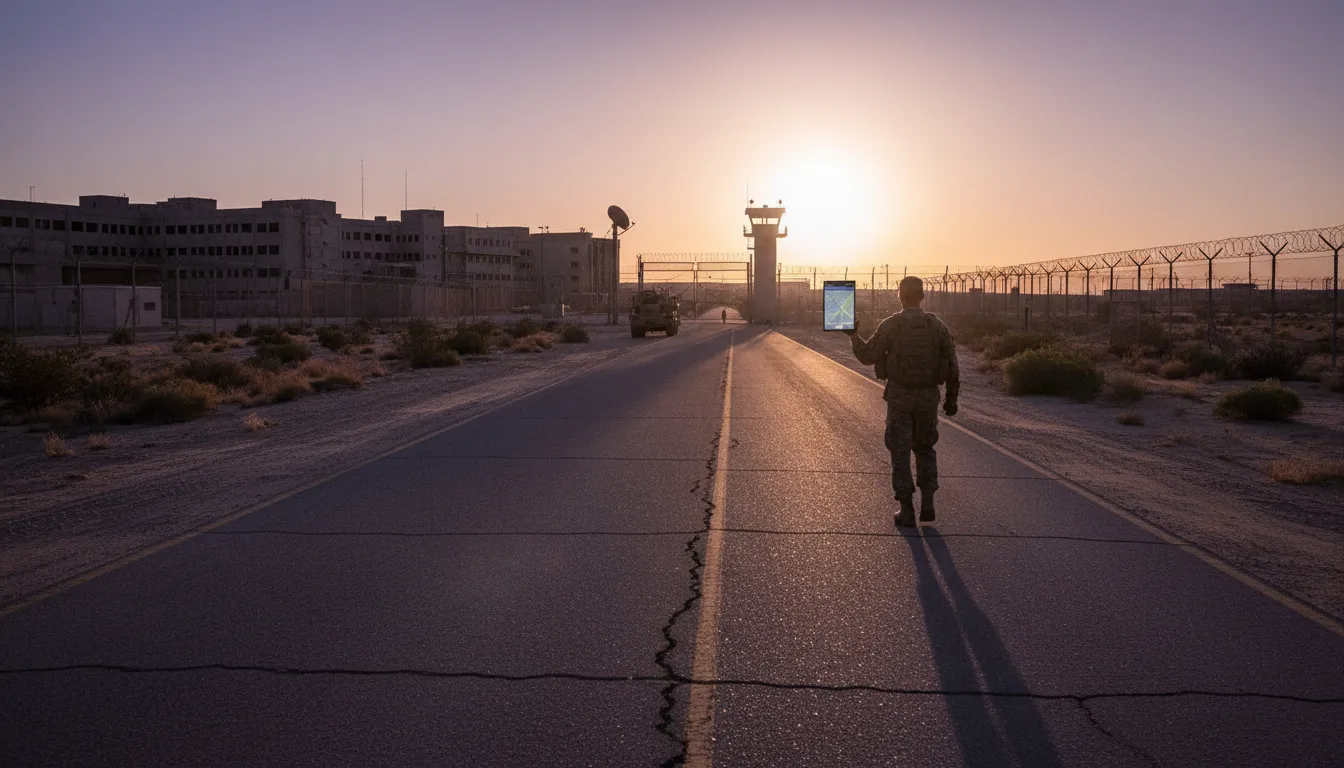
Every time a soldier laces up running shoes and taps "start" on a fitness app, a trail of GPS breadcrumbs begins recording. For most users, the data is harmless—a log of morning jogs and weekend bike rides. But for military personnel, intelligence agents, and security details, that same data can betray the locations of secret bases, nuclear carriers, and world leaders.
The problem is not new. Since at least 2018, fitness tracking platforms—most notably Strava—have been at the center of repeated operational security (OPSEC) failures that exposed some of the world's most sensitive military information to anyone with an internet connection.
How Location Data Becomes Intelligence
Fitness apps work by recording a user's GPS coordinates at frequent intervals during exercise. When users upload workouts publicly, anyone can view the route, timestamp, and location. On its own, a single jog may seem meaningless. But intelligence analysts use a technique called pattern-of-life analysis: aggregating many data points over time to map routines, identify facilities, and even predict future movements.
Strava's global heatmap—a visualization of billions of GPS data points from its users—makes this even easier. The heatmap glows brightly wherever many people exercise and dims in remote areas. In 2018, Australian researcher Nathan Ruser noticed glowing jogging paths in the middle of the Syrian and Afghan deserts, tracing the exact perimeters and patrol routes of undisclosed U.S. and allied military bases.
A Pattern of Breaches
The 2018 heatmap incident was only the beginning. Subsequent investigations revealed an alarming pattern:
- 2018: Strava's heatmap exposed U.S. military bases in Afghanistan, Syria, Iraq, and even a suspected CIA facility in Somalia. The Pentagon launched an immediate review.
- 2018: Researchers found the Polar fitness app could identify names and home addresses of personnel at Guantánamo Bay, drone bases, and nuclear weapons storage facilities, as reported by Bellingcat.
- 2022: The Israeli NGO FakeReporter uncovered a Strava breach that identified 100 individuals across six top-secret Israeli military installations.
- 2024: Le Monde's #StravaLeaks investigation identified 26 U.S. Secret Service agents, 12 French security personnel, and 6 Russian agents from their public Strava profiles—pinpointing the locations of Presidents Biden and Trump, and even the hotel where Biden stayed before a meeting with China's Xi Jinping.
Why It Keeps Happening
After the 2018 scandal, the U.S. Department of Defense banned geolocation-enabled devices for deployed troops. Service members can carry fitness trackers, but must disable GPS features in operational areas. Other NATO allies issued similar guidance.
Yet breaches continue for several reasons. First, policies are difficult to enforce when personal devices are involved. The U.S. Secret Service told Le Monde it cannot prohibit agents' off-duty social media use. Second, many users simply do not realize their profiles are public by default. Third, the culture of sharing fitness achievements on social platforms creates constant temptation to override security protocols.
Open-Source Intelligence on Autopilot
What makes fitness app leaks especially dangerous is that they require no hacking. All the data is voluntarily uploaded and publicly visible. Intelligence professionals call this open-source intelligence (OSINT)—information gathered from freely available sources. A hostile actor need only browse Strava, cross-reference usernames with LinkedIn profiles or public records, and build a detailed picture of military movements.
The technique scales easily. Automated scripts can scrape thousands of profiles, map activity clusters near known military facilities, and flag anomalies—such as a burst of running activity appearing in an empty stretch of ocean, which is exactly how journalists in 2026 confirmed the position of the French nuclear aircraft carrier Charles de Gaulle in the Mediterranean after a sailor logged a 7-kilometer deck run on Strava.
What Users Can Do
Security experts recommend several steps for anyone in a sensitive role: set all fitness profiles to private, disable GPS recording during work, use Strava's built-in privacy zones to hide start and end points, and avoid sharing workout data on any public platform. For military organizations, the lesson is clear: consumer technology and operational security exist in permanent tension, and no policy memo can substitute for individual awareness.