How Harmful Algal Blooms Work—and Why They Spread
Harmful algal blooms poison water, kill marine life, and cost economies billions. Here is how they form, what makes them toxic, and why they are growing worse.
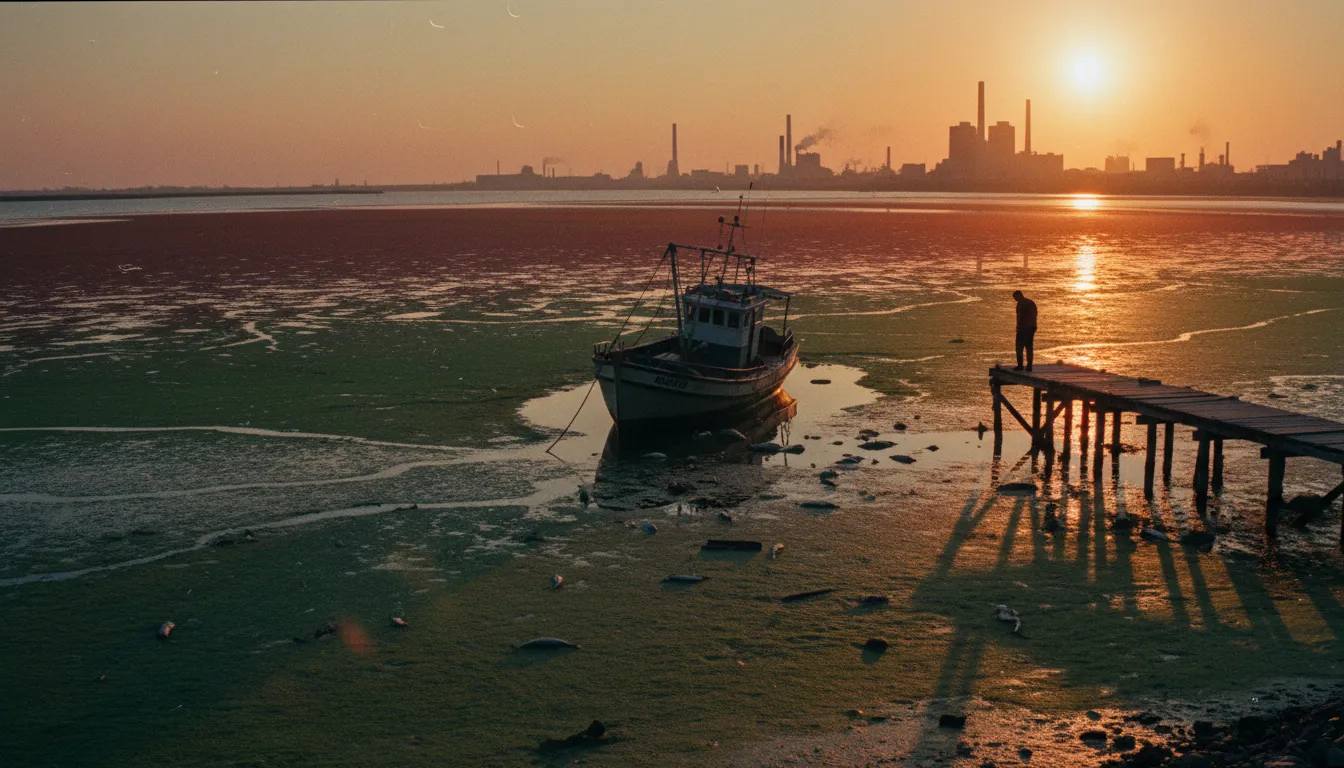
Invisible Invaders in the Water
Every summer, stretches of coastline and lakefront turn vivid green, rust-red, or murky brown. The culprit is a harmful algal bloom (HAB)—an explosive overgrowth of microscopic algae or cyanobacteria that can poison drinking water, suffocate marine ecosystems, and sicken anyone unlucky enough to swim through it. Once considered a regional nuisance, HABs now rank among the fastest-growing environmental hazards on the planet.
What Triggers a Bloom
Algae are photosynthetic organisms found in virtually every body of water. Under normal conditions they form the base of aquatic food webs. A bloom erupts when two ingredients converge: excess nutrients and favorable physical conditions.
Nitrogen and phosphorus—washed into waterways from agricultural fertilizer, sewage, and stormwater runoff—act as fuel. Warm, slow-moving water with plenty of sunlight provides the perfect incubator. According to the U.S. Environmental Protection Agency, nutrient pollution is the single largest driver of HABs in both freshwater and coastal systems.
Not every bloom is harmful. Of the thousands of algal species, only a few dozen produce toxins. But when those species—such as the cyanobacterium Microcystis in freshwater or the dinoflagellate Karenia brevis in the Gulf of Mexico—gain a nutrient advantage, they can dominate a water body within days.
How the Toxins Work
HAB organisms manufacture a range of potent chemicals. Microcystins, the most common freshwater HAB toxins in the United States, attack the liver. Saxitoxin, produced by Alexandrium species, disrupts nerve signaling and causes paralytic shellfish poisoning—in extreme cases leading to respiratory failure and death. Brevetoxins from K. brevis red tides become airborne in sea spray, triggering coughing and breathing difficulties in beachgoers even a kilometer inland.
Filter-feeding shellfish—mussels, clams, oysters—concentrate these toxins in their tissues, creating a hidden pathway to human plates. The Centers for Disease Control and Prevention notes that while HAB-related human illness is relatively rare, cases can be severe and are likely underreported.
Dead Zones and Economic Fallout
When a massive bloom dies, bacteria decompose the organic matter and consume dissolved oxygen. The result is a hypoxic "dead zone" where fish, crabs, and other marine life cannot survive. The Gulf of Mexico dead zone, fed by Mississippi River nutrients, regularly exceeds 15,000 square kilometers.
The economic toll is staggering. NOAA estimates HABs cost the U.S. economy at least $82 million per year, but individual events can dwarf that average. A 2015 toxic Pseudo-nitzschia bloom shut down the West Coast Dungeness crab fishery, causing $97.5 million in lost landings alone. Florida's 2018 red tide stripped an estimated $2.7 billion from coastal tourism revenue.
Why Blooms Are Getting Worse
Scientists have documented a clear increase in HAB frequency and range since the 1980s. Two forces are converging to accelerate the trend.
Nutrient loading continues to rise globally as intensive agriculture expands and urban runoff increases. At the same time, climate change is warming surface waters, extending growing seasons, and intensifying storms that flush nutrients into rivers and lakes. Research published in Harmful Algae shows that warmer temperatures and stronger stratification give cyanobacteria a competitive edge over less harmful algal species.
The combination is especially dangerous in large freshwater systems. Lake Erie's 2011 bloom blanketed more than 2,000 square miles and cost the region an estimated $71 million. In 2014, a bloom forced Toledo, Ohio, to shut off drinking water for half a million residents.
Fighting Back
Prevention starts upstream. Reducing fertilizer runoff through buffer strips, cover crops, and precision agriculture cuts the nutrient supply that blooms depend on. Upgraded wastewater treatment can sharply lower phosphorus discharges. NOAA and the EPA operate HAB forecasting systems that use satellite imagery and water-quality sensors to give communities early warnings.
Emerging research offers new tools. Scientists recently identified a marine fungus, Algophthora mediterranea, capable of infecting and killing toxic bloom-forming algae—a potential biological control agent. Meanwhile, real-time DNA sensors are being tested to detect toxin-producing species before a bloom becomes visible.
Harmful algal blooms sit at the intersection of agriculture, climate, and public health. Solving the problem will require action across all three—but the science to do so is advancing fast.