How Naval Blockades Work—and Why They Still Matter
Naval blockades have shaped wars and economies for centuries. Here's how they work, what international law requires, and why they remain one of the most powerful tools in modern conflict.
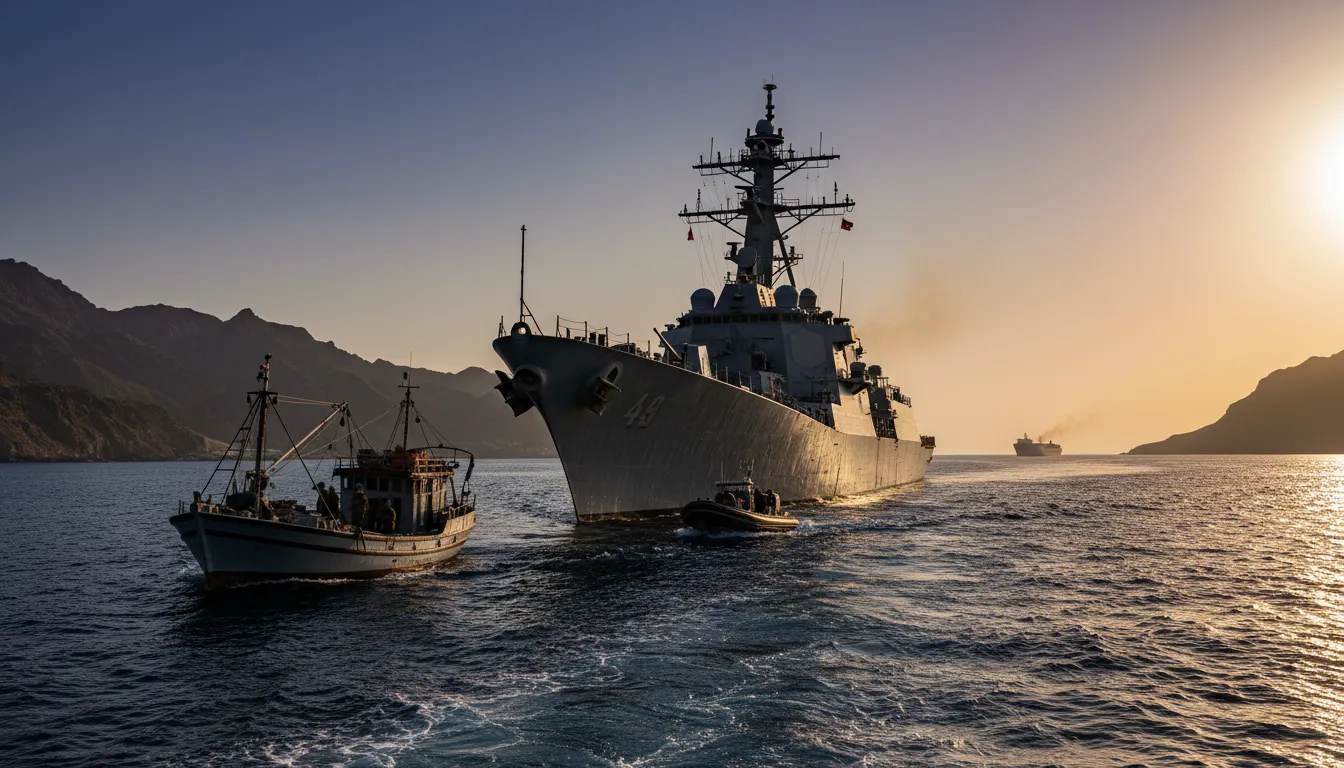
A Weapon as Old as War Itself
When a nation wants to choke an adversary without firing a shot on land, it often turns to the sea. A naval blockade—the use of warships to prevent vessels from entering or leaving enemy ports or coastlines—is one of the oldest and most consequential tools in warfare. From ancient Athens to modern shipping lanes, blockades have toppled empires, starved populations, and reshaped global trade.
What Makes a Blockade a Blockade
A naval blockade is formally defined as a belligerent operation designed to prevent the ingress or egress of vessels from specified ports or coastal areas. Unlike an embargo, which is an economic policy enforced through trade regulations, a blockade is enforced physically—by warships, mines, or aerial patrols positioned to intercept shipping.
The key distinction is enforcement. A declared blockade that cannot actually stop ships from passing is considered legally void. As the 1856 Declaration of Paris established, a blockade must be "effective" to be binding—meaning there must be a realistic chance that vessels attempting to breach it will be intercepted.
The Legal Rules of the Game
International law treats blockades as a lawful method of warfare—but only if strict conditions are met. The San Remo Manual on International Law Applicable to Armed Conflicts at Sea (1994), widely regarded as the authoritative codification of these rules, sets out several requirements:
- Declaration and notification: The blockading state must formally declare the blockade, specifying its start date, geographic limits, and a grace period for neutral vessels to leave the area.
- Impartiality: The blockade must be enforced equally against vessels of all nations, not selectively targeting certain flags.
- Effectiveness: The blockading force must actually be capable of preventing passage. A "paper blockade" with no real enforcement is illegal.
- Proportionality: The blockade's scope and duration must not exceed what military necessity requires.
Critically, any blockade designed to starve a civilian population is prohibited under international humanitarian law. Blockading forces must allow passage of medical supplies and food essential to civilian survival, subject to inspection.
How Blockades Shape Wars
History offers dramatic proof of blockades' power. During the American Civil War, the Union's "Anaconda Plan" blockaded Confederate ports to cut off cotton exports and weapons imports—a slow squeeze that crippled the Southern economy. In World War I, the British Royal Navy's blockade of Germany targeted not just weapons but food and fertilizer. The result was widespread civilian malnutrition that contributed to Germany's eventual collapse.
The U.S. submarine campaign against Japan in World War II severed oil and resource flows from Southeast Asia, forcing the Japanese fleet into desperate repositioning that undermined its own defenses. And during the 1962 Cuban Missile Crisis, President Kennedy imposed what he carefully termed a "quarantine"—a partial blockade—to prevent Soviet missiles from reaching Cuba, bringing the world to the brink of nuclear war.
Modern Blockades and Global Trade
In the modern era, blockades carry enormous economic consequences. Roughly 80% of global trade moves by sea, and disrupting a single chokepoint can send shockwaves through supply chains worldwide. When shipping lanes are threatened, marine insurance premiums spike, vessels reroute to longer paths, and substitute ports face capacity surges they were never designed to handle.
The Saudi-led coalition's blockade of Yemen beginning in 2015 demonstrated another modern reality: humanitarian catastrophe. While aimed at preventing arms shipments to Houthi rebels, the blockade restricted food and fuel imports to a country almost entirely dependent on them, contributing to what the UN called the world's worst humanitarian crisis.
Why Blockades Endure
Despite advances in air power, cyberwarfare, and precision strikes, naval blockades persist because they exploit a fundamental vulnerability: nations depend on the sea for survival. A blockade forces an adversary to choose between capitulation and enduring slow economic asphyxiation—without requiring the blockading power to occupy a single square meter of enemy territory.
That combination of strategic leverage and physical distance makes the naval blockade what it has always been: one of the most powerful, and most contested, instruments of war.


