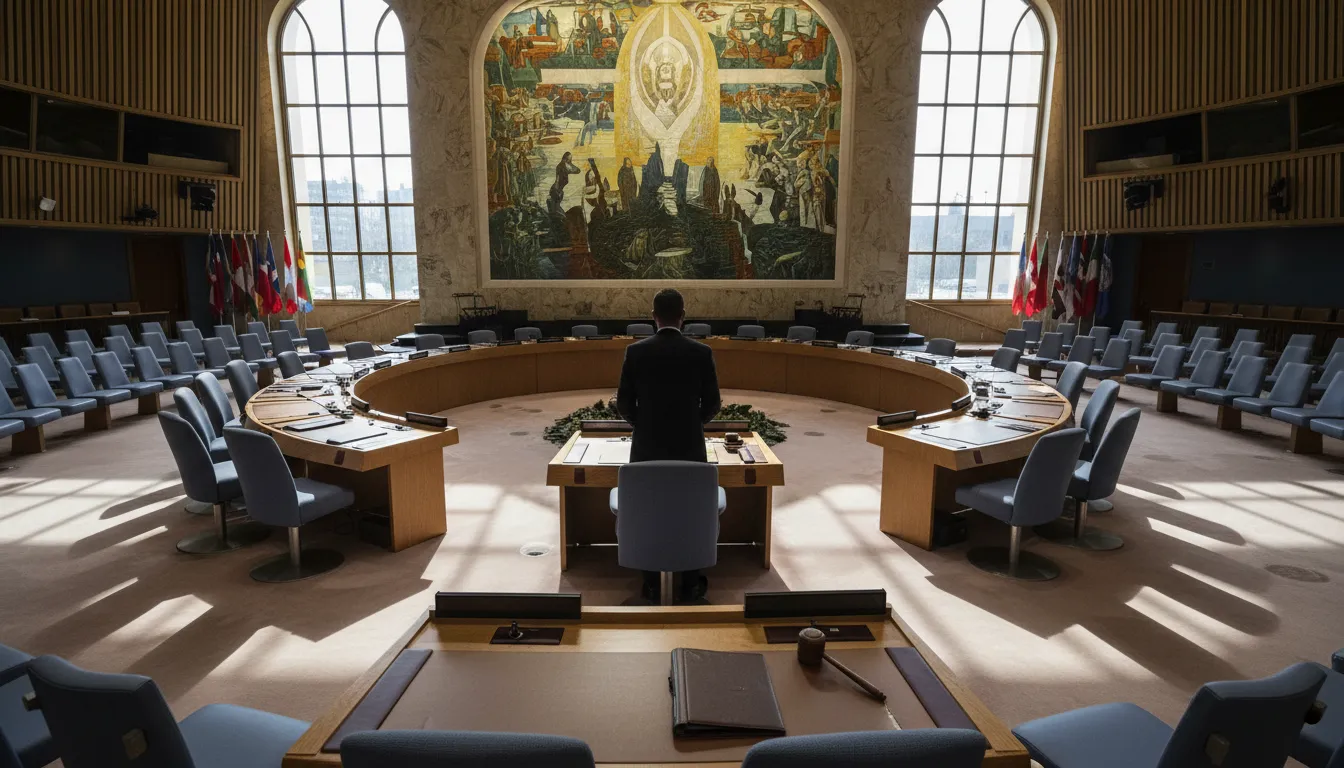
Iran Retaliates: Hormuz Crisis Jolts Global Oil Markets
Iran launched hundreds of missiles and drones at Israel and Gulf Arab states after US-Israeli strikes killed Supreme Leader Khamenei, effectively shutting the Strait of Hormuz and sending oil prices surging toward $100 a barrel.
Khamenei Killed, Iran Fires Back
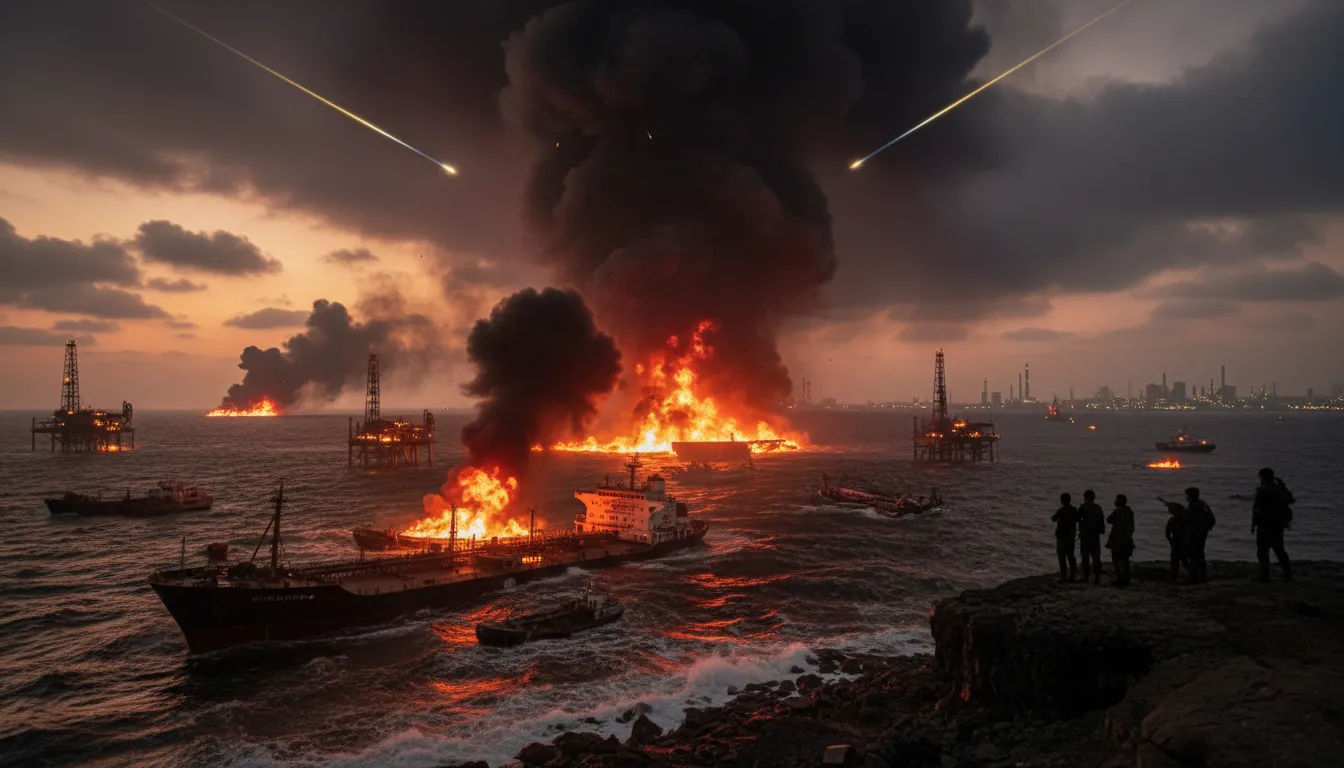
The Middle East entered open war over the weekend when US and Israeli forces launched coordinated strikes on Iran, killing Supreme Leader Ali Khamenei and senior security officials. Within hours, Iran's Islamic Revolutionary Guard Corps (IRGC) retaliated with a massive barrage — hundreds of ballistic missiles, cruise missiles, and drones targeting Israel and seven Arab states across the Persian Gulf.
A Salvo Across the Gulf
The UAE's Ministry of Defence reported that Iran fired 165 ballistic missiles, two cruise missiles, and 541 drones in its opening retaliation, according to Al Jazeera. US military assets in Jordan, Kuwait, Bahrain, Qatar, Iraq, Saudi Arabia, and the UAE were targeted. Air defences intercepted most of the barrage, but 21 drones struck civilian targets in the UAE, missile debris injured at least 16 people in Qatar, and Kuwait's international airport sustained structural damage. The US Fifth Fleet headquarters in Bahrain was among the facilities hit.
The Hormuz Chokepoint
The most consequential blow may have arrived not from missiles but from a four-word maritime broadcast. IRGC vessels announced over VHF radio that "no ship is allowed to pass the Strait of Hormuz," according to an EU official cited by Al Jazeera. Lloyd's of London and major insurance pools promptly withdrew war-risk coverage for the corridor — effectively closing the strait to commercial shipping without a physical blockade. Some 150 tankers and freighters stalled at the entrance.
The Strait of Hormuz carries roughly 20% of the world's seaborne oil and 20% of global LNG exports — the single most critical energy chokepoint on the planet. A third of all seaborne oil exports transited the strait in 2025, according to the US Energy Information Administration.
Oil Markets React
Brent crude jumped 8–10% to around $79 a barrel in over-the-counter Sunday trading, according to Reuters and CNBC. Analysts warned the move could be merely a prelude.
"We expect prices to open much closer to $100 a barrel and perhaps exceed that level if we see a prolonged outage of the Strait," — Ajay Parmar, director of energy and refining, ICISRystad Energy projected an initial $20/barrel rise to around $92, with Brent potentially surpassing $120 if the closure extends for weeks.
OPEC+ Acts — but Markets Are Sceptical
OPEC+ convened quickly and agreed to add 206,000 barrels per day starting in April, led by Saudi Arabia and Russia, Bloomberg reported. Markets were unimpressed. "If oil cannot move through Hormuz, an extra 206,000 barrels per day does very little to ease the market," one analyst told Bloomberg. "Logistics and transit risk matter more than production targets right now." Asian importers — China and India alone route more than 60% of their crude through the strait — face the sharpest supply exposure.
What Comes Next
President Trump vowed Sunday to "avenge" the deaths of US service members and said combat operations against Iran would continue, according to CNBC. Qatar, Kuwait, Bahrain, and the UAE condemned the attacks on their territory while stopping short of joining the conflict. Qatar's airspace, along with those of Kuwait and the UAE, was temporarily closed.
Whether the Hormuz closure proves a brief show of force or the opening chapter of a sustained energy shock remains the defining question for global markets. Analysts warn the world has not seen disruption on this scale since the 1970s oil embargo — and an economy still absorbing the scars of recent inflationary shocks is poorly placed to absorb it.