Japan's HTV-X1 Departs ISS After Delivering 5.5 Tons
JAXA's next-generation HTV-X1 cargo spacecraft undocked from the International Space Station on March 6, 2026, after delivering roughly 5,470 kilograms of supplies, scientific hardware, and experiments during a mission that underlines Japan's critical role in sustaining the orbital outpost.
A Successful Resupply Mission Comes to a Close
Japan's uncrewed cargo freighter HTV-X1 departed the International Space Station (ISS) on Friday, March 6, 2026, marking the end of a five-month resupply mission that delivered approximately 5,470 kilograms of food, spare parts, scientific equipment, and new experiments to the orbiting laboratory. The spacecraft was released at 12:00 p.m. ET after the station's robotic arm, Canadarm2, unberthed it from the Harmony module's Earth-facing port earlier that morning. NASA astronaut Chris Williams monitored the systems throughout the departure.
From Tanegashima to Orbit
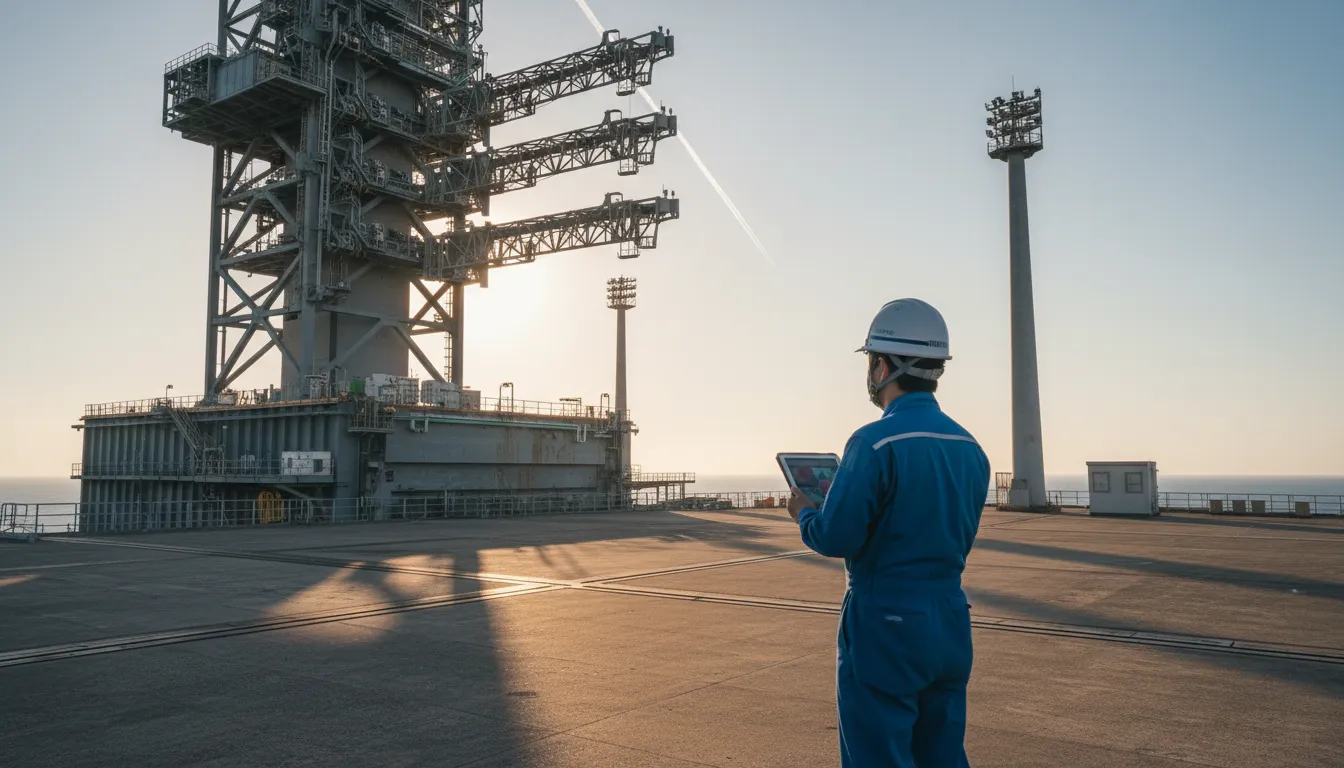
HTV-X1 lifted off on October 26, 2025, atop a JAXA H3 rocket from the Yoshinobu Launch Complex at the Tanegashima Space Center in southern Japan. The flight was notable on multiple fronts: it was the first H3 mission to fly with four solid rocket boosters and the first to use a wide payload fairing — demonstrating the growing versatility of Japan's next-generation launch vehicle. Four days later, on October 30, JAXA astronaut Kimiya Yui, a member of Expedition 74, captured the spacecraft with Canadarm2 and guided it to its berth at the Harmony module.
A Cargo Hold Full of Science
Beyond the routine resupply of food, clothing, and hardware, HTV-X1 carried several experiments that highlight Japan's expanding scientific ambitions in low Earth orbit. Among the most distinctive payloads was a sake fermentation experiment, studying how yeast behaves in microgravity — a project with implications for both biotechnology and our understanding of cellular processes in space. The spacecraft also delivered the i-SEEP platform (IVA-resuppliable Small Exposed Experiment Platform), which allows external science experiments requiring power and data links to be conducted outside the station, and six CubeSats scheduled for later deployment from the ISS.
A New Generation of Japanese Logistics
HTV-X1 is the first flight of JAXA's upgraded HTV-X series, the successor to the original Kounotori (White Stork) transfer vehicles that flew nine missions between 2009 and 2020. The new design boasts a higher cargo capacity — up to 5,820 kilograms — and a key operational innovation: after departing the ISS, it does not immediately deorbit. Instead, HTV-X1 will spend more than three months operating as a free-flying science platform in Earth orbit, conducting remotely controlled experiments on behalf of JAXA before receiving its deorbit command. The spacecraft will then burn up during re-entry over the Pacific Ocean, incinerating thousands of kilograms of station waste in the process.
Japan's Strategic Role in ISS Logistics
The HTV-X mission comes at a time when ISS cargo logistics are more complex than ever. With the station now relying on a mix of providers — including SpaceX's Dragon and Northrop Grumman's Cygnus on the American side — Japan's contribution remains indispensable, particularly for pressurized cargo that cannot fit in smaller vehicles. JAXA's ability to field an upgraded spacecraft on its own domestically developed rocket signals not only technological maturity but also Japan's commitment to the ISS partnership well into the post-2030 era, even as discussions about the station's eventual decommissioning continue among international partners.
For now, HTV-X1 moves on to its secondary life as an orbital laboratory — a fitting epilogue for a spacecraft whose mission was, from start to finish, defined by science.