Germany's Housing Crisis: 400,000 Homes Target Unmet
Germany is on track to complete only around 240,000 new homes in 2026 — far short of its 400,000-unit target — while rents in major cities surge above 5% annually, putting affordable housing at the top of the political agenda for Chancellor Friedrich Merz.
A Target That Was Never Within Reach
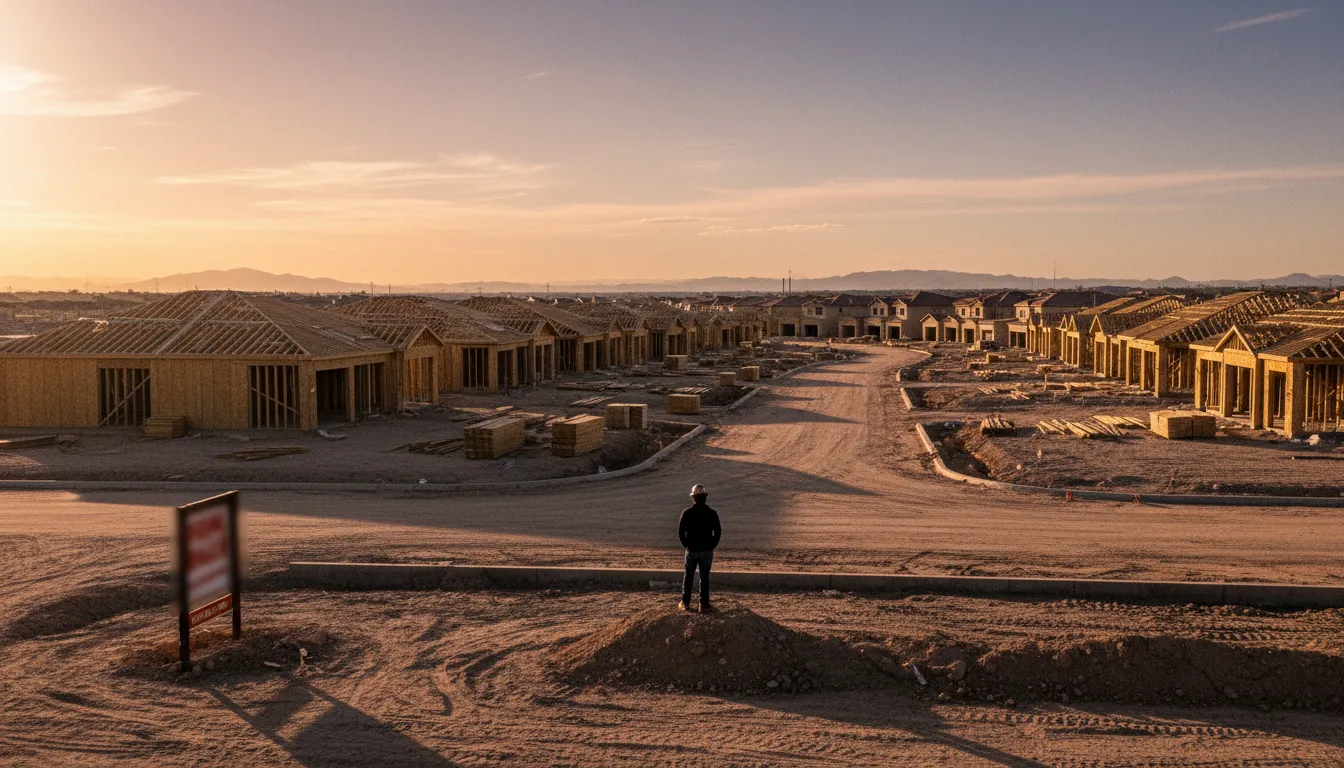
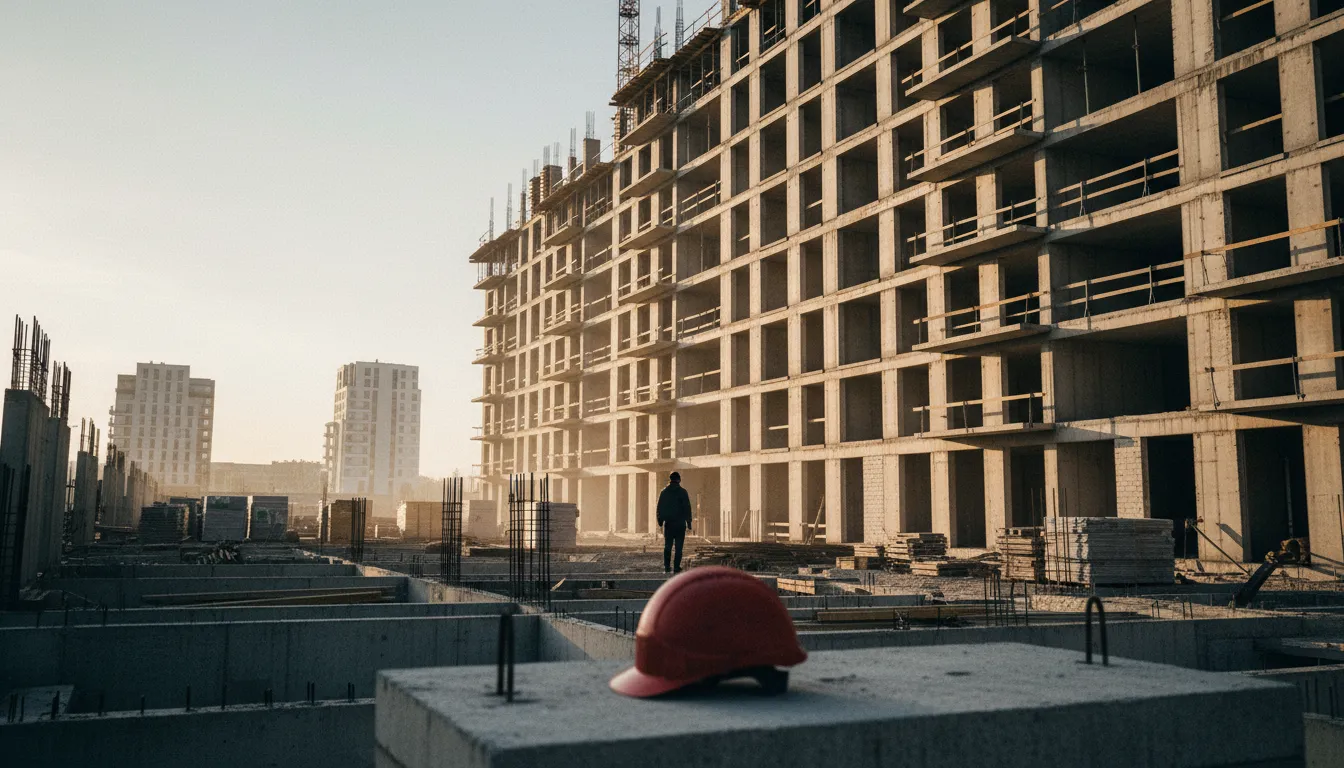
Germany's housing construction crisis is deepening at an alarming pace. The country is expected to complete only around 240,000 new homes in 2026 — barely 60% of the government's long-standing target of 400,000 units per year. According to the German Economic Institute (IW), completions could fall even further, to roughly 215,000 units, while the Ifo Institute projects as few as 185,000 — a figure that would represent a catastrophic collapse in new housing supply.
The 400,000-unit annual target, championed by the previous coalition under Olaf Scholz, was already widely considered aspirational. Now, under Friedrich Merz, it looks almost entirely detached from economic reality. The BBSR, Germany's federal institute for research on building and planning, has quietly revised the benchmark down to 320,000 new homes per year through 2030 — yet even this reduced goal remains far out of reach.
Rents Surge as Supply Collapses
The consequences for renters are stark. Across Germany's twenty largest cities, asking rents are rising at an annual pace exceeding 5%, with some metropolitan markets recording increases of up to 8%. JLL data shows the weighted median asking rent in Germany's eight largest cities reached €18.17 per square metre in the second half of 2025. Munich remains the most expensive, at €22.96/m² — more than double the national average.
Analysts forecast continued rent growth of 4–6% annually for the foreseeable future, driven by a severe mismatch between supply and demand. Germany is already estimated to be short some 550,000 apartments, with the deficit concentrated in affordable and social housing segments — precisely where new construction is least economically viable for private developers.
After the sharp correction of 2022–2023 — when prices fell as much as 7.1% amid rising interest rates — residential property values have resumed their climb, rising an estimated 3–4% in 2025 and projected to rise a similar amount in 2026. With mortgage rates easing to around 3.6–3.8% for 10-year fixed loans, buyer demand is recovering, adding further pressure to an already undersupplied market.
Structural Barriers Block Recovery
The reasons behind the construction shortfall are well-documented but stubbornly persistent. Germany's permit-to-completion timeline now averages 26 months for residential projects — and up to 34 months for multi-family housing. Construction costs surged dramatically in the post-pandemic period and have not meaningfully retreated. Energy-efficiency requirements, while environmentally important, add significant per-unit costs.
The Merz government introduced a Housing Acceleration Act (Wohnungsbau-Turbo) in mid-2025, aiming to simplify the Building Code, streamline permitting, and subsidise construction through the state-owned KfW bank. The goal is to make new apartments in tight markets viable for under €15 per square metre in rent. The "rent brake" has been extended until 2029, and a panel of experts is working on broader tenancy reform.
A Political Problem That Won't Go Away
Housing has become one of the defining political challenges for the Merz administration. With affordability declining even as mortgage rates fall, the crisis increasingly affects middle-income households — not just the poorest. Analysts warn that without far deeper structural reforms — including faster zoning approvals, more public land release, and sustained investment in social housing — Germany's housing shortage will remain acute well beyond 2030.
For millions of renters across Berlin, Hamburg, Frankfurt and Munich, that timeline offers little comfort.