Khamenei Killed as US-Israel Strike Iran in Historic Attack
The United States and Israel launched a massive coordinated assault on Iran, killing Supreme Leader Ayatollah Ali Khamenei and striking roughly 500 military targets in the largest air operation in Israeli history. Tehran retaliated with ballistic missiles against US bases across the Gulf and threatened to close the Strait of Hormuz, sending global energy markets into turmoil.
The Strike: Israel's Largest-Ever Air Operation
The Middle East has been plunged into its deepest crisis in decades after the United States and Israel launched a massive coordinated military assault on Iran early Saturday, killing Supreme Leader Ayatollah Ali Khamenei and triggering a cycle of retaliatory strikes that has brought the region to the brink of all-out war.
In an operation Israel codenamed "Roaring Lion" and the Pentagon called "Operation Epic Fury," approximately 200 Israeli fighter jets struck around 500 targets across western and central Iran — the largest combat mission in Israeli military history. Targets included air defense systems, ballistic missile launchers, nuclear facilities, and senior leadership compounds in Tehran, Isfahan, Qom, Karaj, and Kermanshah.
Khamenei Dead, Senior Officials Eliminated
Among those killed was Khamenei himself, 86, Iran's supreme leader since 1989. President Donald Trump confirmed his death via Truth Social, while Iranian state television subsequently acknowledged it, declaring 40 days of national mourning. According to Al Jazeera and Israeli security officials, Khamenei was killed by an airstrike on his Tehran compound.
Also eliminated in the strikes were Iran's defense minister, the commander of the Islamic Revolutionary Guard Corps, the secretary of the Iranian National Security Council, and members of Khamenei's immediate family. The killing marks an unprecedented escalation — the most consequential leadership decapitation since the 2020 elimination of General Qasem Soleimani.
Casualties and Controversy
Iran's Red Crescent reported at least 200 people killed and more than 700 wounded across 24 provinces. Among the most devastating incidents was a strike on a girls' primary school in southern Iran, which killed at least 85 children, with more feared buried under rubble — an event that drew immediate international condemnation and calls for a war crimes investigation, according to NPR.
Iran Strikes Back Across the Gulf
Tehran responded swiftly, launching dozens of ballistic missiles and drones against American military installations and Israeli targets across the region. For the first time, Iran simultaneously targeted all US military bases in the Persian Gulf. The US Navy's 5th Fleet headquarters in Bahrain came under direct attack. Kuwait's Ali al-Salem Air Base was struck by ballistic missiles, though Kuwaiti air defenses intercepted the projectiles. Iran's IRGC confirmed a second wave of strikes using Fattah hypersonic missiles. Jordan reported intercepting 49 incoming projectiles, according to France 24.
The airspace over Qatar, Kuwait, Bahrain, the UAE, and several other nations was closed, disrupting international aviation across the broader region.
Hormuz: A Threat to Global Energy
Iran announced the closure of the Strait of Hormuz, through which roughly 20% of global oil passes daily. Ships in the Gulf received radio broadcasts from what appeared to be the Iranian Navy banning transit through the waterway. The UK's Maritime Trade Operations agency confirmed vessels had received closure notifications.
Markets face severe disruption if the blockade holds. JP Morgan analysts warned oil could surge to $120–$130 per barrel, up from around $73 before the conflict. Economists warn a prolonged Hormuz closure could tip the global economy into recession, according to Bloomberg.
International Reaction
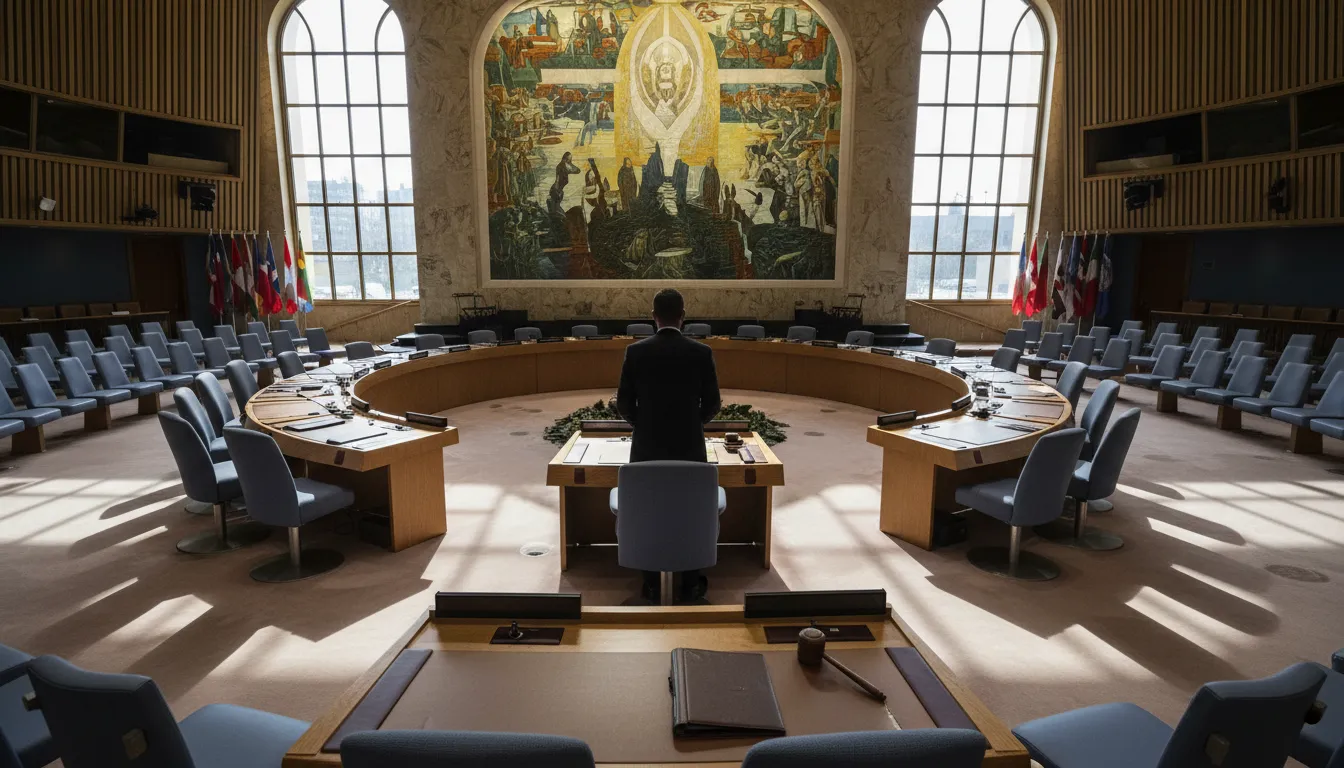
The UN Security Council convened an emergency session, with Secretary-General António Guterres warning of "a grave threat to international peace and security." Trump's public statement urging Iranian citizens to "take over your government" signaled that Washington's objectives extend to regime change in Tehran — a position that alarmed US allies and neutral powers alike. With Iran vowing continued retaliation and US forces under fire across the Gulf, the region stands at a precipice that could reshape the geopolitical order for a generation.