Macron at Île Longue: Paris Redraws its Nuclear Doctrine
Emmanuel Macron will deliver a highly anticipated speech on French nuclear deterrence this Monday, March 2nd, from the Île Longue submarine base. He is expected to announce unprecedented forms of consultation with European allies, while maintaining exclusive command of the arsenal.
A Historic Event at the Heart of French Deterrence
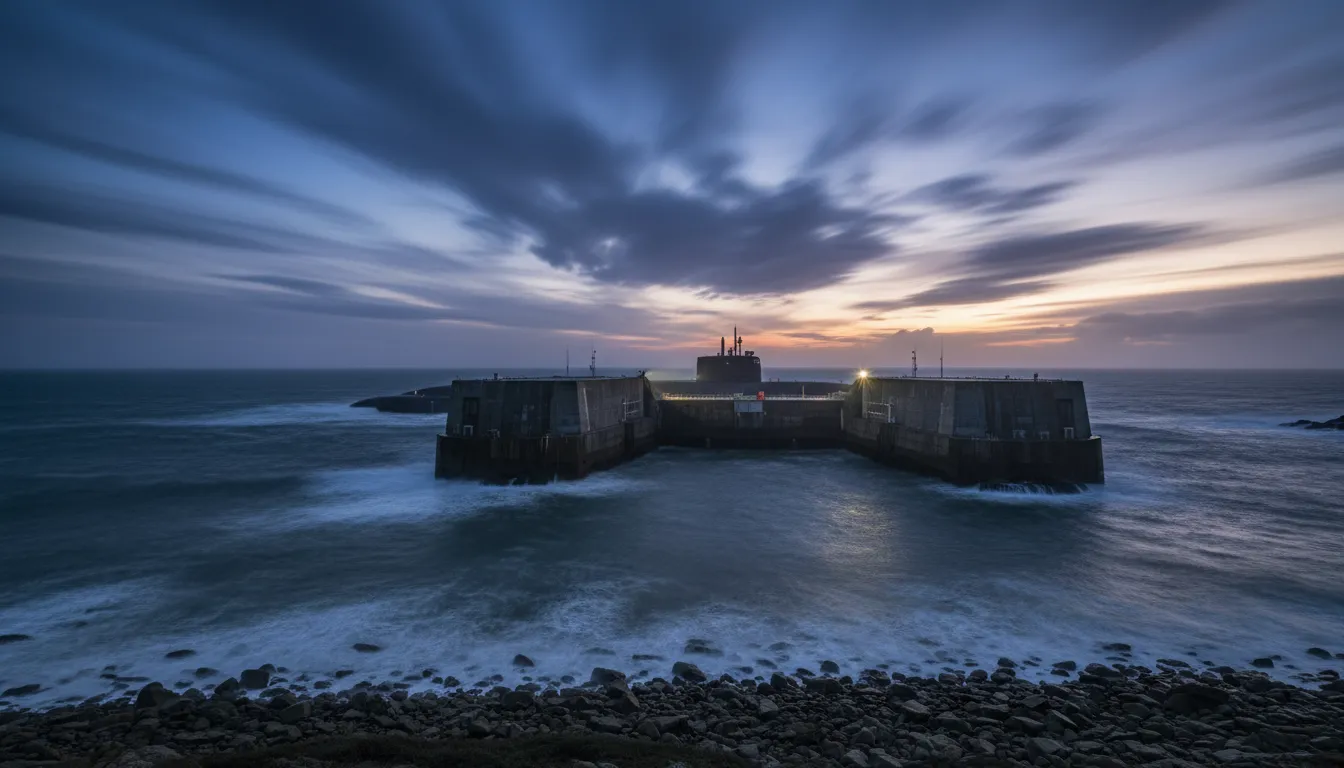
Emmanuel Macron is expected this Monday, March 2nd, on the peninsula of Île Longue, near Brest, where the Navy's four nuclear-powered ballistic missile submarines are based, for a speech with continental repercussions. This will be his first major statement on French nuclear doctrine since February 2020. The timing is no accident: as Washington moves closer to Moscow and American guarantees to NATO waver under the Trump administration, Europe is scrutinizing Paris like never before.
The French Arsenal: 300 Warheads, One Finger on the Trigger
France possesses approximately 290 to 300 nuclear warheads, carried by ballistic missiles aboard its submarines or by cruise missiles launched from Rafale fighter jets. In 2025, nuclear deterrence absorbed some €7 billion. This is an arsenal of "strict sufficiency," far below the 3,500 American warheads. But its absolute singularity lies in its command: only the President of the Republic can order a launch. "That is the case and will remain so," a source at the Élysée Palace emphasized, closing the door to any shared command.
Merz Opens the Door, Macron Steps Through Cautiously
The diplomatic catalyst for this speech is Friedrich Merz. On February 13th in Munich, the new German Chancellor revealed that he had held "confidential talks" with Macron on "European nuclear deterrence"—an unprecedented phrase from Berlin. The French president then mentioned the idea of "articulating" the national doctrine with "special cooperations, joint exercises, and shared security interests with certain key countries." Poland, the Netherlands, Sweden, and Denmark have also expressed interest.
According to Élysée Palace sources, Paris is expected to propose a deeper strategic dialogue and increased participation in deterrence exercises. There will be no sharing of the arsenal's financing, no co-decision on its use—a consultative extension of the nuclear umbrella, not an operational delegation.
The Double Pressure of the Geopolitical Context
The impetus comes from a double shock. On one hand, the war in Ukraine has revived the Russian threat on Europe's doorstep. On the other, Donald Trump's return to the White House has sown doubt about American commitment, particularly after his threatening statements towards Denmark regarding Greenland. France and the United Kingdom have also already strengthened their bilateral coordination via the Déclaration de Northwood, establishing a joint Nuclear Steering Group.
Between Sovereignty and European Solidarity
The Ministry of the Armed Forces has reiterated the five permanent pillars of French deterrence: powerful and responsible, independent, credible, strictly defensive—and endowed with a "European dimension." It is precisely this last aspect that Macron intends to develop on Monday. While some senators have already denounced an improvisation "to the detriment of our credibility," its supporters see it as the lucid response of a continent that can no longer outsource its existential security to Washington. This speech marks a turning point: for the first time, Paris explicitly assumes that French deterrence has a European vocation—even if it remains sovereignly French.