Middle East Airspace Collapse Grounds Hundreds of Flights
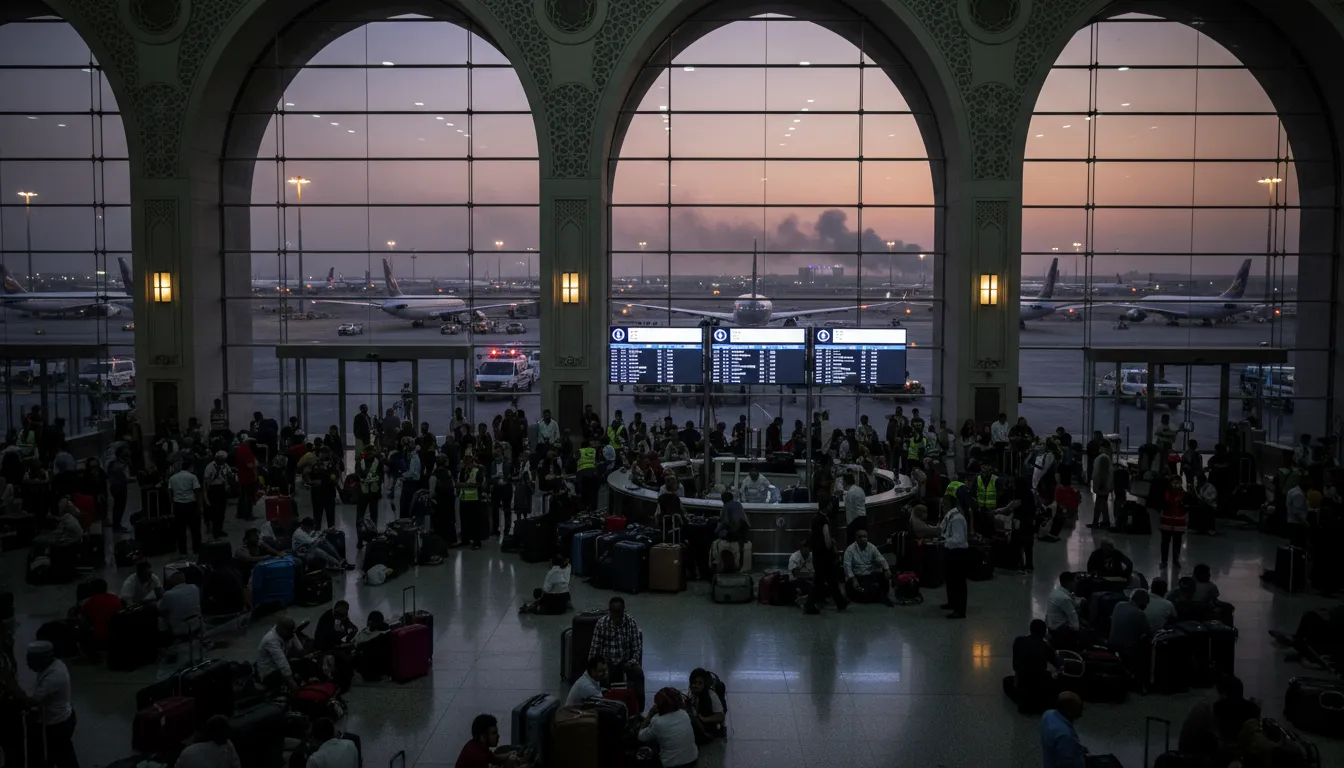
Joint US-Israeli strikes on Iran on February 28 triggered the closure of airspace across at least eight countries, paralysing global aviation hubs including Dubai and Doha and forcing hundreds of flights to cancel or divert.
A Crisis in the Skies
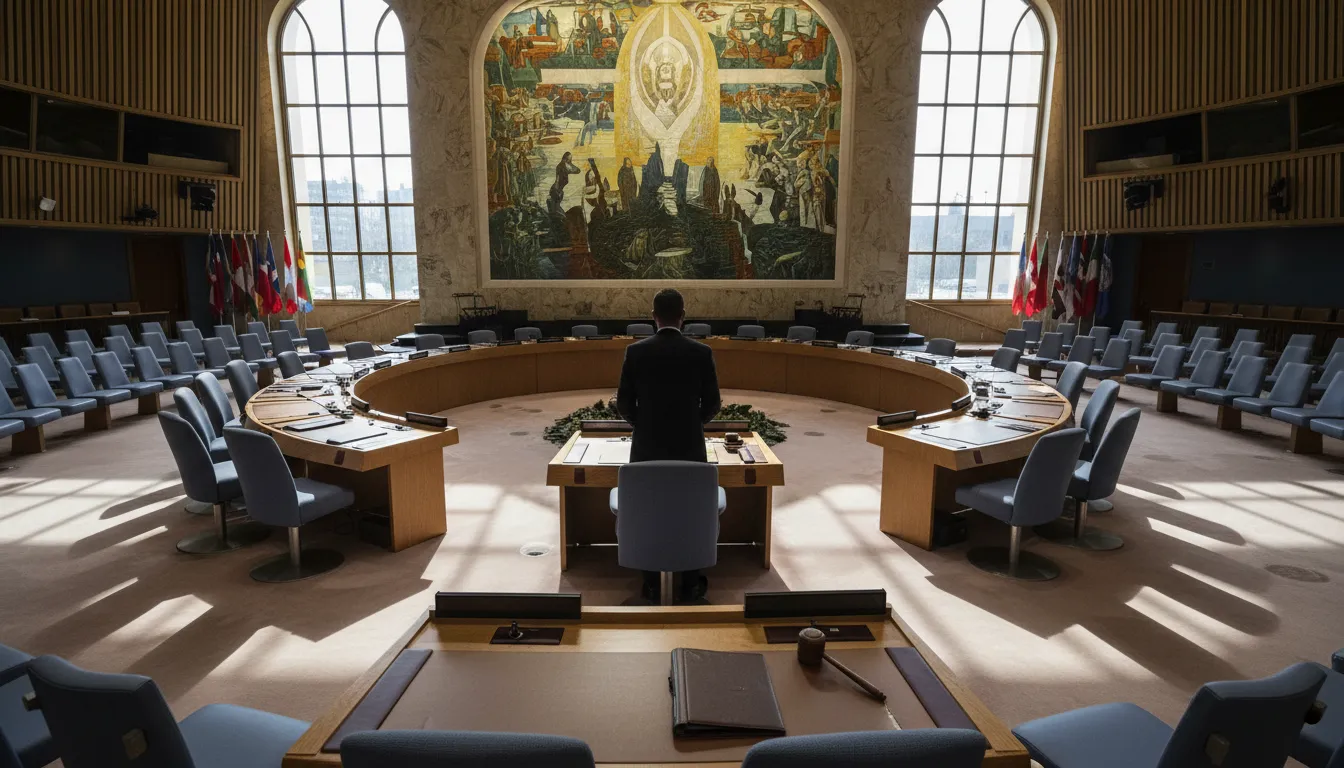
At approximately 6:45 AM UTC on Saturday, February 28, 2026, US and Israeli forces launched coordinated military strikes on Iran, touching off a chain reaction that extended far beyond the battlefield. Within hours, at least eight countries — Bahrain, Jordan, Kuwait, Iran, Iraq, Israel, Qatar, and the United Arab Emirates — had shuttered their airspace, while Syria partially closed its southern corridor. The result was one of the most severe aviation crises the world has seen since the COVID-19 pandemic.
Dubai Paralysed, Global Hubs in Chaos
The blow fell hardest on Dubai International Airport (DXB), the world's busiest international hub by passenger traffic. According to aviation data firm Cirium, more than 280 inbound and outbound flights were cancelled at DXB alone, with roughly 250 further flights delayed. Emirates, the flagship carrier of the UAE and one of the world's largest airlines by international seat capacity, announced a full temporary suspension of operations to and from Dubai, stating that the "safety and security of our passengers and crew remain our highest priority."
Across the region, the numbers mounted rapidly. By midday Central European Time, Cirium recorded 232 cancelled flights out of 3,422 scheduled — a 6.78% cancellation rate system-wide. Israel bore the worst proportional impact, with nearly 40% of all planned flights (40 out of 107) scrapped. Qatar's Hamad International Airport and Kuwait International Airport also faced heavy disruption as Gulf carriers scrambled to respond.
Airlines Reroute, Passengers Stranded Mid-Air
Carriers across four continents moved quickly to suspend or reroute services. Air France, British Airways, Iberia, KLM, Lufthansa, Turkish Airlines, and Wizz Air all halted regional operations. Air India announced it would avoid the Middle East entirely. Russia grounded its flights to Iran and Israel.
The disruptions were not merely administrative. Several aircraft were forced to turn back mid-flight: an American Airlines Philadelphia-to-Doha service reversed course after six hours in the air, while an Air Canada Toronto-to-Dubai flight was still airborne after more than ten hours with its destination in doubt, according to Simple Flying.
Long-haul routes between Europe and Asia face a compounding problem: Russian and Ukrainian airspace has been closed to most Western carriers since 2022, forcing airlines to rely on the Middle Eastern corridor as a critical alternative. With that corridor now disrupted, flights are being rerouted either south over Saudi Arabia or north via Central Asia — adding hours to journey times and straining crew duty limits and fuel reserves.
Economic Shockwaves
The aviation industry is bracing for significant financial fallout. Airlines face sharply higher fuel costs from longer diversion routes, surging war-risk insurance premiums for aircraft operating anywhere near the conflict zone, and cascading logistical costs from crew displacement and misaligned aircraft. Time-sensitive air cargo — pharmaceuticals, electronics components, fresh produce — that moves through Gulf hubs is also at risk, with broader implications for global supply chains.
Analysts at Bloomberg noted that Dubai and Doha together handle a disproportionate share of intercontinental transit traffic. A prolonged closure would not merely inconvenience travellers — it would fundamentally reshape long-haul routing for much of the Eastern Hemisphere.
No Timeline for Resumption
As of Saturday afternoon, no affected country had given a timeline for reopening its airspace. Emirates urged passengers to monitor its travel update portals and said it was assisting affected customers with rebooking, refunds, and alternative arrangements. Analysts warned that even a partial reopening depends heavily on the pace of military de-escalation — a variable that, as of press time, showed no signs of resolution. With two major aviation corridors — Russian and now Middle Eastern — effectively closed, the global aviation network is under pressure it has rarely faced in peacetime.