Sweden Jams Russian Drone Targeting French Carrier
Swedish forces intercepted and jammed a drone launched from a Russian spy vessel toward the French aircraft carrier Charles de Gaulle while it was docked in Malmö during NATO Baltic exercises, in what Paris called a 'ridiculous provocation.'
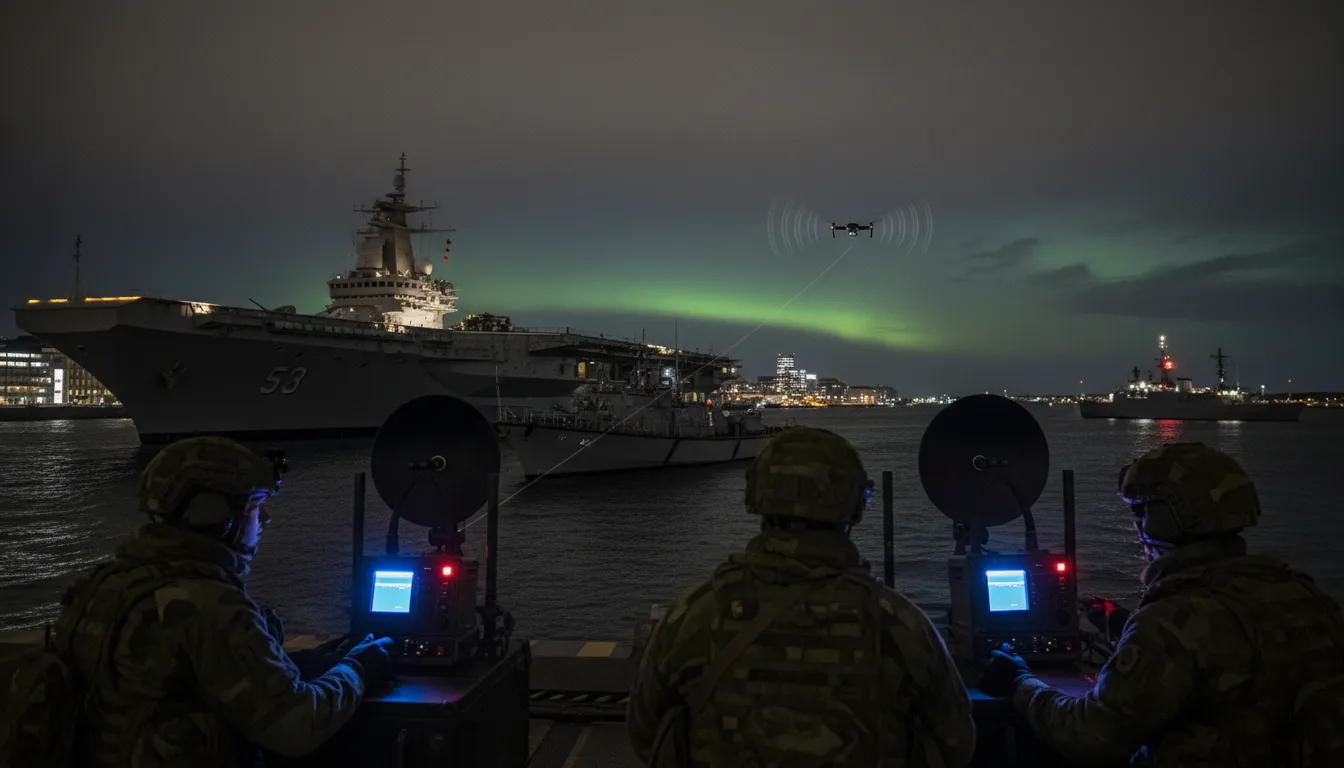
Drone From Russian Spy Ship Approaches NATO's Flagship Carrier
Swedish armed forces intercepted and electronically jammed a drone launched from a Russian reconnaissance vessel toward France's nuclear-powered aircraft carrier FS Charles de Gaulle on February 25, as the flagship warship lay docked in the southern Swedish port of Malmö. The incident, confirmed by Sweden's defence ministry, marks one of the boldest acts of Russian military surveillance against a NATO asset in European waters since Sweden joined the alliance in 2024.
Swedish Defence Minister Pål Jonson stated that technical data conclusively identified the drone's origin: "The Swedish Armed Forces can now confirm that the unauthorized drone was launched from the Russian radio reconnaissance vessel Zhigulevsk." The vessel had been transiting the Öresund Strait — the narrow channel separating Sweden from Denmark — when it launched the drone toward the carrier, which was berthed in Malmö as part of NATO's LA FAYETTE 26 mission and the broader Orion-26 Baltic exercises.
Swift Electronic Countermeasures
A Swedish navy patrol vessel detected the drone and activated electronic countermeasures, disrupting the aircraft's control systems at approximately seven nautical miles from the Charles de Gaulle — close enough to gather detailed intelligence on the carrier's layout, systems, and personnel, had it gone unchallenged. Swedish officials confirmed the jamming system worked without disrupting operations aboard the French ship. Whether the drone returned to the Zhigulevsk or fell into the sea remains unclear.
Jonson described the incident as "serious and irresponsible" while praising his forces' response as "decisive and professional." The Charles de Gaulle's visit to Malmö was itself historic — it was the first time France's flagship aircraft carrier had docked in Sweden, a symbolic gesture of NATO solidarity following Stockholm's accession to the alliance just under two years ago.
Diplomatic Fallout and Kremlin Denial
France's Foreign Minister Jean-Noël Barrot responded sharply, saying that if Russian involvement was confirmed, the only conclusion would be that it was a "ridiculous provocation." That confirmation came swiftly from Stockholm.
The Kremlin, predictably, denied any wrongdoing. Spokesman Dmitry Peskov dismissed the allegations as "quite an absurd statement," offering no alternative explanation for the drone's origin or flight path toward a NATO carrier.
A Pattern of Baltic Provocations
The incident fits a well-documented pattern of Russian military harassment in the Baltic region. Since Sweden and Finland joined NATO, Moscow has intensified aerial reconnaissance and GPS jamming operations in the area. Russia's intelligence-gathering fleet, including vessels like the Zhigulevsk, routinely monitors NATO naval movements in the North and Baltic Seas.
Security analysts noted that targeting the Charles de Gaulle — Europe's only nuclear-powered aircraft carrier and the centrepiece of the French navy's power projection — carries significant symbolic weight. The French Carrier Strike Group also included the Dutch frigate HNLMS Evertsen, underlining the multinational nature of the NATO presence Moscow sought to surveil.
The episode underscores a broader reality: as NATO expands its Baltic footprint, Russia is escalating its intelligence efforts to match — and Swedish membership has placed Stockholm at the forefront of that confrontation.