NASA Delays Artemis II to April After Helium Fault
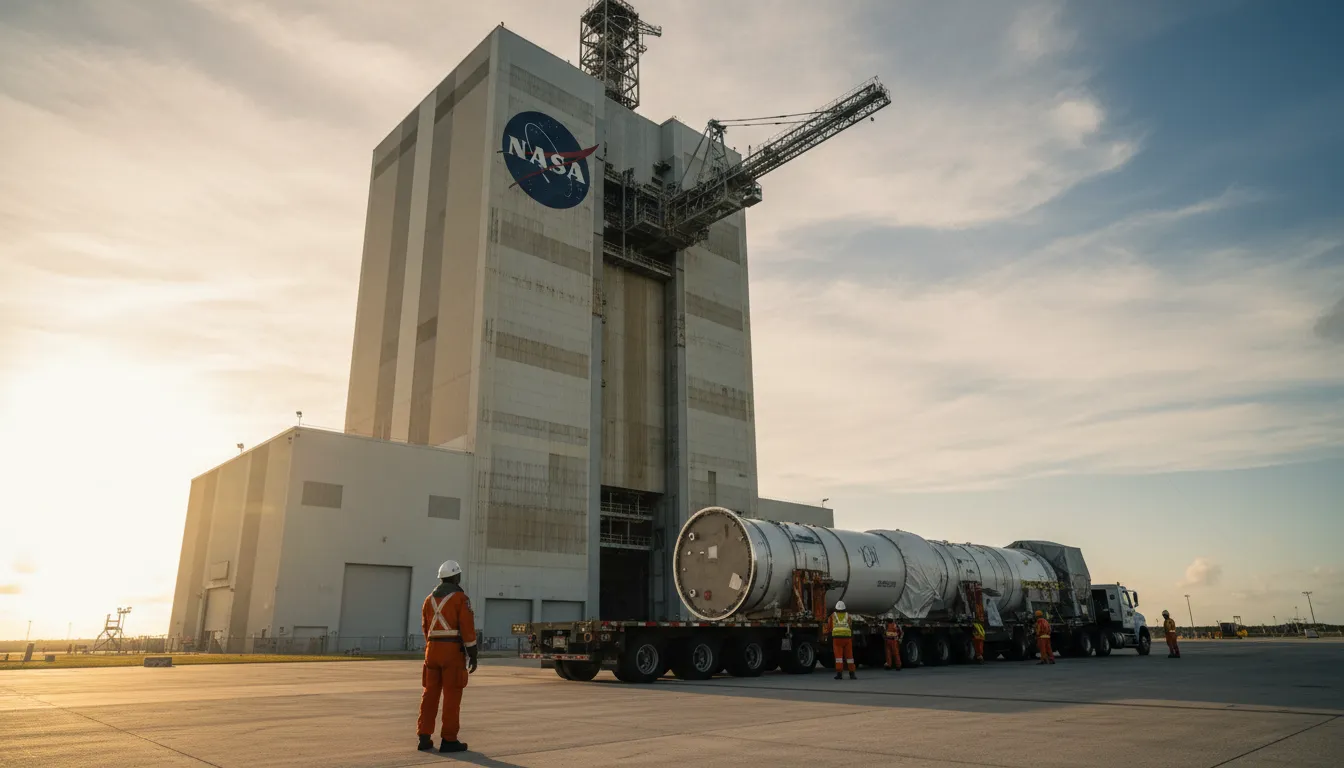
NASA has rolled the Space Launch System rocket and Orion spacecraft back to the Vehicle Assembly Building after a helium flow fault blocked a March launch, pushing humanity's first crewed lunar mission since 1972 to April at the earliest.
A Helium Flaw Grounds the Moonshot
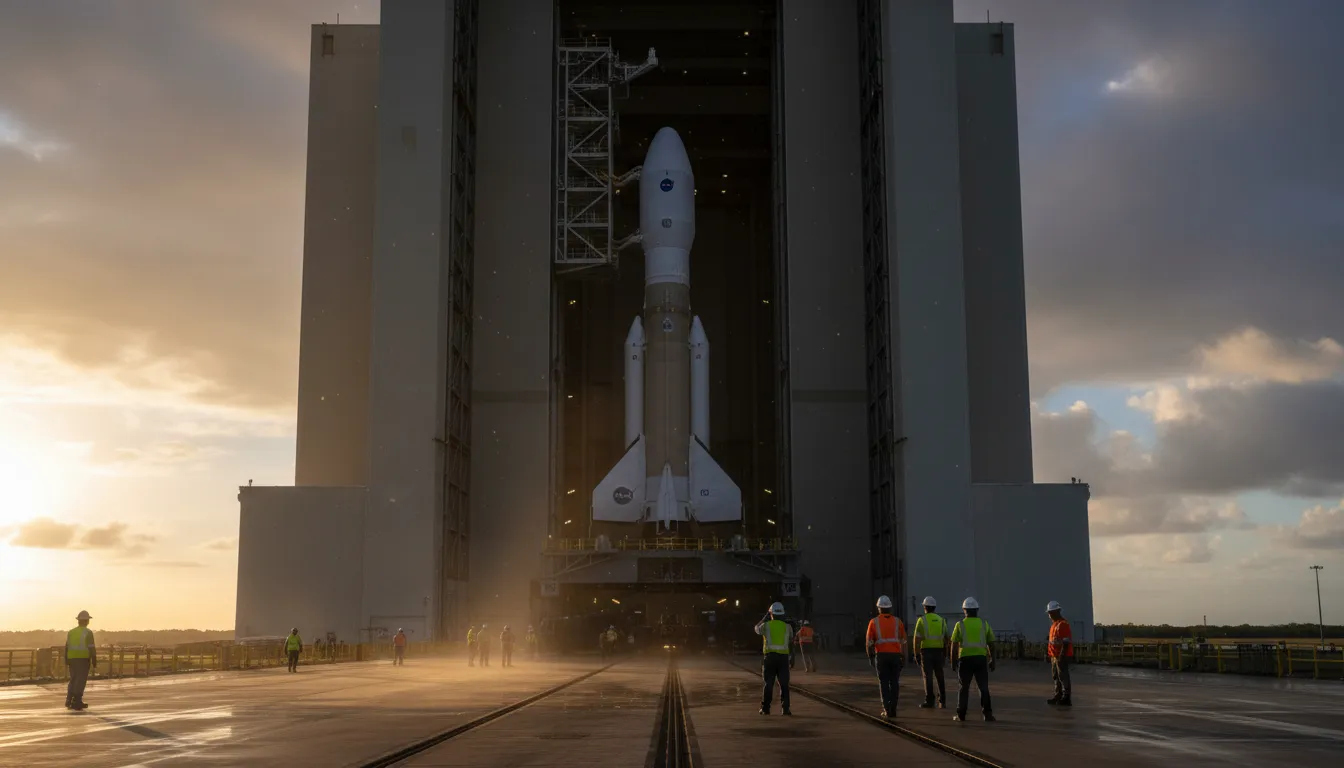
NASA has moved the Artemis II mission out of its March launch window after engineers discovered a helium flow problem with the rocket's upper stage, forcing the Space Launch System (SLS) and Orion spacecraft back into the Vehicle Assembly Building (VAB) for repairs. The earliest possible new launch date is now April 1, 2026.
The trouble emerged after the wet dress rehearsal concluded on February 19. During post-test operations, teams were unable to flow helium through the Interim Cryogenic Propulsion Stage (ICPS) — the upper stage responsible for pushing Orion toward the Moon. Helium is critical in large rockets: it pressurizes propellant tanks, purges fuel lines before ignition, and maintains the correct environmental conditions for the engine.
NASA Administrator Jared Isaacman confirmed that accessing and repairing the issue could only be done inside the VAB. On February 24, the 100-meter-tall SLS rocket began the roughly four-mile rollback from Launch Pad 39B — a multi-hour journey that has become an unwelcome sight in recent months.
Engineers are investigating three possible root causes: a fault at the interface between ground support equipment and rocket plumbing, a malfunctioning valve in the upper stage, or a clogged filter. Teams are also reviewing data from Artemis I, during which similar helium pressurization problems were encountered before that uncrewed mission launched in November 2022.
Second Delay in Weeks
This is not the first setback for Artemis II. An earlier rehearsal in early February revealed a liquid hydrogen leak, pushing the launch from February to March. The latest problem eliminates the March window entirely.
The next viable launch opportunities fall in the first week of April — candidate dates include April 1, 3, 4, 5, and 6 — and potentially April 30, depending on how quickly engineers can diagnose and fix the fault.
Crew Released from Quarantine
The four-member crew had entered pre-launch quarantine ahead of the original March 6 liftoff. With the mission now delayed, NASA released Commander Reid Wiseman, Pilot Victor Glover, Mission Specialist Christina Koch (all NASA astronauts), and Mission Specialist Jeremy Hansen of the Canadian Space Agency from quarantine. They have returned to Houston to await a revised schedule. Their quarantine period will need to restart before any rescheduled launch.
Why Artemis II Matters
Artemis II will be the first crewed mission to fly beyond low Earth orbit since Apollo 17 landed on the Moon in December 1972. The 10-day mission is a lunar flyby — the crew will not land but will loop around the Moon, testing all life-support and deep-space navigation systems aboard Orion with people on board for the first time.
A successful Artemis II is the essential prerequisite for Artemis III, which aims to land astronauts — including the first woman and the first person of color — on the lunar surface. Multiple downstream missions and international partnerships with agencies including ESA and JAXA hinge on Artemis II demonstrating that Orion and SLS can safely carry humans to the vicinity of the Moon.
A Program Under Pressure
The Artemis program has been plagued by schedule slippage since its inception. Artemis I launched more than a year late in November 2022. Artemis II has already been pushed back multiple times from its original 2024 target. Critics, including some in the U.S. Congress, have questioned the program's cost — estimated at over $4 billion per launch — and its pace relative to commercial competitors like SpaceX's Starship.
For now, NASA and its partners are focused on a swift VAB investigation. Every day saved in repairs improves the chances of launching in early April rather than slipping the mission further into the year.