Oil Tops $100 as Iran Shuts the World's Oil Chokepoint
Iran's closure of the Strait of Hormuz has sent Brent crude surging past $100 a barrel, triggering the IEA's largest-ever emergency reserve release of 400 million barrels and a US sanctions waiver on Russian oil — but markets remain skeptical relief will come fast enough.
The Chokepoint That Moves the World
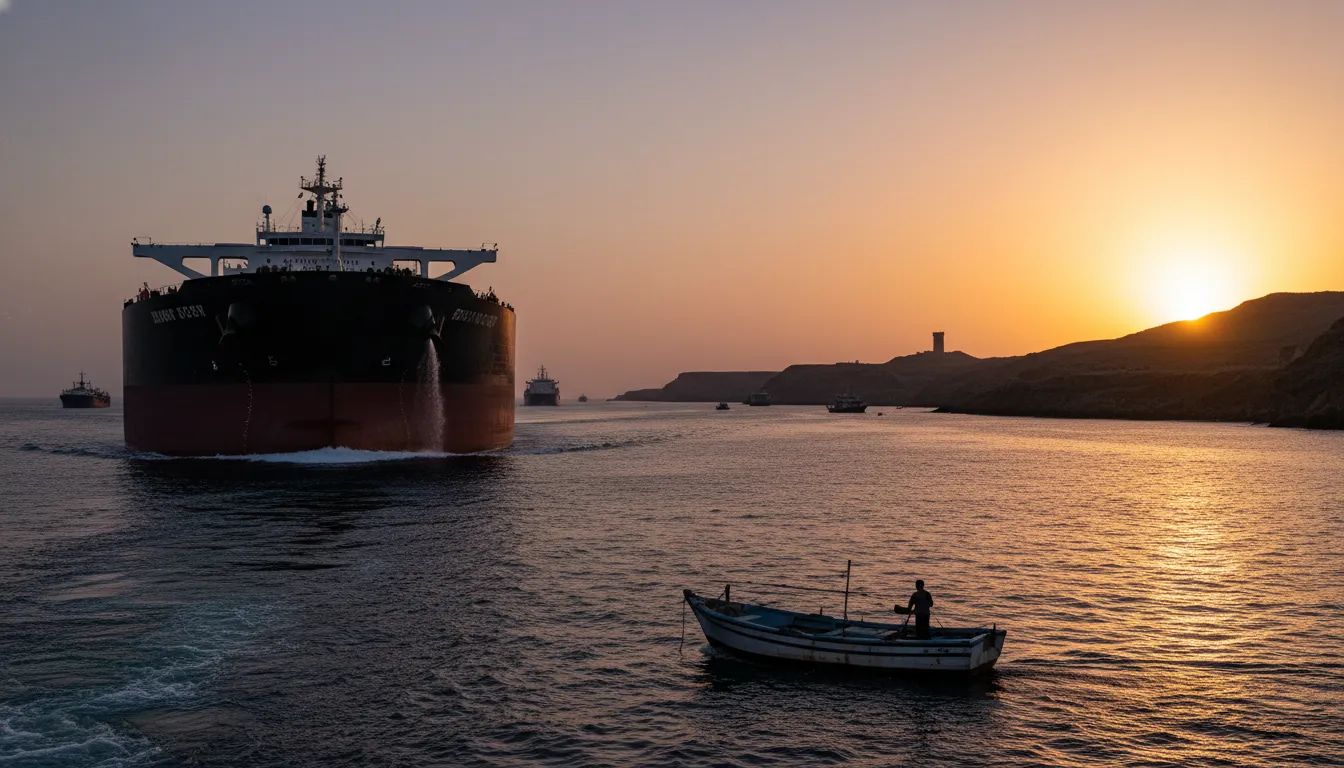
In the two weeks since the United States and Israel launched strikes against Iran on February 28, 2026, a single narrow waterway has brought the global energy system to the edge of crisis. The Strait of Hormuz — a 33-kilometre-wide passage between Iran and Oman — carries roughly one-fifth of the world's daily oil and gas supply. Since the war began, Iran has effectively closed it, threatening to attack any commercial vessel attempting to transit.
The consequences have been swift and severe. Brent crude, the global benchmark, surged more than 25% from pre-war levels, peaking at $119 per barrel before settling just above $100 after emergency intervention measures were announced. It was the first time oil traded above $100 since 2022.
Iran Doubles Down
Any hopes of a rapid reopening were dashed on March 12 when Iran's newly installed supreme leader Mojtaba Khamenei vowed to keep the strait shut. Iran's Islamic Revolutionary Guard Corps had already declared that "not one litre of oil" would pass. At least 19 commercial vessels have been damaged since the conflict began, and the US military acknowledged it is currently "not ready" to escort oil tankers through the strait — all available assets are committed to offensive operations against Iran, Energy Secretary Chris Wright confirmed.
The International Energy Agency described the disruption as "the largest supply disruption in the history of the global oil market," with roughly 15 million barrels per day of crude and refined products effectively cut off from buyers in Europe, Asia, and beyond.
Emergency Measures Fall Short
In an unprecedented move, the IEA's 32 member countries unanimously agreed to release 400 million barrels from their strategic petroleum reserves — more than double the 182 million barrels unlocked after Russia's 2022 invasion of Ukraine. The United States alone committed 172 million barrels from its Strategic Petroleum Reserve; the UK pledged 13.5 million barrels and South Korea 22.46 million barrels.
"The oil market challenges we are facing are unprecedented in scale," said IEA Executive Director Fatih Birol.
Markets responded with cautious skepticism. Analysts noted the 400 million barrel release equals roughly four days of global production and only 16 days of normal Gulf transit volume. More critically, it could take 60 to 90 days before the oil meaningfully reaches refineries — providing little immediate relief to traders, airlines, or consumers already facing sharply higher prices.
The Russian Oil Paradox
In a striking reversal of sanctions policy, US Treasury Secretary Scott Bessent issued a 30-day sanctions carve-out allowing Indian refiners to purchase Russian oil stranded at sea aboard ships unable to reroute after the Hormuz closure. Bessent argued the measure "will not provide significant financial benefit to the Russian government" since Moscow collects most oil revenues at the point of extraction, not delivery.
Congressional Democrats immediately demanded the waiver be reversed, calling it contradictory to US foreign policy goals. The temporary exemption expires on April 4 and does not apply to new Russian shipments.
A Global Shock in the Making
The ripple effects are spreading well beyond the pump. Refinery operations across Asia and Europe face disruption affecting supplies of jet fuel, diesel, and fertilisers. Import-dependent economies in Japan, South Korea, and India are particularly exposed, while European buyers scramble to secure alternative routes around Africa's Cape of Good Hope — adding weeks and significant cost to every cargo.
KPMG chief economist Diane Swonk warned the conflict could drag on for up to six months, potentially driving oil above $130 per barrel and tipping several economies into recession. For now, markets are watching one narrow strait — and waiting to see who blinks first.